
Restoring Seaweed Beds to Advance Blue Carbon Initiatives
Toward a Scalable Business Model through Five Demonstration Projects


As seaweed beds continue to decline worldwide, Japan has launched a nationwide initiative to restore these vital marine ecosystems by making effective use of local fishing ports. Implemented under NEDO’s Green Innovation (GI) Fund Projects, the initiative aims to help reduce CO2 emissions through “blue carbon”—the natural process by which seaweeds absorb and store carbon in marine ecosystems through photosynthesis. In collaboration with Japan’s Fisheries Agency, NEDO is promoting this effort through the KAISO BANK Consortium, a public–private partnership dedicated to restoring seaweed beds across the country.
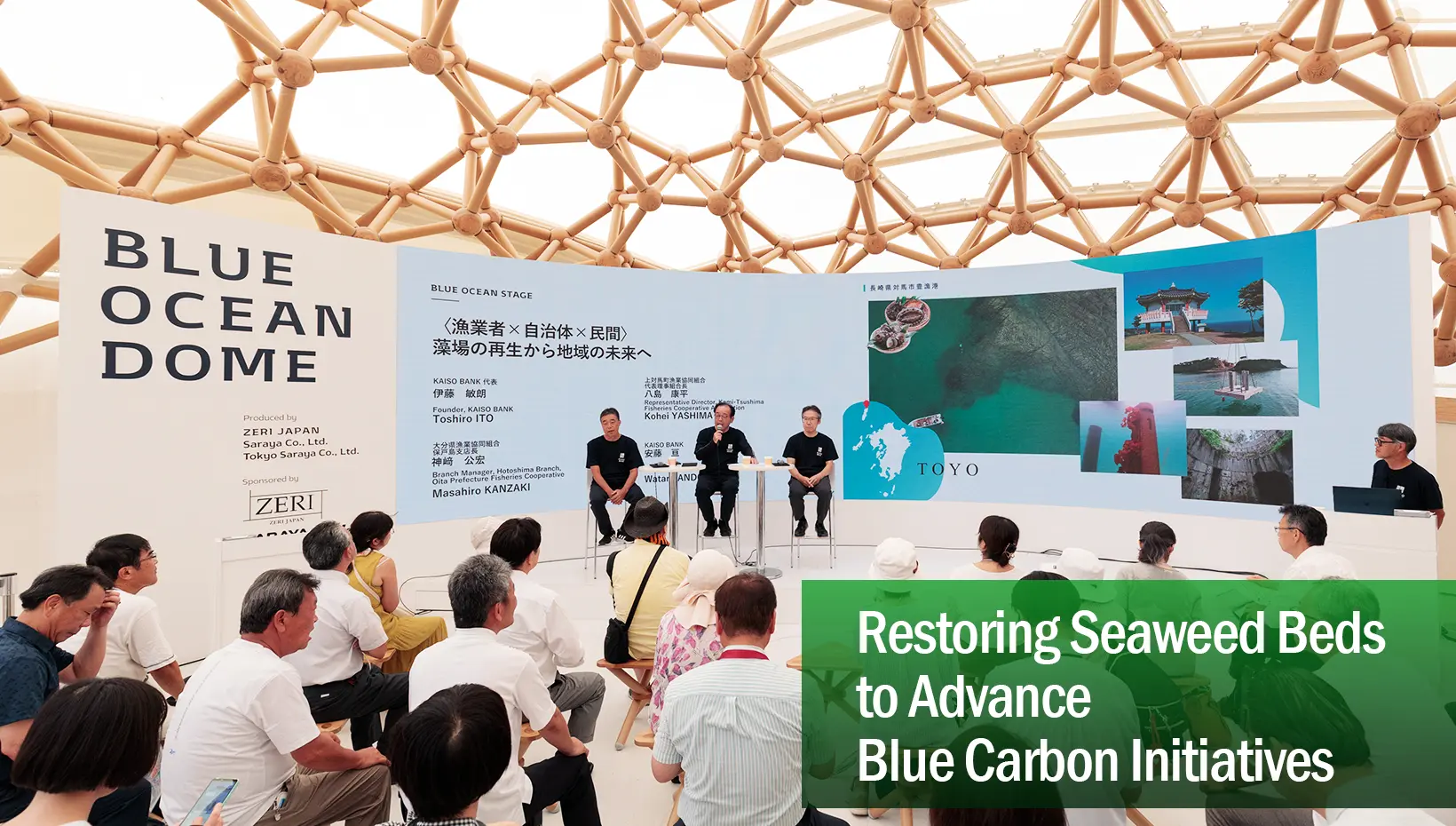
At Expo 2025 Osaka, Kansai, the KAISO BANK Consortium participated in an event held at the BLUE OCEAN DOME (ZERI JAPAN) pavilion during “Hokkaido Kelp Week—The Potential and Future of Kelp,” co-hosted by The Hokkaido Shimbun Press. On July 23, 2025, a talk session titled “Fishers, Local Governments, and Businesses: From Seaweed Bed Restoration to the Future of Coastal Communities” brought together participating companies and fisheries representatives to discuss the current status and challenges of seaweed bed restoration, as well as prospects for their regions.
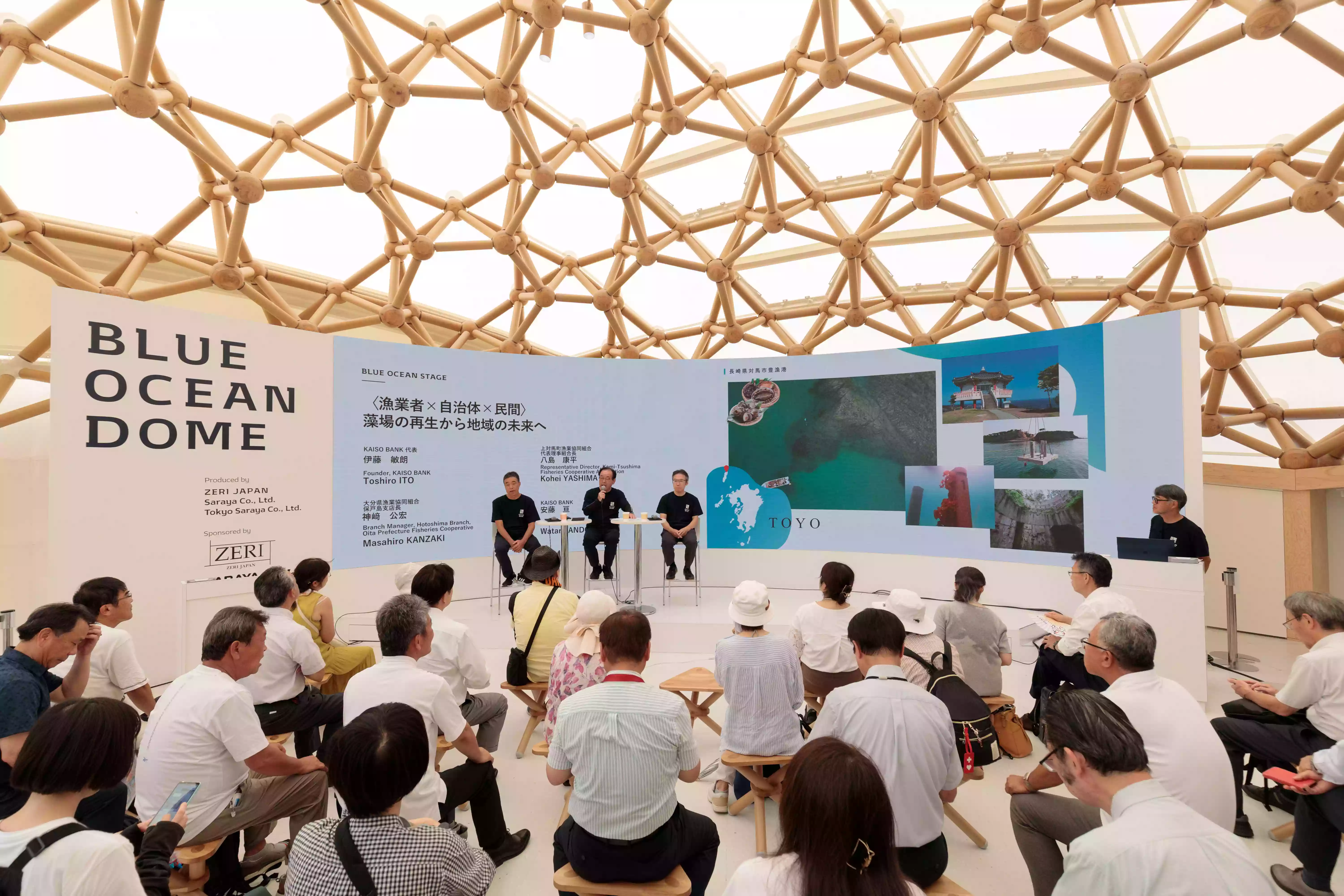 Talk session on blue carbon at the BLUE OCEAN DOME (ZERI JAPAN) pavilion at Expo 2025 Osaka, Kansai, on July 23, 2025
 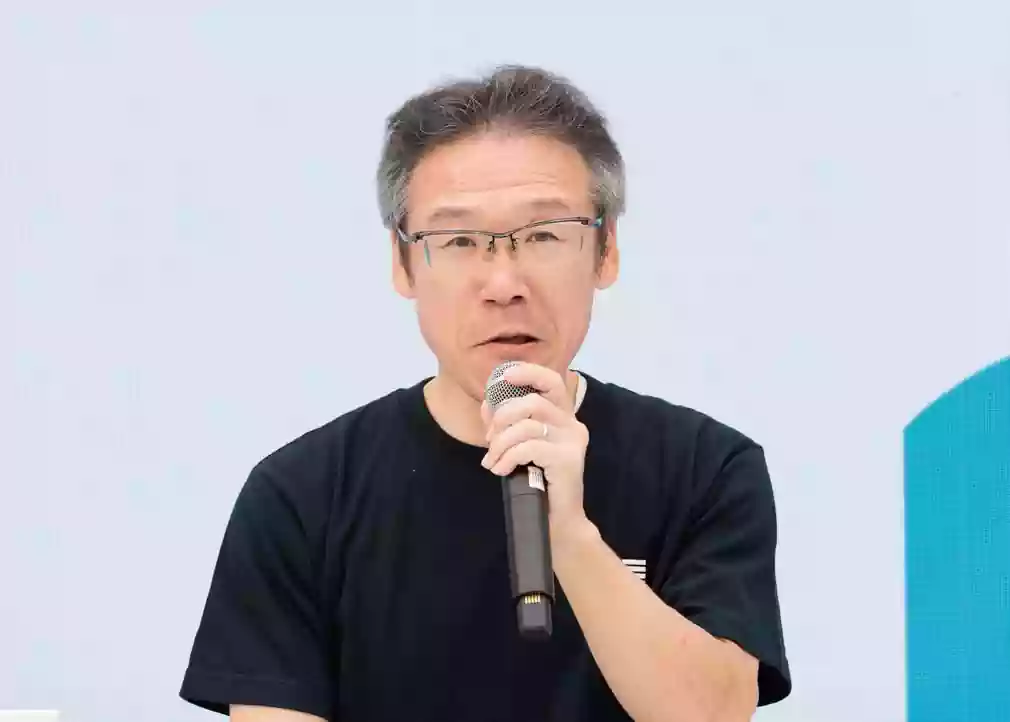 Toshiaki Ito, Director and General Manager of Business Division at Sansho Suiko Co., Ltd.
 The KAISO BANK Consortium is leading the “Blue Carbon Ecosystem Expansion Project through the Utilization of Fishing Ports for Seaweed Banks,” conducted under NEDO’s GI Fund Projects—specifically within the initiative titled “Development of Negative Emissions Technologies in the Agriculture, Forestry, and Fisheries Industries.”
Through collaboration among companies and organizations that had previously worked independently on seaweed bed restoration, the consortium has established a one-stop framework covering every stage—from seedling production and cultivation to transplantation, wide-area monitoring, and ultimately commercialization.
Toshiaki Ito, Director and General Manager of Business Division at Sansho Suiko Co., Ltd., who leads the KAISO BANK Consortium and oversees the five demonstration projects at fishing ports across Japan including the one in Kamoenai, Hokkaido, explained the significance of the initiative, saying, “Until now, each fishing port has carried out its own efforts to restore seaweed beds, but this project represents a completely new approach.”
* Generally, “blue carbon” refers to carbon absorbed through photosynthesis by marine ecosystems such as seaweeds, seagrasses, mangroves, and phytoplankton. While carbon absorbed by forests is called “green carbon,” carbon absorbed and stored in the ocean is known as “blue carbon.” In this project, the KAISO BANK Consortium aims to promote the absorption and storage of CO2 by large seaweeds as part of blue carbon initiatives.
Demonstration at Five Fishing Ports, Expanding to Ten
The KAISO BANK Consortium has launched demonstration projects at five fishing ports across Japan. At each site, seaweed seedling production facilities were developed over the course of about one year, followed by approximately two years of field demonstrations starting in 2023.
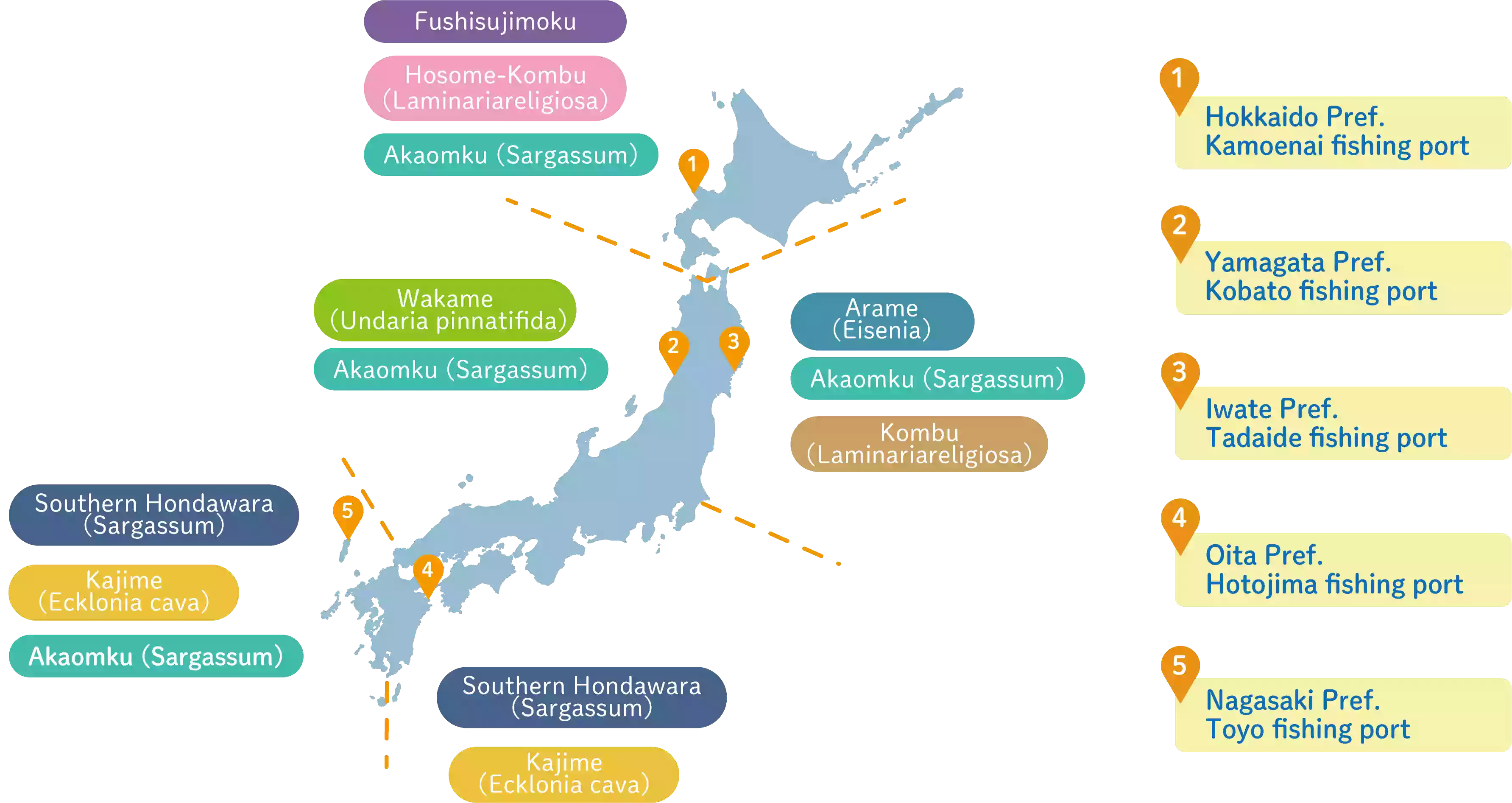 Five demonstration sites across Japan
Wataru Ando, Director of ECOS Professional Engineer Office and a member of the KAISO BANK Consortium, explained the background of the project: “Japan is home to roughly 1,500 species of seaweeds, including hijiki and akamoku (Sargassum), making it an ideal environment for the absorption and storage of CO2. However, climate change and rising sea temperatures have caused seaweed beds to decline across the country, reducing the ocean’s capacity to capture and store carbon. To address this challenge, we are working to restore seaweed beds by collecting and cultivating seaweed spores and transplanting them into coastal areas. Through these efforts, we aim to contribute to carbon neutrality, promote nature-positive initiatives, and revitalize local communities.”
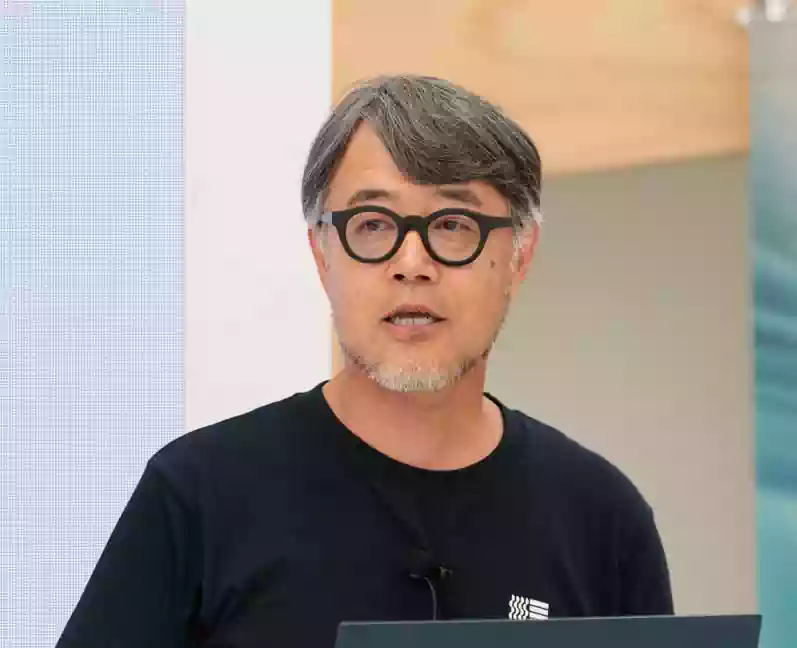 Wataru Ando, Director of ECOS Professional Engineer Office, moderated the talk session
 Under NEDO’s GI Fund Projects, KAISO BANK has set a target of restoring 70 hectares of seaweed beds and achieving annual CO2 absorption of 400 tons by 2030.
Regarding future development, the KAISO BANK plans to further scale up its activities. Ando noted, “We are considering either expanding the seaweed bed areas at each of the five sites or launching new projects in additional locations to increase the total to around ten.”
Advancing through Four Stages—Build, Grow, Increase, and Measure
The demonstration projects are being carried out in four stages—Build, Grow, Increase, and Measure.
In the first stage, “Build,” high-quality seaweeds (mother algae) are collected from marine areas and used to produce large quantities of seedlings in facilities located within fishing ports.
Next, in the “Grow” stage, the seedlings are attached to special seaweed cartridges and cultivated in the fishing ports for one to two months. This phase, known as “intermediate cultivation,” allows the seaweeds to grow large enough to avoid being eaten by herbivorous marine species such as sea urchins and rabbitfish (Siganus fuscescens).
Once the seaweeds have reached a certain size, they are transplanted onto algal reef blocks designed to promote growth, creating new seaweed beds in the “Increase” stage.
Finally, in the “Measure” stage, the expanded seaweed bed areas are monitored using drones and other methods to calculate CO2 absorption levels.
 KAISO BANK’s Four-Stage Plan — Build, Grow, Increase, and Measure
Throughout these four stages, various research findings have been applied. Ando pointed out, “The greatest advantage of the seaweed cartridge is that it can be removed and replaced. As seaweed beds expand, some localized areas may wither over time, but this system allows us to easily replace only those sections.”
“Currently, the cartridges are fastened with bolts and nuts, which requires considerable effort. We are now exploring a simpler mechanism that allows them to be secured just by fitting them into place,” Ando added. “At present, about 1,000 seaweed cartridges are cultivated at each fishing port, totaling 5,000 across the five sites. We plan to increase this tenfold to around 50,000. As the number of participating fishing ports continues to grow, it’s increasingly important for us to improve work efficiency.”
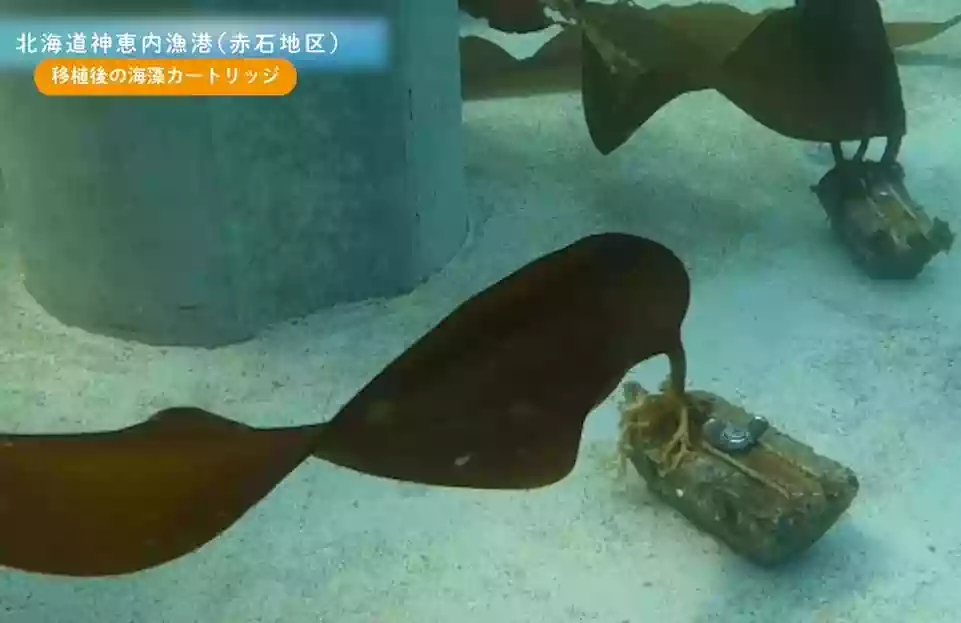 Seaweed cartridges fastened to algal reef blocks with bolts and nuts (Source: KAISO BANK video)
 Regarding the algal reef blocks, a variety of shapes—including columnar, plate, and panel types—have been developed to suit different site conditions. “The columnar type has an advantage,” Ando explained. “It slows down herbivorous species such as sea urchins from climbing up the surface, allowing seaweeds at the top to grow in the meantime. Once the upper seaweeds remain, they release spores, creating a natural cycle of regeneration.”
“The foundations used for the algal reef blocks come in several types, depending on factors such as water depth and wave conditions. We select the optimal type for each site, considering both cost-effectiveness and ease of installation,” Ando continued. “Although our goal is to restore 70 hectares of seaweed beds by 2030, we do not plan to install foundations across the entire area. Doing so would require a substantial budget and could interfere with fishing vessel navigation. Instead, we plan to install the foundations strategically, expecting the seaweeds to spread naturally from those areas and expand the seaweed beds over time.”
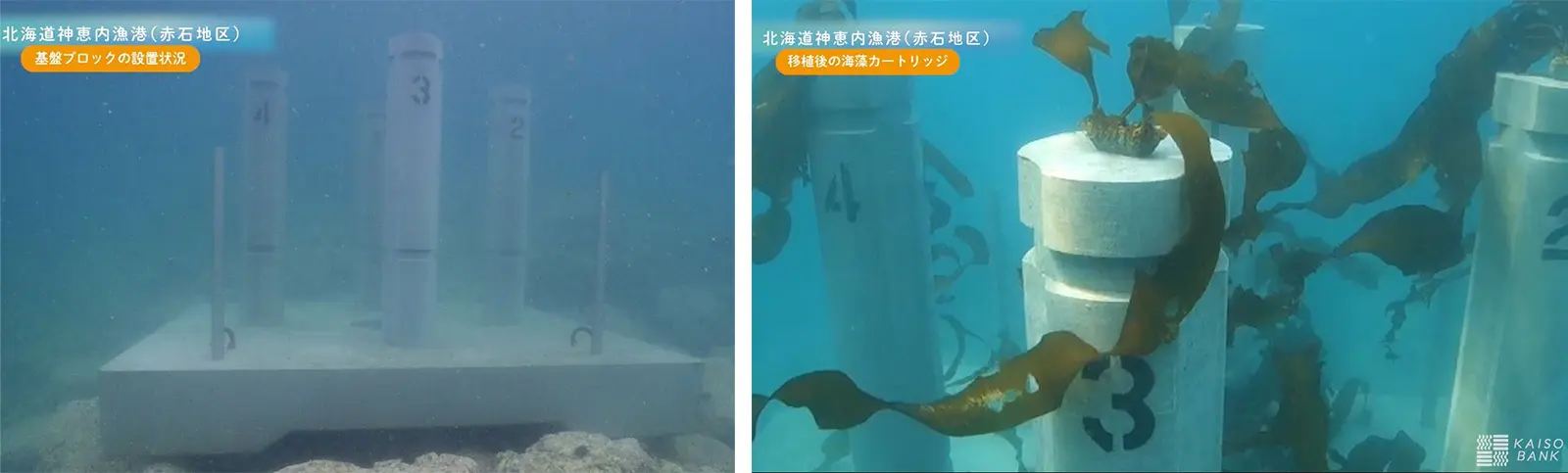 Left: Base block with columnar algal reef blocks attached
Right: Algal reef blocks with seaweed cartridges installed
(Source: KAISO BANK video)
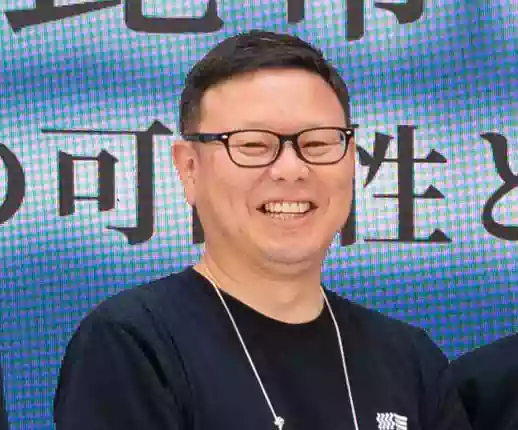 Hirokazu Nishimura, Director and General Manager of the Technical Division and Head of the Carbon Neutral Promotion Office at Nikken Kogaku Co., Ltd., a KAISO BANK member in charge of research on concrete algal reef blocks
 Furthermore, the algal reef blocks incorporate features that promote seaweed growth. “For this project, we adjusted the amino acid composition and blended specific amino acids suited to each seaweed species to accelerate their growth,” noted Hirokazu Nishimura, an experienced researcher in environment-activating concrete (amino acid–blended concrete) and Director and General Manager of the Technical Division and Head of the Carbon Neutral Promotion Office at Nikken Kogaku Co., Ltd. “In addition to these nutrients, it is also crucial to develop base blocks that combine shapes—such as columnar and plate types—best suited to local conditions.”
Measuring with Drones and Lasers to Build a Data-Driven Business Model
A key factor in validating the outcomes of these demonstration projects lies in how the data are collected and measured. Without scientific proof of how much the seaweed bed areas have expanded and how much CO2 has been absorbed, it would be impossible to substantiate the project’s significance and value.
“Along with measuring seaweed bed areas from the air using drones, we use green lasers to measure seaweed height. This allows for a more accurate estimation of CO2 absorption and storage,” explained Hisaaki Gomi, Technical Advisor at Sanyo Techno Marine Co., Ltd., and a KAISO BANK member in charge of monitoring technologies. “To identify seaweed species more precisely, we also equip surface drones with stereo cameras to capture underwater images. These images are used as training data for seaweed classification, effectively replacing divers’ visual observations and complementing wide-area measurements collected by drones and other systems.”
“The drone-based approach enables us to measure up to 5 hectares per day,” Gomi emphasized. “When we used divers for manual measurements, a considerable amount of CO2 was emitted from the boats supporting their operations. By shifting to the current method, we have reduced CO2 emissions by about half.” According to him, just the change in measurement approach has had a significant impact on reducing emissions.
 Hisaaki Gomi, Technical Advisor at Sanyo Techno Marine Co., Ltd., and a KAISO BANK member in charge of monitoring technologies
 Once the CO2 absorption data can be scientifically validated, the project will be ready to take the next step toward full-scale commercialization. Preparations are already underway—one of them being alignment with Japan’s J Blue Credit® system, a government-backed program that certifies verified reductions or absorption of greenhouse gases. “At KAISO BANK, we are also considering handling the application process for J Blue Credit® certification of CO2 absorbed by seaweed beds at each fishing port,” said Hisaaki Gomi.
Revitalizing Coastal Communities
Through blue carbon efforts to restore seaweed beds and enhance CO2 absorption, KAISO BANK’s initiatives also aim to revitalize coastal communities by nurturing richer marine environments.
At the talk session, many participants expressed high expectations for KAISO BANK’s initiatives and their potential to bring new vitality to local fisheries and coastal regions.
Toshiaki Ito, Founder of KAISO BANK and Director and General Manager of the Business Division at Sansho Suiko Co., Ltd., commented, “Our primary goal is to increase CO2 absorption by expanding seaweed growth. And as a result, many additional benefits will also come to local communities—fisheries resources will recover, fishing opportunities will grow, and the entire region, including tourism, will become more vibrant.”
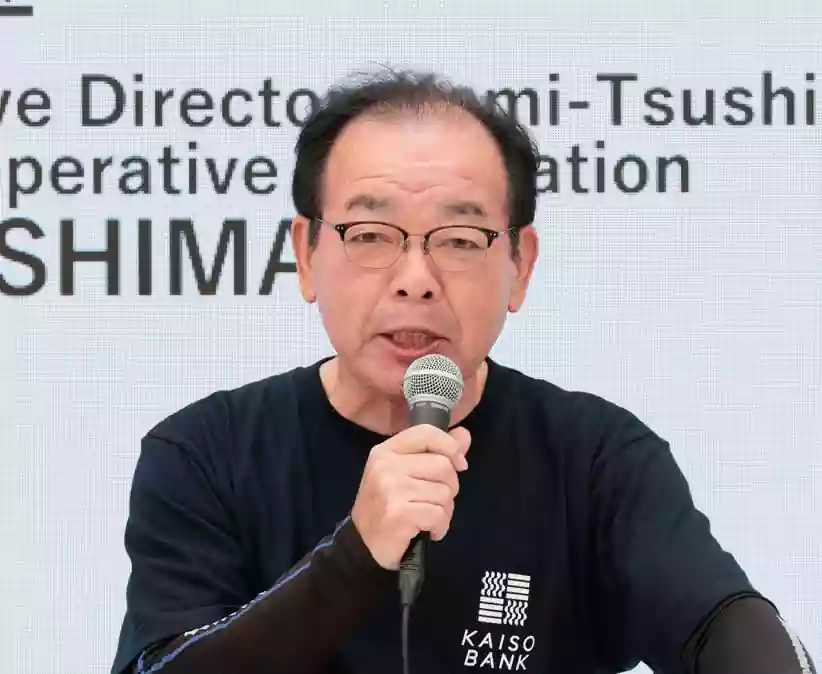 Kohei Yashima, Representative Director of the Kami-Tsushima Fisheries Cooperative Association
Voices from local fisheries echoed this sense of hope. Kohei Yashima, Representative Director of the Kami-Tsushima Fisheries Cooperative Association, shared his thoughts: “We have been working on seaweed bed restoration for some time, but we face a shortage of manpower. Our cooperative has about 380 members, with an average age of 67.5. We hope to see more young people joining our efforts.”
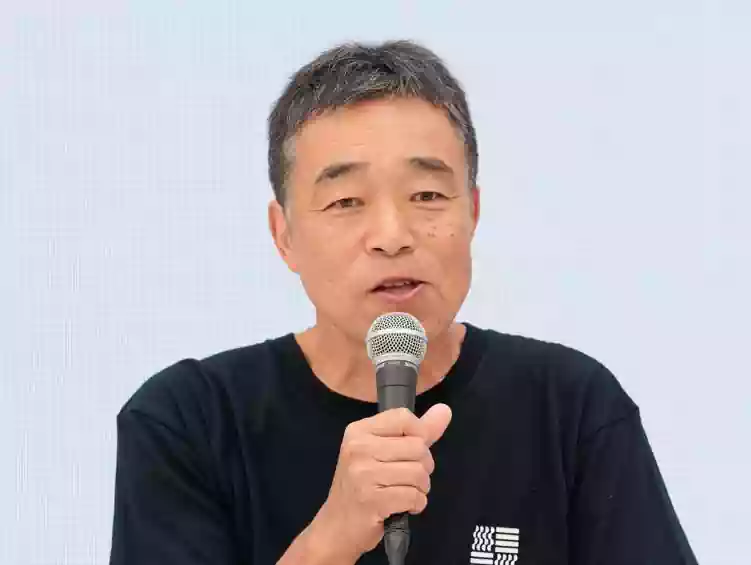 Masahiro Kanzaki, Branch Manager of the Hotojima Branch, Oita Prefecture Fisheries Cooperative
 From Oita Prefecture, Masahiro Kanzaki, Branch Manager of the Hotojima Branch, Oita Prefecture Fisheries Cooperative, expressed his hopes. “Seaweed bed restoration can serve not only to sustain the island’s core fishing industry but also as a valuable resource for environmental education for children and as a potential attraction for tourism. I hope that these restoration activities will grow into a new local industry, creating opportunities for young people to return to the island and build their livelihoods here.”
Recognizing these efforts, NEDO, in collaboration with Japan’s Fisheries Agency, will continue to support KAISO BANK’s work—promoting decarbonization through blue carbon projects and revitalizing local communities across Japan.
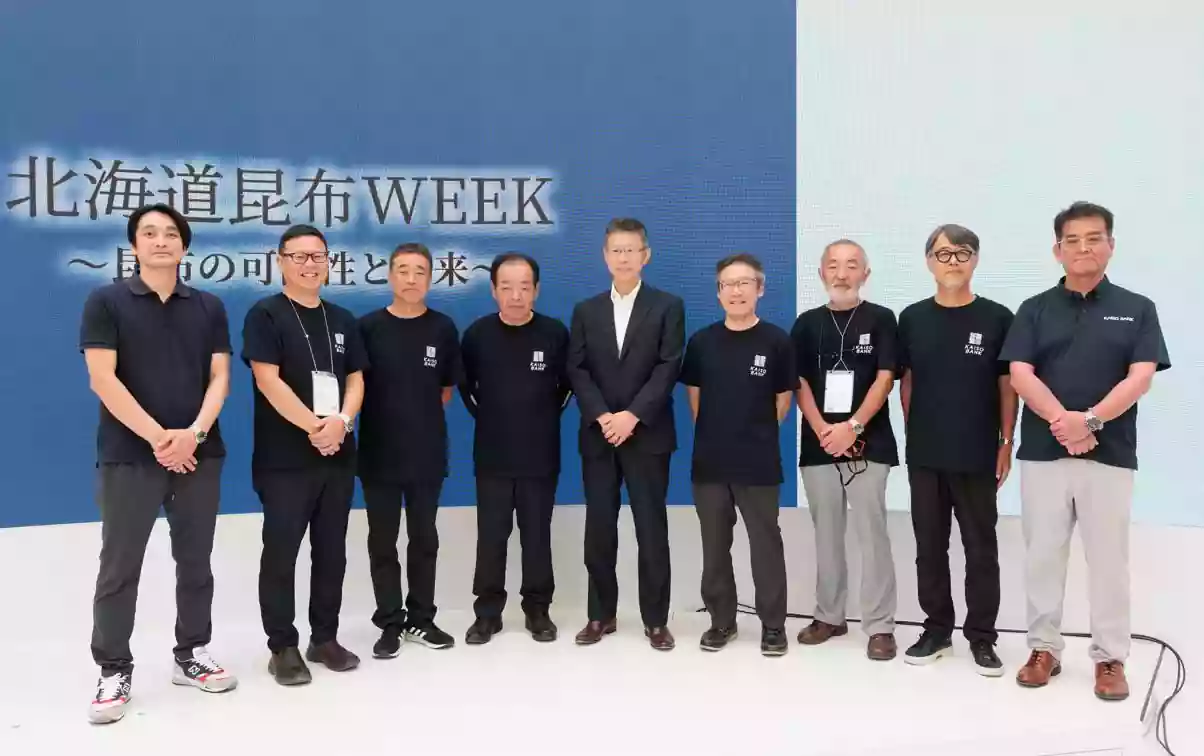 Key members of KAISO BANK with Shuji Yumitori (center), Executive Director of NEDO, which is promoting the GI Fund Projects
 Note: Titles are as of July 2025, at the time of the interview.