
Demonstration of Hydrogen Co-firing Using a Large-scale Gas Turbine
Hydrogen Power Generation Reaches Technical Readiness


Hydrogen has attracted global attention as a next-generation energy source in the transition toward a decarbonized society. Among the various pathways for its social implementation, the power generation sector is widely regarded as the largest prospective source of hydrogen demand.
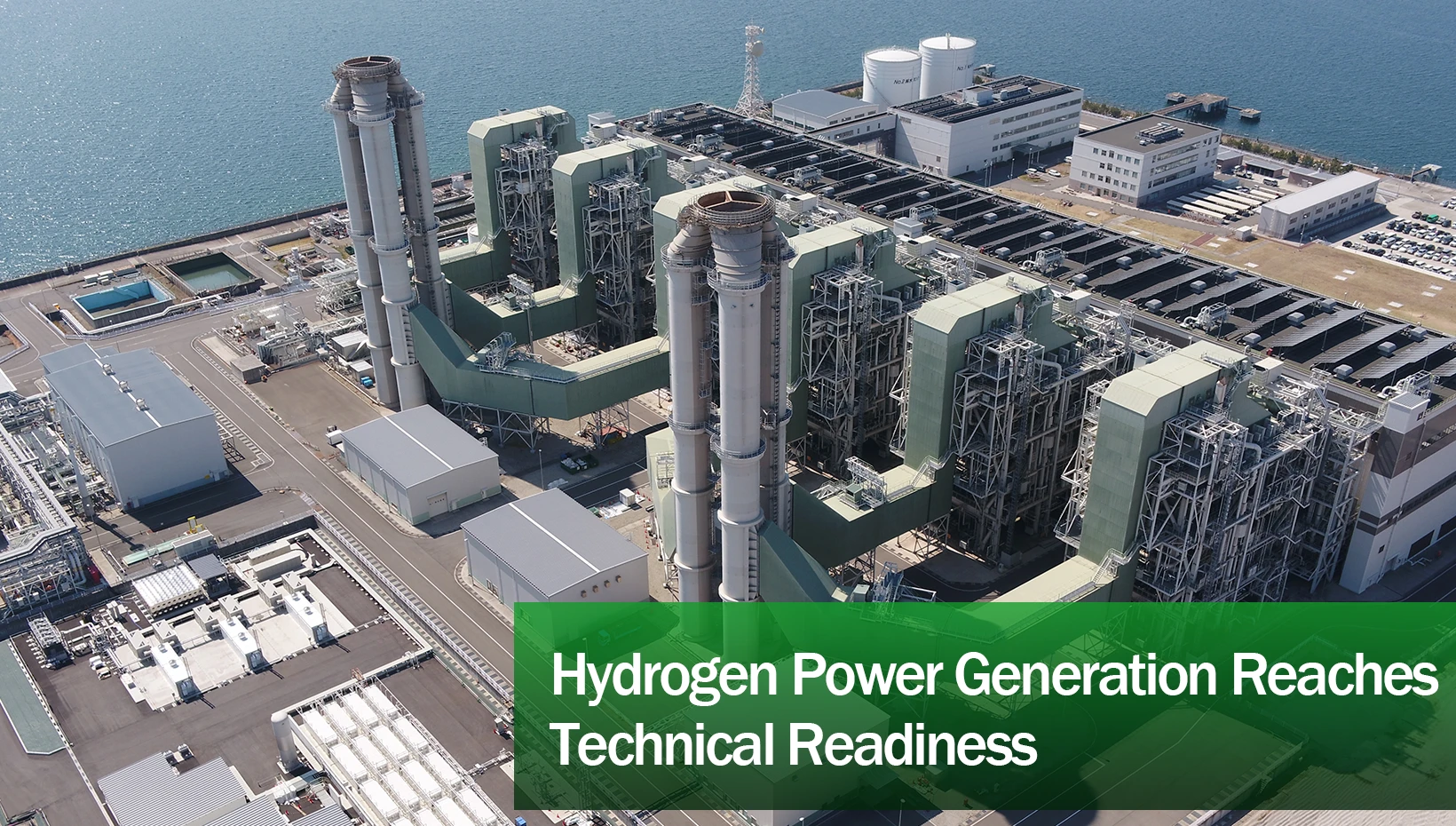
Under the Green Innovation (GI) Fund Projects led by NEDO, Kansai Electric Power Co., Inc. has conducted demonstration tests of hydrogen co-firing at the Himeji No. 2 Power Station in Hyogo Prefecture, using an existing large-scale gas turbine. These tests were largely completed by the end of September 2025, establishing the technical readiness required for the practical application of large-scale hydrogen co-firing power generation. The project is scheduled to conclude in March 2026, after which the company aims to move toward full-scale commercialization. The outcomes of this demonstration have clarified a viable pathway toward the practical use of hydrogen in power generation, marking an important milestone in the transition to a hydrogen-based society.
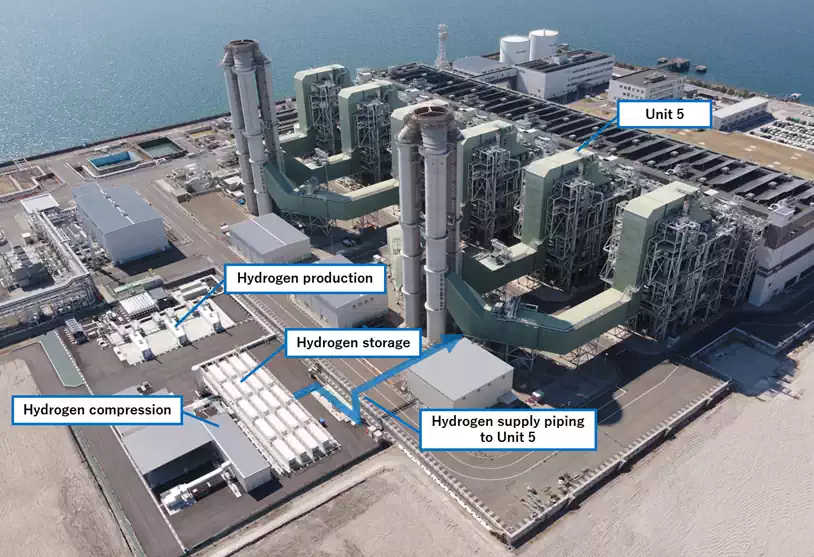
Facilities at Kansai Electric Power’s Himeji No. 2 Power Station where hydrogen co-firing demonstration tests using a large-scale gas turbine were conducted. Unit 5 represents the entire power generation system, including the gas turbine. (Source: Kansai Electric Power)
Overcoming the “Eightfold Combustion Speed” Challenge with Hydrogen Co-firing in Existing Facilities
Reaching carbon neutrality will require more than an expanded deployment of renewable energy alone. It also demands the decarbonization of thermal power generation, which remains essential as a stable source of electricity. One promising approach is hydrogen co-firing power generation, in which hydrogen is blended with natural gas for combustion. However, applying hydrogen in existing power generation facilities is far from straightforward from a technical standpoint.
One of the most significant technical hurdles to the practical application of hydrogen power generation lies in the difference in combustion speed. “Hydrogen combusts approximately eight times faster than natural gas,” Takanori Kugimiya, Ph.D., Project Manager of NEDO’s GI Hydrogen Section, explains. “Because of this characteristic, attempting to burn hydrogen directly in existing gas turbines carries the risk of flashback, a phenomenon in which the flame propagates back from the combustor toward the fuel injection point. Such flashback could cause serious damage to the combustor.”
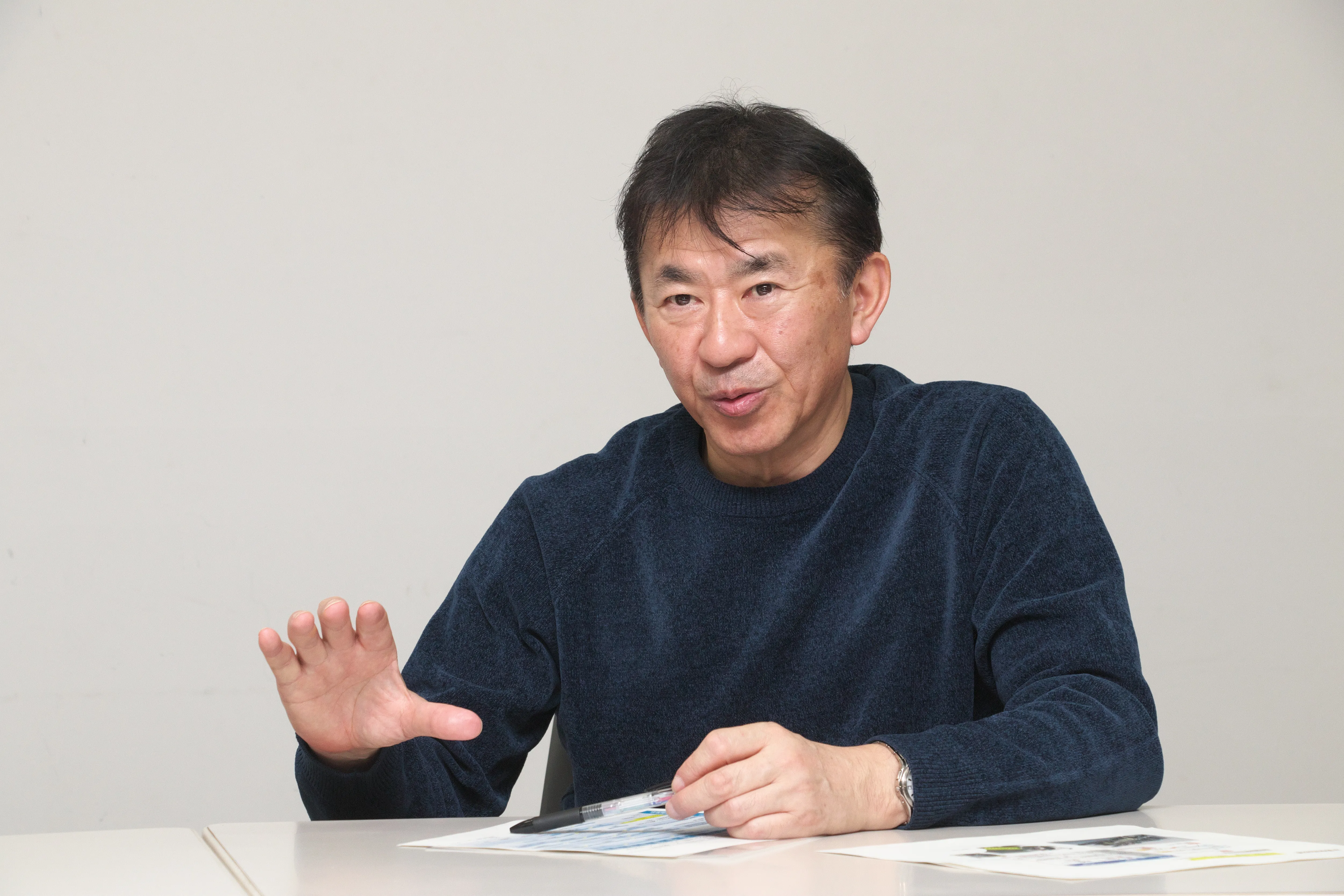
Takanori Kugimiya, Ph.D., Project Manager and Director, GI Hydrogen Section, Applied Technology Unit, Hydrogen and Ammonia Department, NEDO
In addition, Hiroyuki Nakata, General Manager of the Regional Business Group in the Hydrogen Business Strategy Division at The Kansai Electric Power Co., Inc., explains, “Because hydrogen and natural gas differ in their combustion behavior, hydrogen combustion is more prone to causing pressure fluctuations inside the combustor, known as combustion oscillations. If these oscillations intensify, they may damage the equipment. Hydrogen also tends to burn at higher temperatures, increasing the formation of nitrogen oxides (NOx), a major air pollutant. Maintaining environmental performance was therefore another key challenge.”
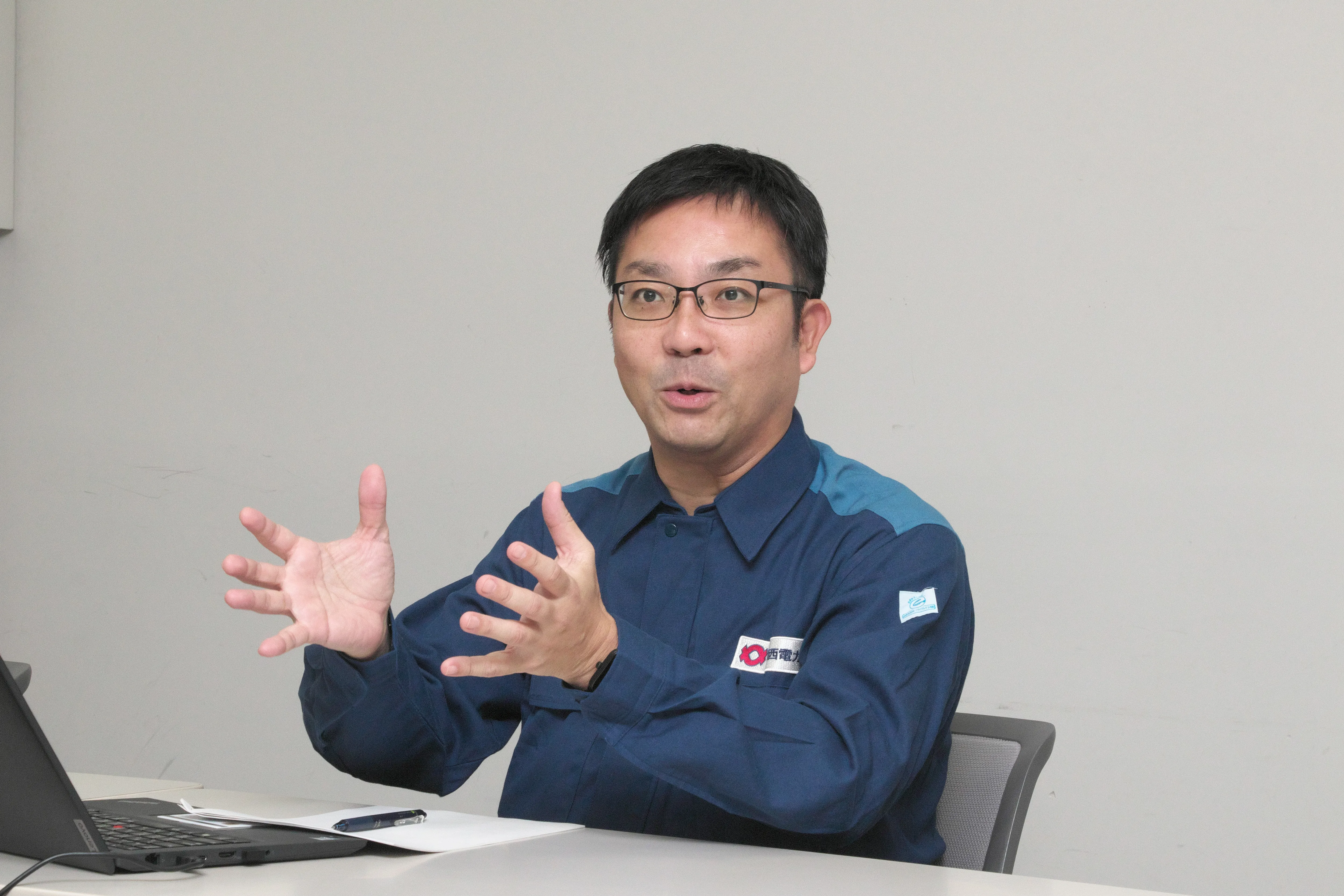
Hiroyuki Nakata, General Manager, Regional Business Group, Hydrogen Business Strategy Division, The Kansai Electric Power Co., Inc.
The project was originally conceived as a demonstration using a mid-sized gas turbine. However, with future commercial deployment in mind, the team decided in March 2023 to shift to a more challenging demonstration using a large-scale gas turbine, prioritizing efficient operation in real-world settings.
Looking back, Takanori Kugimiya, Project Manager of NEDO’s GI Hydrogen Section, says, “Kansai Electric Power has actively pursued demonstration testing using the large-scale plant at Himeji No. 2 Power Station, which features state-of-the-art facilities. The initiative was driven not merely by the need to conduct a demonstration, but by a clear focus on future commercialization.”
The demonstration tests aimed to achieve hydrogen co-firing at volume ratios of up to 30%. To this end, the combustor of the existing Unit 5 gas turbine was retrofitted for hydrogen co-firing using technology developed by Mitsubishi Heavy Industries. The tests involved supplying hydrogen to assess whether stable operation could be maintained under practical operating conditions.
The verification focused on three perspectives. The first was combustion stability: whether flashback and combustion oscillations could be suppressed and stable flame conditions maintained. The second was output control and operational flexibility, including the ability to adjust output smoothly under hydrogen co-firing conditions and to respond to rapid load fluctuations. The third was environmental performance: whether NOx emissions could be maintained below applicable regulatory thresholds.
“The tests confirmed that stable combustion could be maintained following combustion tuning,” Nakata says. “We also evaluated various scenarios expected in commercial operation, such as output ramp-up time, operational stability, and system behavior during a sudden interruption of hydrogen supply. In addition, NOx emissions were confirmed to be properly treated using an ammonia-based denitrification system. Based on these results, we concluded that hydrogen co-firing at volume ratios of up to 30% is technically feasible in existing large-scale gas turbines.”
This achievement demonstrates the feasibility of hydrogen power generation while maintaining the adjustment capabilities required for power system stability.
Preventing Hydrogen Leaks and Accumulation to Ensure Safety
In introducing hydrogen as a new fuel, ensuring safety is essential to gaining public understanding and acceptance. While hydrogen is sometimes perceived as being highly explosive, it can be used safely under proper management. Accordingly, the demonstration tests placed strong emphasis on the implementation of comprehensive safety measures.
Nakata underscores two core principles guiding the safety strategy: preventing leakage and avoiding accumulation. Given hydrogen’s extremely small molecular size, it is more susceptible to leakage than natural gas. Accordingly, the demonstration facilities were engineered to reduce potential leakage points by maximizing the use of welded connections in piping. Although similar techniques are employed in existing natural gas infrastructure, this project implemented stricter construction standards and oversight.
In preparation for potential hydrogen leaks, hydrogen detectors were strategically installed to enable early detection and prompt response. Given hydrogen’s low density and rapid dispersion characteristics, buildings and equipment enclosures were designed to ensure adequate ventilation and prevent hydrogen accumulation near ceilings.
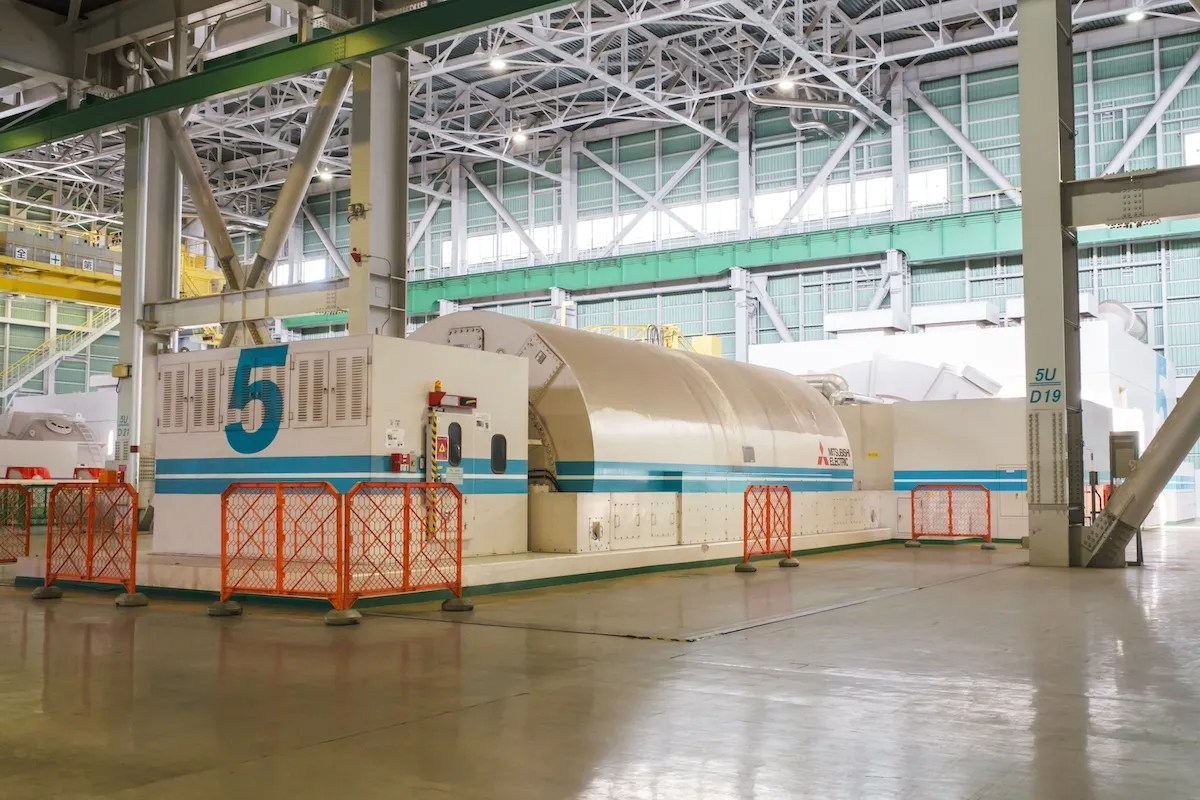
Large-scale gas turbine of Unit 5 (Source: Kansai Electric Power)
“By incorporating expertise from plant manufacturers and specialists in gas handling, we put multiple layers of safety measures in place,” Nakata explains. “As a result, no incidents such as fires or accidents occurred throughout the demonstration period. For us, as an operator with extensive experience in natural gas–fired power generation, this project provided both confidence and a proven track record in handling hydrogen safely.”
Taken together, these established measures demonstrated that hydrogen can be handled safely under the operating conditions verified in the project.
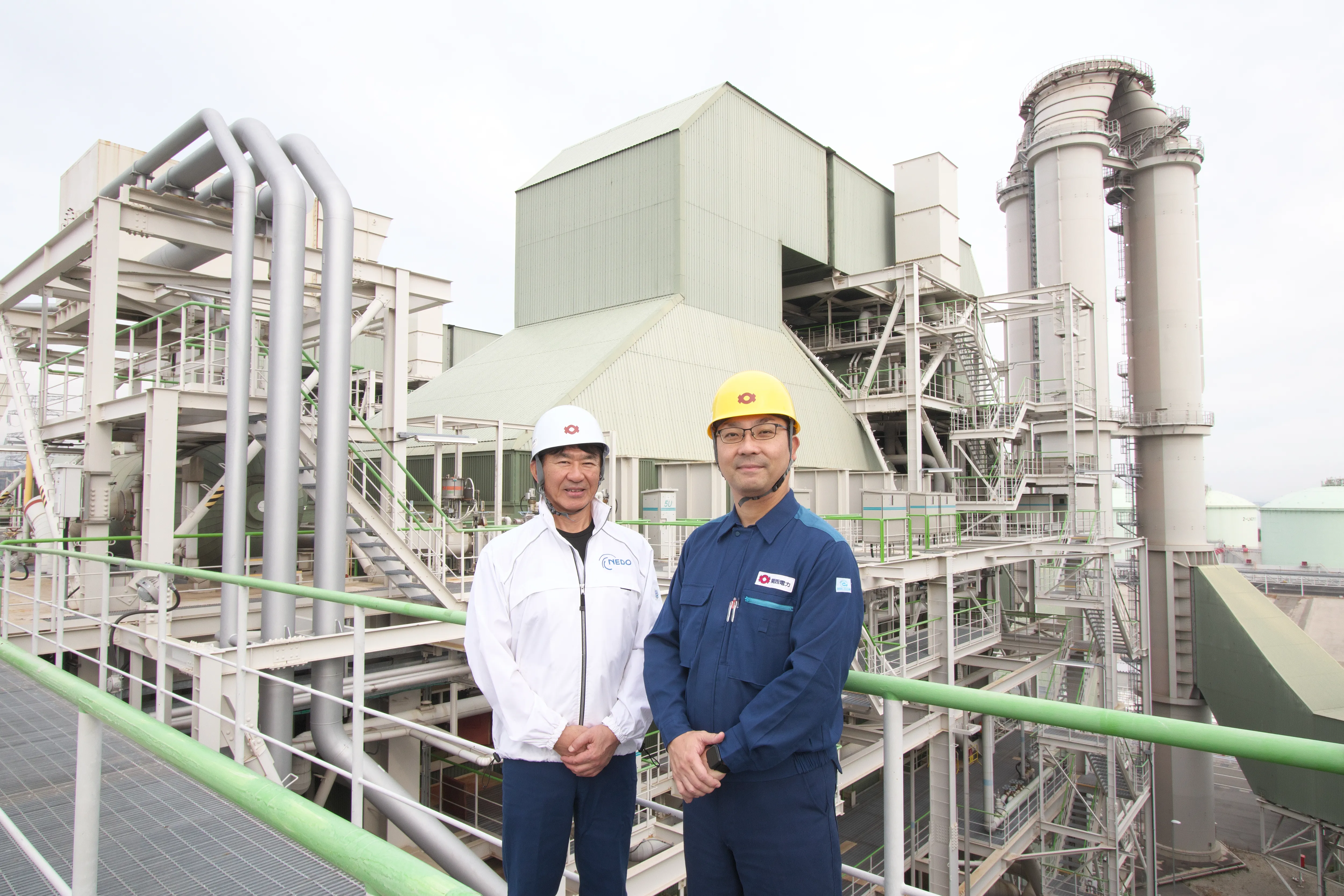
Takanori Kugimiya, Project Manager at NEDO (left), and Hiroyuki Nakata of Kansai Electric Power (right), in front of Unit 5
Establishing an End-to-End Process from Hydrogen Production to Power Generation
Another key aspect of the project was the integration of hydrogen production and storage facilities within the power station. At present, large-scale infrastructure capable of supplying hydrogen for power generation via pipelines has yet to be developed. Consequently, Kansai Electric Power established an on-site “mini hydrogen supply chain,” installing a water electrolysis system to produce hydrogen, which is then compressed, stored, and supplied to the gas turbine entirely on-site.
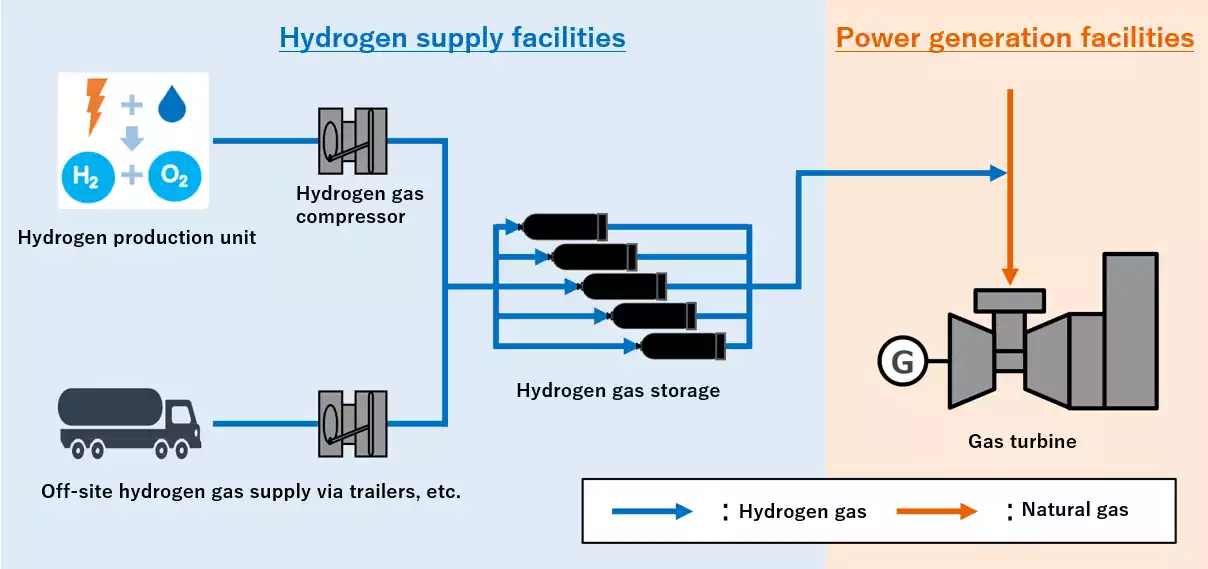
Process flow of hydrogen supply and power generation (Source: Kansai Electric Power)
Reflecting on the significance of establishing on-site hydrogen production facilities, Nakata explains: “The power generation facility used in the demonstration has an output capacity of about 480 MW, but the amount of hydrogen we could produce and store on-site was limited. If we ran the plant at full capacity with hydrogen co-firing at a 30% volume ratio, the stored hydrogen would be used up in just about an hour and a half. That meant we had to put a lot of thought into how to use the limited hydrogen as efficiently as possible while still collecting the data we needed. Still, having the chance to operate the entire process ourselves, from hydrogen production and compression to storage and power generation, has proven to be a valuable asset as we look ahead to full-scale deployment.”
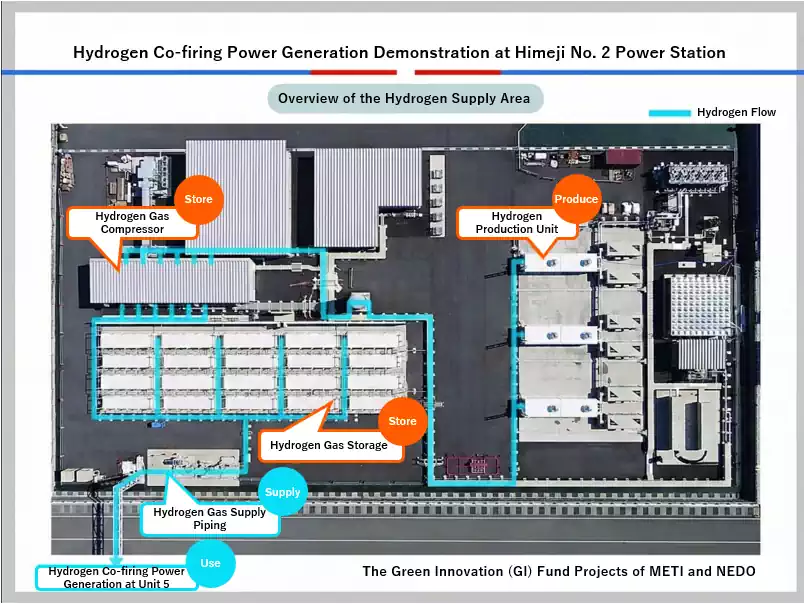
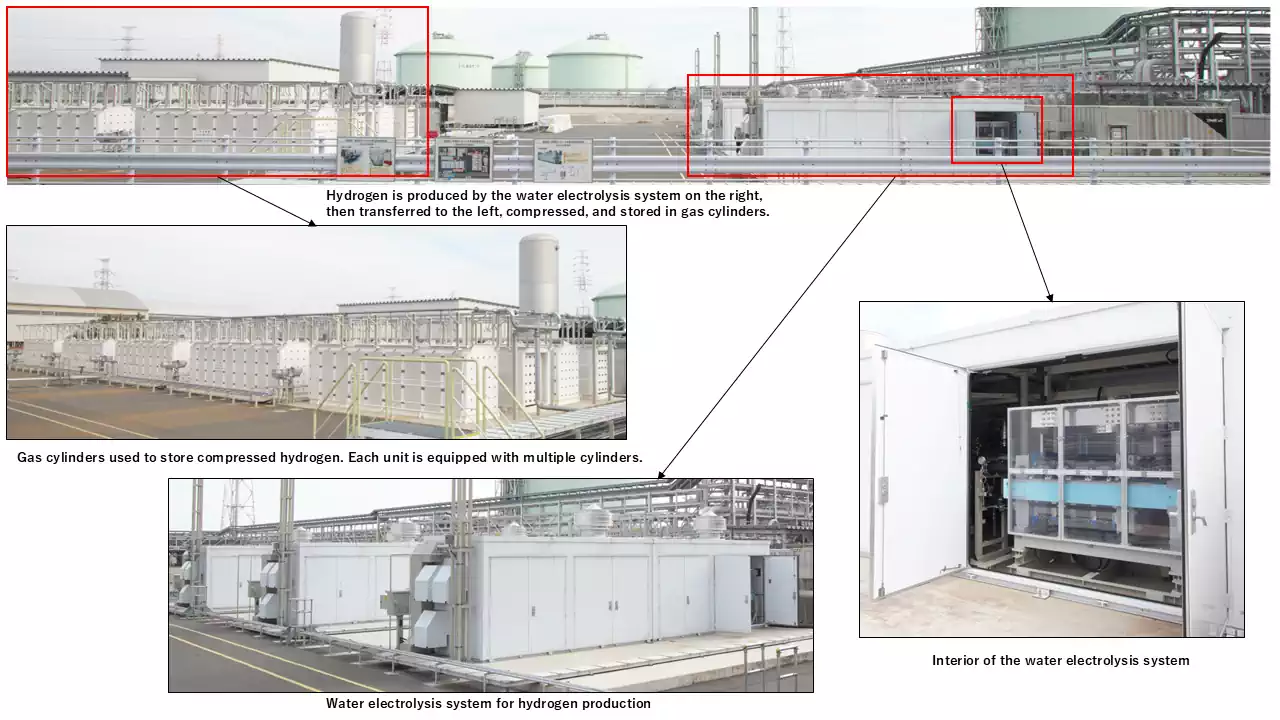
Overall view of the hydrogen supply area (top) and hydrogen power generation facilities (bottom).
Hydrogen produced in this area is supplied to the gas turbine of Unit 5.
(Source: Kansai Electric Power)
With the Demand Side Ready, a Large-Scale Hydrogen Supply Chain Is Needed
Demonstration tests at Himeji No. 2 Power Station have confirmed the technical readiness of hydrogen co-firing power generation using existing large-scale gas turbines.
The know-how gained from Unit 5 is broadly applicable, with clear potential for deployment not only across other gas turbines at the site, but also at natural gas–fired power plants throughout Japan.
However, hydrogen power generation will not become widespread overnight. A major challenge still remains, namely the establishment of a reliable hydrogen supply system.
Kugimiya says, “What this demonstration made clear is just how large a hydrogen consumer a power plant really is. Volumes of hydrogen that would run out in only a few hours when supplied by high-pressure gas cylinders for demonstration purposes would, under commercial operation, have to be delivered continuously and in far greater quantities. Current high-pressure cylinders and small-scale production facilities simply cannot meet that level of demand. To make hydrogen power generation viable at scale, it will be essential to develop large-scale hydrogen supply chains, including overseas transport of liquefied hydrogen by dedicated carriers and the buildout of pipeline networks.”
The realization of a hydrogen-based society is often likened to a classic “chicken-and-egg” problem. Without clear places to use hydrogen, that is, demand on the user side, there is little momentum to build the systems needed to produce and transport it. Yet without those production and transportation systems in place, demand itself cannot expand. This demonstration, however, has shown that the technology on the demand side, power generation as a major potential consumer of hydrogen, is now technically ready.
Kugimiya adds, “Sending a clear message from the power generation side that we are ready to accept hydrogen at any time is extremely important. We believe this will help accelerate infrastructure development and investment decisions on the supply side. In the Kawasaki area of Kanagawa Prefecture, initiatives such as a liquefied hydrogen import terminal are already underway, and we hope these efforts will lead to the next phase of expansion, including the Kansai region.”
Kansai Electric Power has set out its “Zero Carbon Vision 2050,” outlining a roadmap that targets the commercialization of hydrogen co-firing around 2030 and the transition to hydrogen-only combustion by 2050. While global energy conditions have at times prompted a renewed reliance on fossil fuels from the perspective of energy security, the long-term trend toward decarbonization remains unchanged. In this context, hydrogen power generation, which emits no CO2, is expected to play a critical role as a flexible power source that complements the variability of renewable energy.
Considering these circumstances, Nakata says, “Of course, economic challenges remain, such as hydrogen costs and procurement volumes. But first and foremost, it is essential to establish the technology and be ready to move forward at any time. That readiness is indispensable if we are to achieve both long-term energy security and decarbonization. Embracing challenge is one of our core values. Building on the outcomes of this project, we will continue to move steadily toward the realization of a hydrogen-based society.”
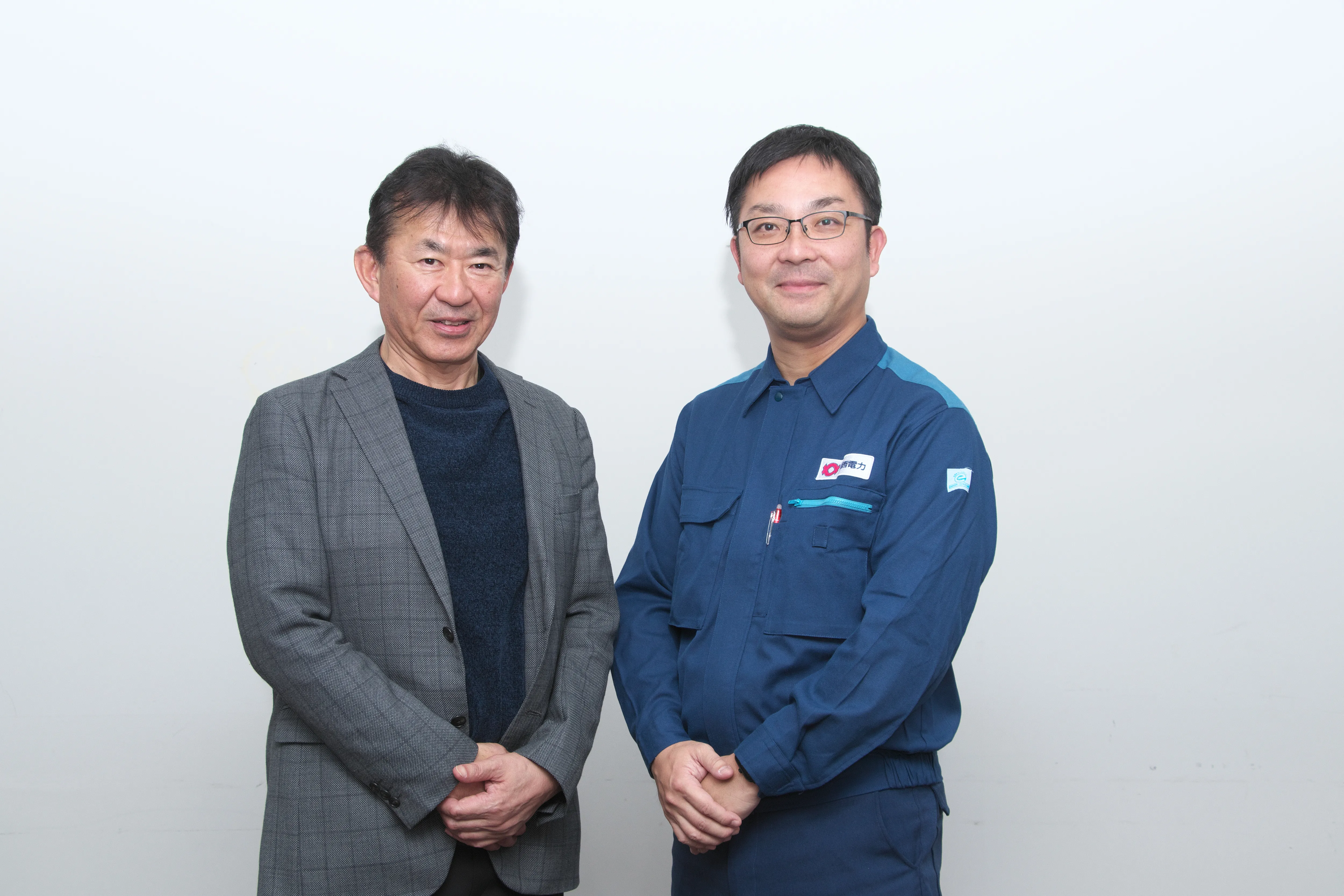
Takanori Kugimiya, Project Manager at NEDO (left), and Hiroyuki Nakata of Kansai Electric Power, who have been working together to advance a long-term roadmap toward hydrogen deployment
Expo 2025 Osaka, Kansai, Japan, held from April to October 2025, served as a testing ground for future society. Kansai Electric Power supplied hydrogen-derived electricity to the Expo site. A portion of the power used by pavilions and facilities at the venue was produced from hydrogen energy combusted at the Himeji No. 2 Power Station. Notably, this achievement was realized in just two years after the project shifted its demonstration plan from mid-sized to large-scale gas turbines.
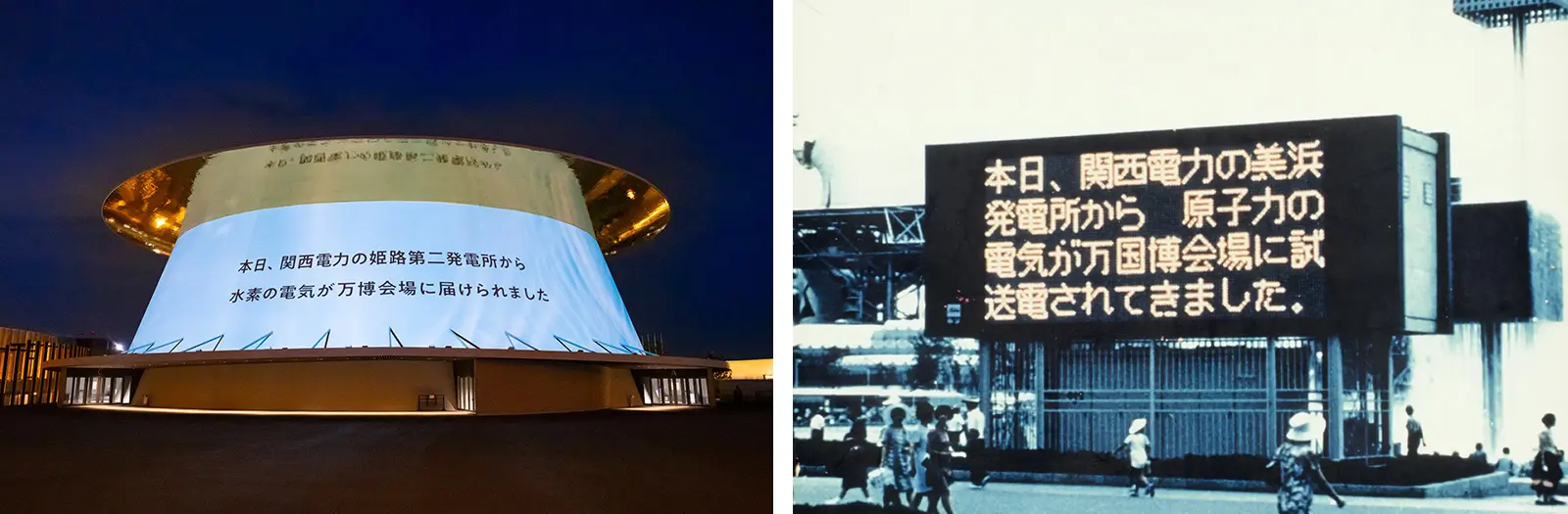
Projection mapping on the exterior of the Expo Hall “Shine Hat” at Expo 2025 Osaka, Kansai (left), and an electronic display from the 1970 Osaka World Expo showing the transmission of nuclear-generated electricity from Kansai Electric Power’s Mihama Power Station to the venue (right).
(Source: Kansai Electric Power)
Kugimiya reflects on the significance of the demonstration, saying, “At the 1970 World Expo in Osaka, nuclear power was supplied to the venue, an event that came to symbolize the dawn of a new era in energy. This time, we believe we were able to showcase hydrogen power generation as a new energy technology.”
“Just as it was remembered at the time,” Nakata adds, “we hope that this Expo will also be remembered as a turning point toward the next energy society. We intend to continue sharing this message going forward.”
The hydrogen flame ignited in Himeji may still mark an early step. Even so, it clearly points toward next-generation energy systems. As the hydrogen supply chain becomes fully connected and large volumes of affordable hydrogen can be delivered, Japan’s thermal power plants have the potential to evolve from sources of CO2 emissions into decarbonized power sources. Preparations for that transition are steadily progressing.