
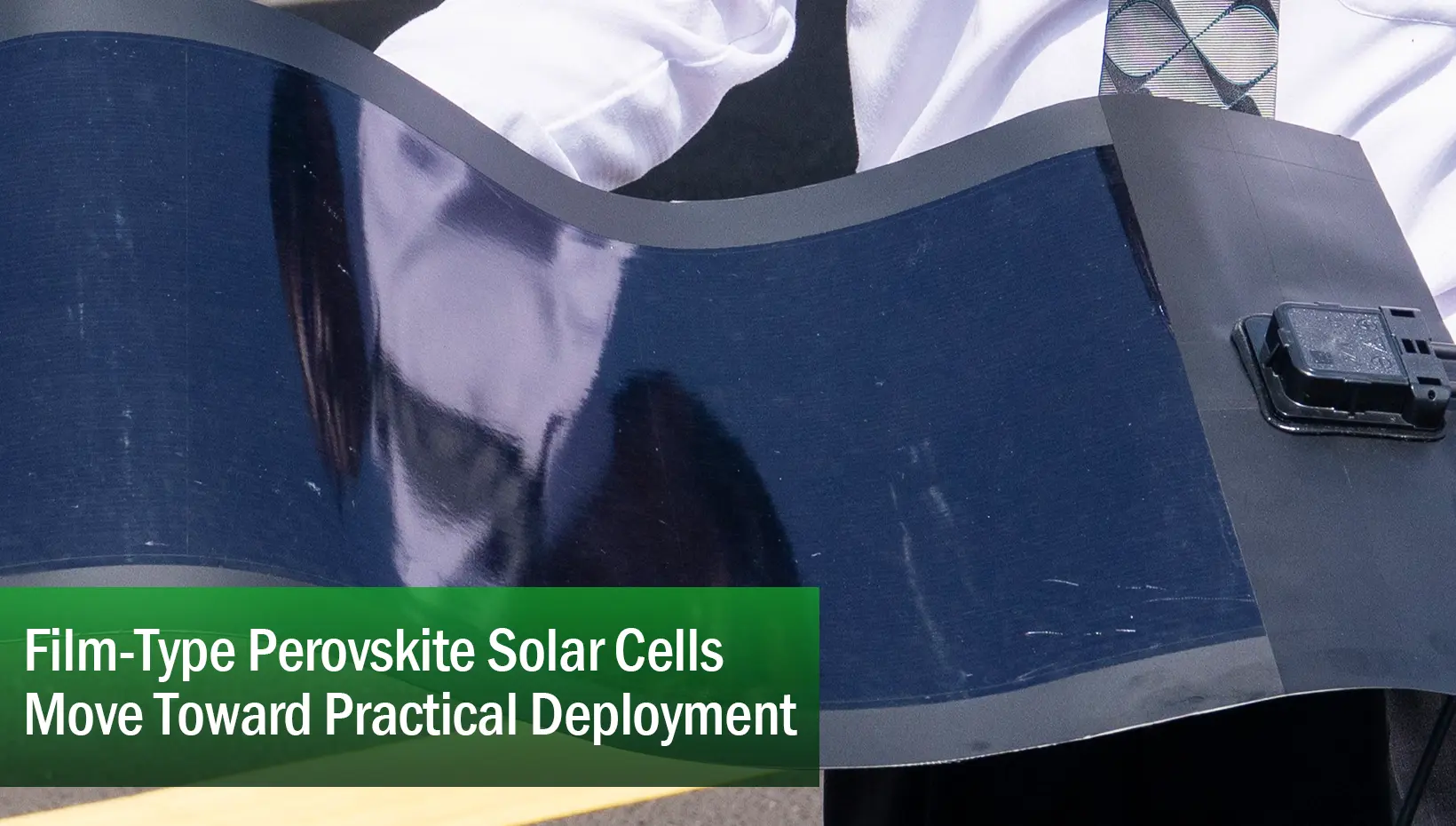
Film-Type Perovskite Solar Cells Move Toward Practical Deployment
Roll-to-Roll Manufacturing Expands from 30cm to 1m Width


A 250-meter-long roof at the West Gate Bus Terminal of Expo 2025 Osaka, Kansai has been fitted with film-type perovskite solar cells—the largest installation of its kind in the world. This large-scale deployment was made possible under NEDO’s Green Innovation (GI) Fund Projects on the Development of Next-Generation Solar Cells. By adopting the roll-to-roll (R2R) manufacturing process, the project seeks to enhance productivity and contribute to cost reduction.
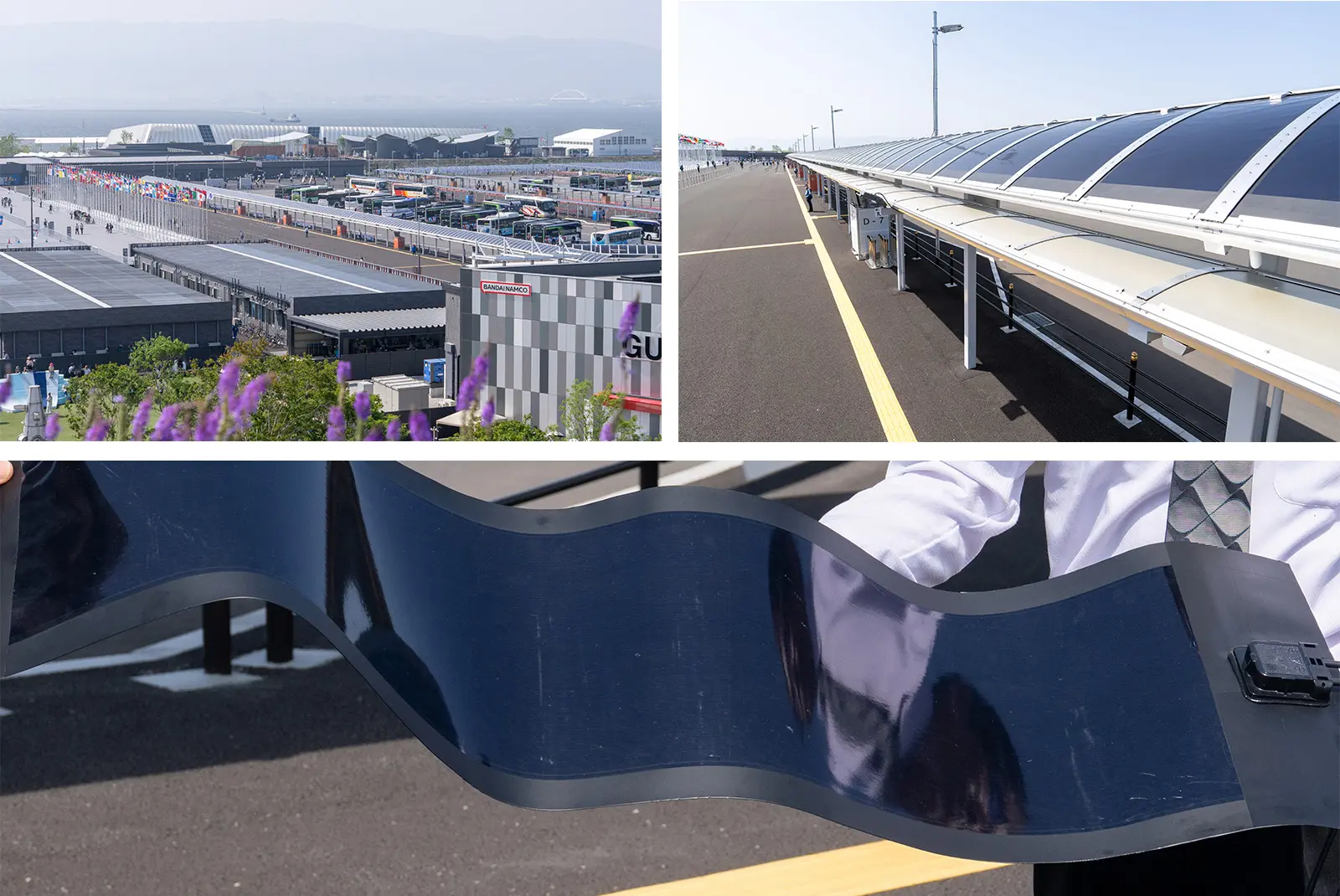 Film-type perovskite solar cells installed on the roof of the West Gate Bus Terminal at Expo 2025 Osaka, Kansai
Top left: The 250-meter-long installation viewed from the Grand Roof Ring
Top right: Curved installation of the solar cells on the terminal roof
Bottom: The flexible, film-type solar cell demonstrating its bendable structure
Lightweight and flexible, perovskite solar cells can be installed on curved surfaces and on structures with limited load-bearing capacity. These features make them suitable for use on the roofs of gymnasiums and factories, as well as on urban buildings — places where conventional crystalline silicon solar cells have been difficult to install. The initiative represents their potential for practical deployment.
To meet growing expectations, SEKISUI CHEMICAL, which developed the film-type perovskite solar cells, has been conducting demonstration tests at multiple locations, including its headquarters building, the Expo 2025 Osaka, Kansai venue, the Tokyo International Cruise Terminal—and plans to carry out future trials at the Uchisaiwaicho South Tower in Tokyo, which is currently under development and scheduled for completion in 2029. Through these field trials, the company is assessing performance and continuously refining the technology toward practical deployment.
The film-type perovskite solar cells developed in this project currently measure 30 centimeters in width. Under the GI Fund Projects, SEKISUI CHEMICAL is working to enhance power conversion efficiency and durability, while scaling up production to a width of one meter.
Overcoming Durability Challenges Through Extensive Demonstration Tests
Although perovskite solar cells offer higher power conversion efficiency than conventional crystalline silicon solar cells, their relatively low durability has been a major challenge. In addition to the well-known issue of moisture sensitivity, degradation caused by light and heat has also been identified as a critical factor.
While perovskite solar cells can maintain efficiency levels comparable to crystalline silicon cells under light or heat alone, their performance tends to decline when exposed to both simultaneously. Since exposure to light naturally raises the temperature, maintaining durability under these combined conditions is crucial for practical application.
According to Koji Matsubara, Project Manager of the Solar PV System Unit, Renewable Energy Department at NEDO, “The degradation mechanism itself has not yet been fully understood. We still don’t have sufficient long-term data under combined light and heat conditions. That’s why we’re working with both domestic and international research institutes, including SEKISUI CHEMICAL, to collect and analyze data and build a reliable foundation for evaluating durability.”
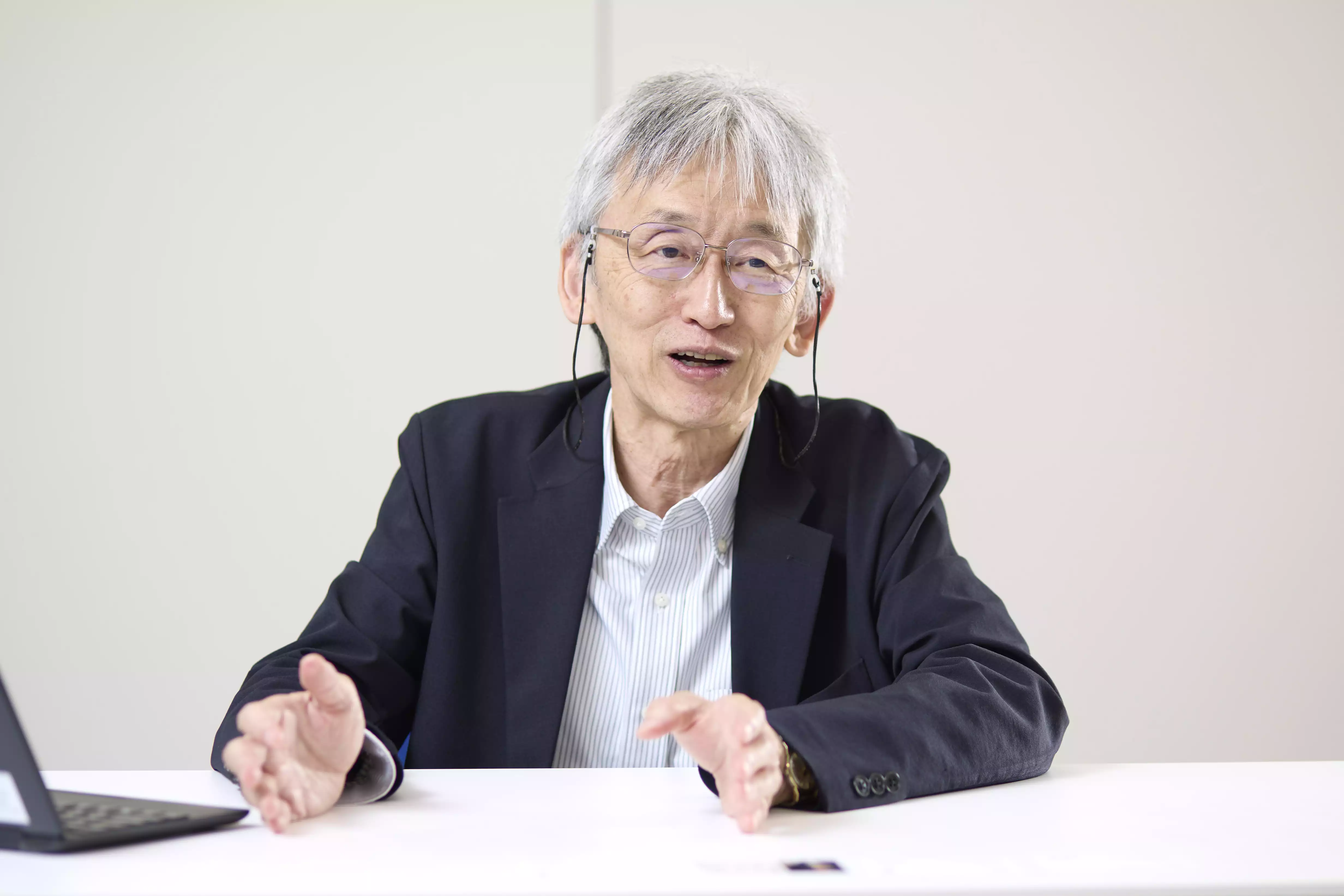 Koji Matsubara, Project Manager of the Solar PV System Unit, Renewable Energy Department at NEDO
Based on insights gained from a series of durability demonstration tests, Takeharu Morita of SEKISUI CHEMICAL shared the following results:
“In the demonstration test at the Tokyo International Cruise Terminal, we saw some very promising results — there was no noticeable decline in power generation efficiency. The Tokyo Metropolitan Government also confirmed a certain level of durability and weather resistance in the coastal environment. I believe this marks a significant step toward the practical use of perovskite solar cells,” Morita said.
“From the results of ongoing accelerated aging tests, we expect a durability equivalent to roughly ten years. At the same time, we’re comparing real-world installation data with accelerated test results to help establish common standards. Working together with Ritsumeikan University and KISTEC (Kanagawa Institute of Industrial Science and Technology), we aim to develop evaluation methods for each degradation mode — including resistance to moisture, heat, and light — during fiscal 2026.”
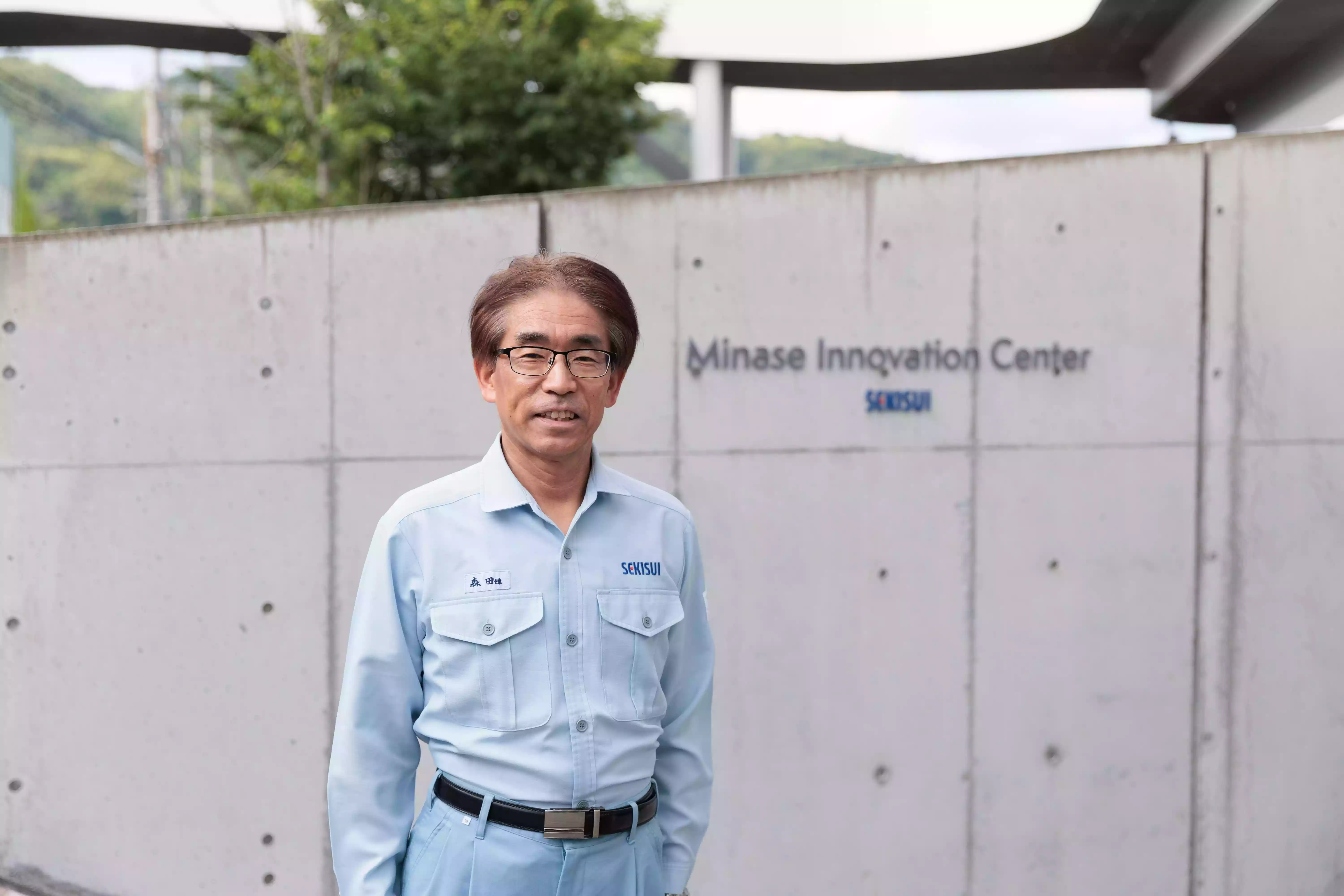 Takeharu Morita, Director and General Manager, Technology & Development Department, SEKISUI SOLARFILM CO., LTD., and Deputy Head of the PV Project at SEKISUI CHEMICAL CO., LTD.
He also pointed out that the absence of international standards for evaluating the durability of perovskite solar cells remains a challenge. “Our goal is to first establish standards domestically and build a solid track record in Japan,” Morita said. “By doing so, we aim for Japan to take the lead in setting international standards in the future.”
His greatest concern is that the spread of low-quality products could undermine the overall reputation of perovskite solar cells. “It’s essential to ensure rigorous quality control and deliver highly reliable products,” Morita emphasized.
At the Tokyo International Cruise Terminal, the demonstration project also examined installation methods. While installation stability against sea breezes and other factors was initially identified as a challenge, these issues have since been addressed and improved through on-site adjustments. Morita noted, “We don’t see challenges as something negative. In fact, overcoming them helps us make even better products.”
Regarding building installations, SEKISUI CHEMICAL is currently working with Tokyo Electric Power Company Holdings (TEPCO Holdings) under the GI Fund Projects to install perovskite solar cells on the spandrel sections* of the Uchisaiwaicho South Tower.
Responsible for technological proof-of-concept and practical deployment under the GI Fund Projects, SEKISUI CHEMICAL positions the Expo demonstration as a showcase of its achievements to date, while viewing the building installation project as part of its ongoing efforts toward social implementation.
※Refers to an exterior wall adjacent to a fire compartment, preventing flame spread.
Pioneering Mass Production with Roll-to-Roll (R2R) Technology
When it comes to competitiveness, film-type perovskite solar cells offer higher potential power conversion efficiency than organic solar cells, while being lighter and more flexible than crystalline silicon solar cells. As productivity improves, they are expected to gain a cost advantage too.
For mass production, the roll-to-roll (R2R) manufacturing process—where sheet-type film is continuously fed through rollers for processing and then rewound—offers higher productivity than the batch process, in which each sheet is manufactured individually. However, R2R manufacturing technology is still evolving, and despite numerous corporate efforts, few have succeeded in achieving stable mass production.
SEKISUI CHEMICAL adopted the film-based approach because it allows the company to leverage its existing film-related technologies.
The R2R manufacturing process consists of three main steps: forming the photoactive layer, creating the electrodes, and post-processing. In particular, the step for producing the photoactive layer has been mechanized, in which the perovskite material is applied onto the film and then dried.
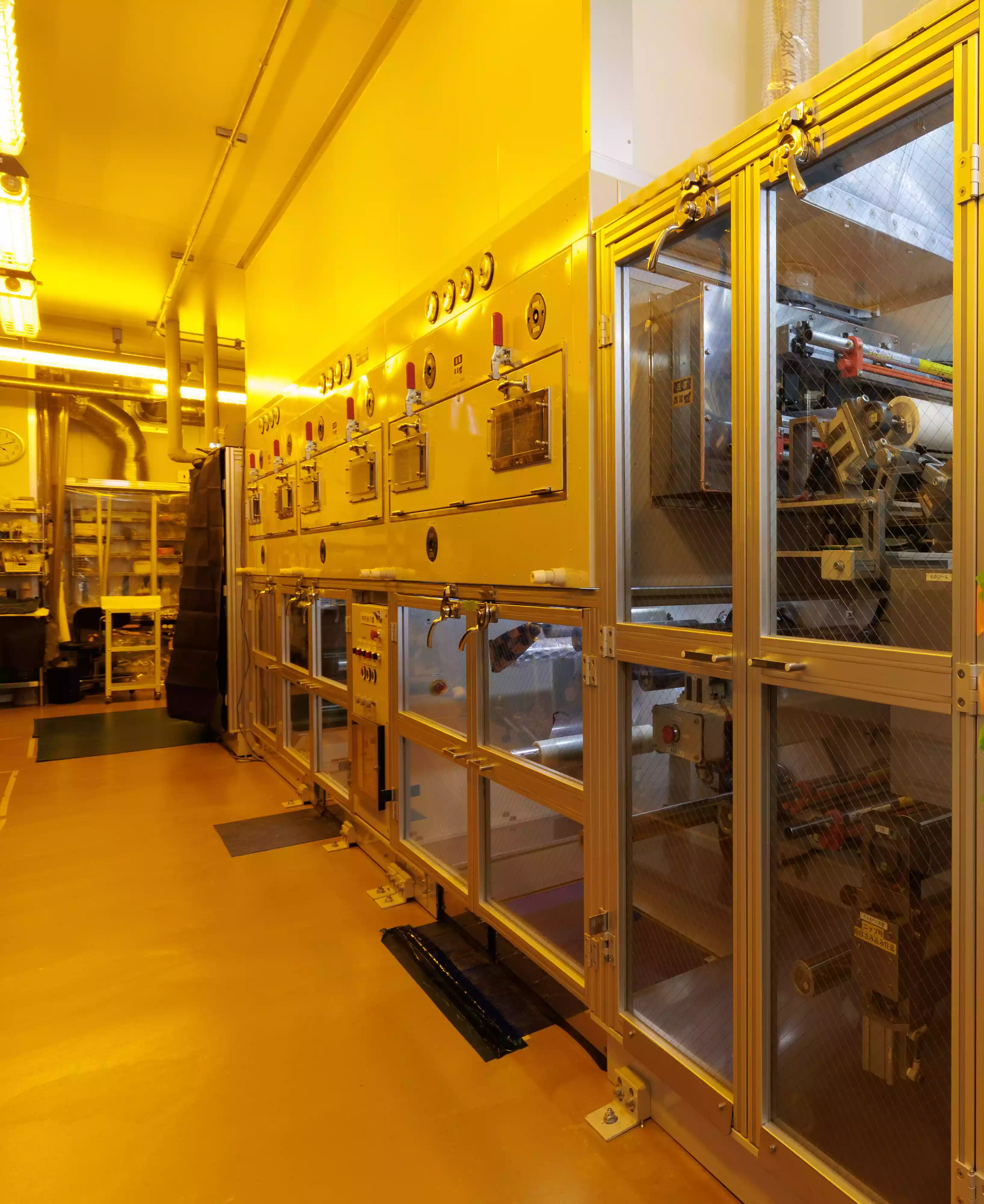 Device for forming the power-generating layer at SEKISUI CHEMICAL’s R&D center
Other R2R systems for electrode formation and post-processing are also installed here
The film is 30 cm wide and several hundred meters long, moving at a speed of 2–3 meters per minute and taking about 5–6 minutes for coating and drying
Regarding the biggest challenge in establishing the 30-centimeter-wide R2R manufacturing technology, Morita explained, “The main issue was achieving uniform coating. If the coating isn’t uniform, the subsequent processing can’t be uniform either. In addition, perovskite materials are extremely sensitive to humidity, so strict control of the manufacturing environment is essential.”
Advancing Coating Precision as Film Width Expands from 30cm to 1m
The key challenge in scaling up from a 30-centimeter to a one-meter film width is, once again, uniformity. “The biggest issue is maintaining uniformity even as the width expands to one meter,” Morita explained. “We also need to consider the effects of vibration and airflow that come with larger-scale equipment. In Phase II of the GI Fund Projects, we’re aiming to develop a one-meter-wide R2R manufacturing system during fiscal 2025.”
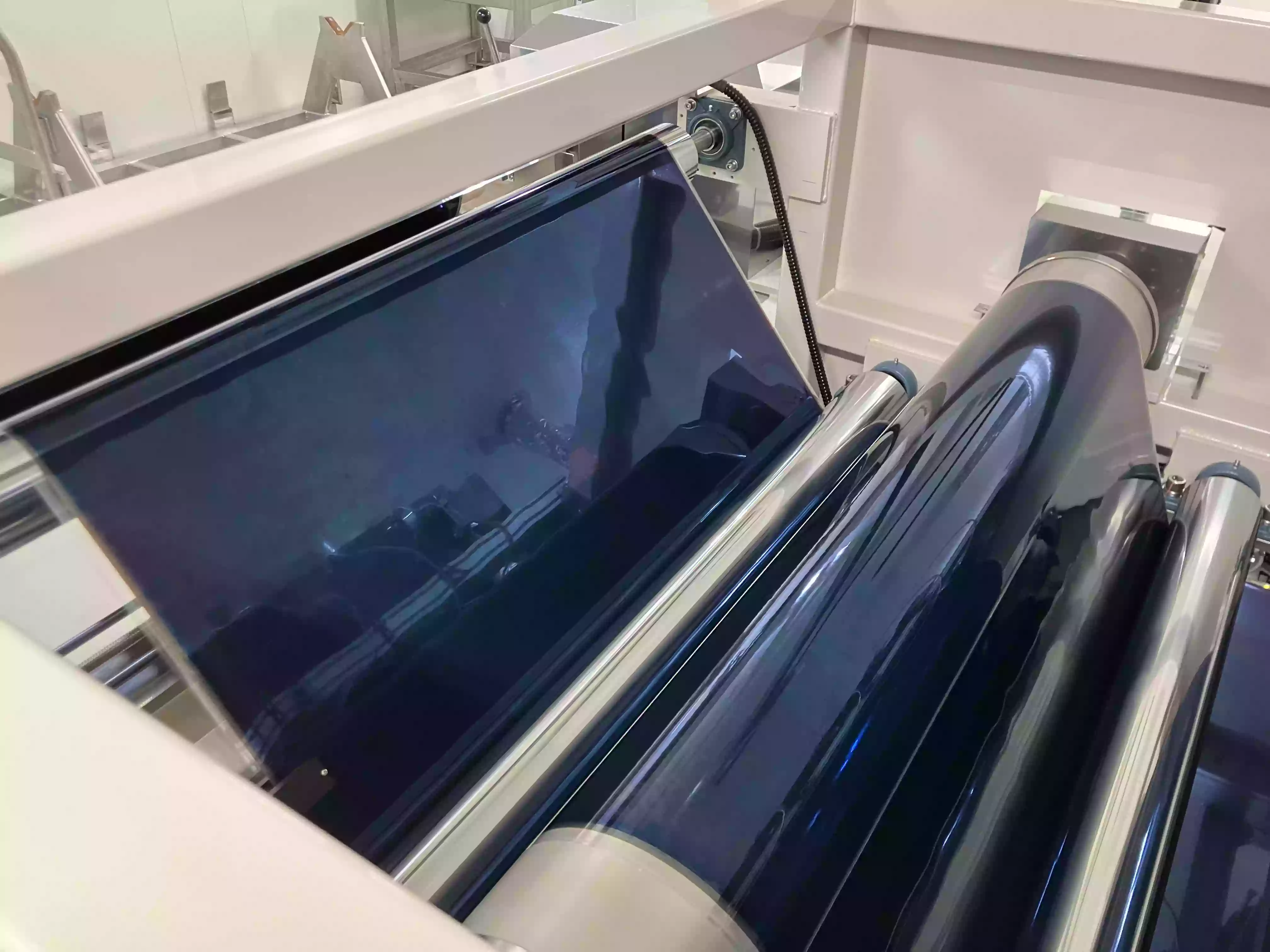 One-meter-wide R2R manufacturing system developed by SEKISUI CHEMICAL
(Source: SEKISUI CHEMICAL CO., LTD.)
Regarding the technical challenges of scaling up to a one-meter width, Koji Matsubara, Project Manager at NEDO, explained, “Ensuring uniformity and achieving high-speed production become major challenges when expanding beyond 30 centimeters. When increasing the width from 30 centimeters to one meter, simply tripling the laser output or the number of lasers in the laser processing step may not be cost-effective. Balancing technical complexity with economic feasibility is therefore a key consideration.”
Reducing Total Costs Toward Practical Deployment
SEKISUI CHEMICAL plans to establish a 100-MW production capacity on its first manufacturing line by 2027. The company also aims to build a gigawatt-scale production line by 2030.
While improving power generation efficiency, enhancing durability, and establishing a mass production system are all essential for practical deployment, Morita emphasized that cost competitiveness must be evaluated in terms of total cost — not just the module price, but also installation, maintenance, and disposal costs.
“If installation is simple, labor costs can be reduced. If maintenance is easy, long-term costs can be lowered. In particular, for building facade installations, we want to avoid situations where scaffolding has to be erected for replacement after 30 years. The construction cost in such cases would be enormous — making the price of the solar cells almost negligible in comparison. In addition to establishing construction technologies, it will also be necessary to review various regulations, including those related to building and fire codes,” Morita explained.
Commenting on SEKISUI CHEMICAL’s position in the global market, Matsubara, stated, “SEKISUI CHEMICAL can be regarded as one of the world’s leading companies in this field. In the area of film-type perovskite solar cells, some European companies are producing small-scale products, but SEKISUI is taking the lead in moving toward full-scale commercialization. In China, research on film-type cells is also under way, but most commercialization efforts there focus on glass-based products.”
SEKISUI CHEMICAL’s development of film-type perovskite solar cells represents a world-leading initiative, unmatched in both performance and manufacturing technology. The company is expected to drive the global solar cell market forward and contribute significantly to the realization of a carbon-neutral society.