
Next-Generation Aircraft Move Closer to Reality
Key Technologies for Decarbonizing Aviation Take Shape


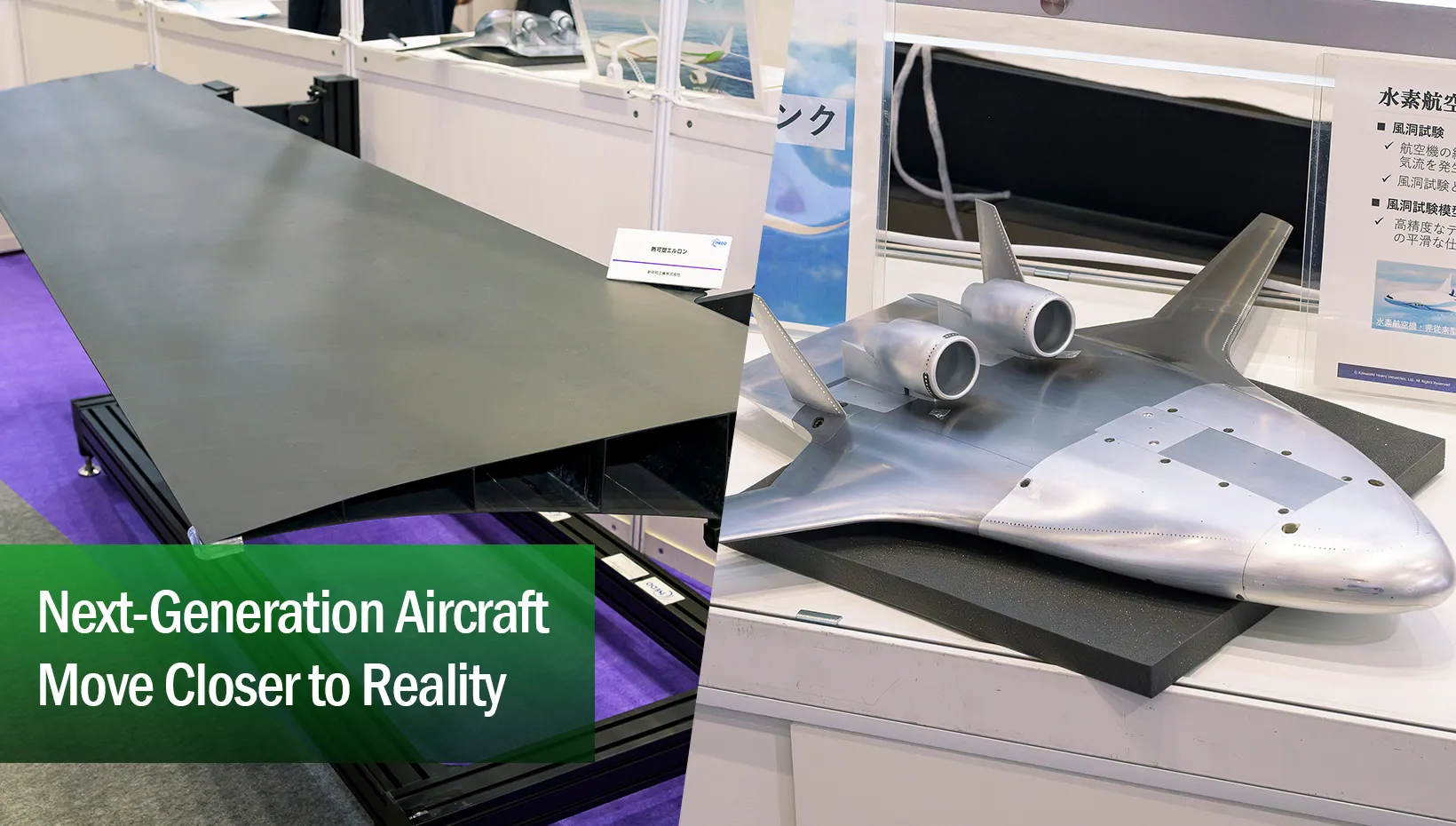
The development of next-generation aircraft is gaining momentum as several core technologies are beginning to take shape. Under NEDO’s Green Innovation (GI) Fund Projects, Kawasaki Heavy Industries is working toward the commercialization of hydrogen-powered aircraft around 2040, advancing key technologies along the way. Meanwhile, ShinMaywa Industries has successfully shifted the material used for aircraft ailerons as part of efforts to develop major structural components. These developments were showcased at the NEDO booth at nano tech 2026 — International Nanotechnology Exhibition & Conference held in January 2026, drawing considerable attention.
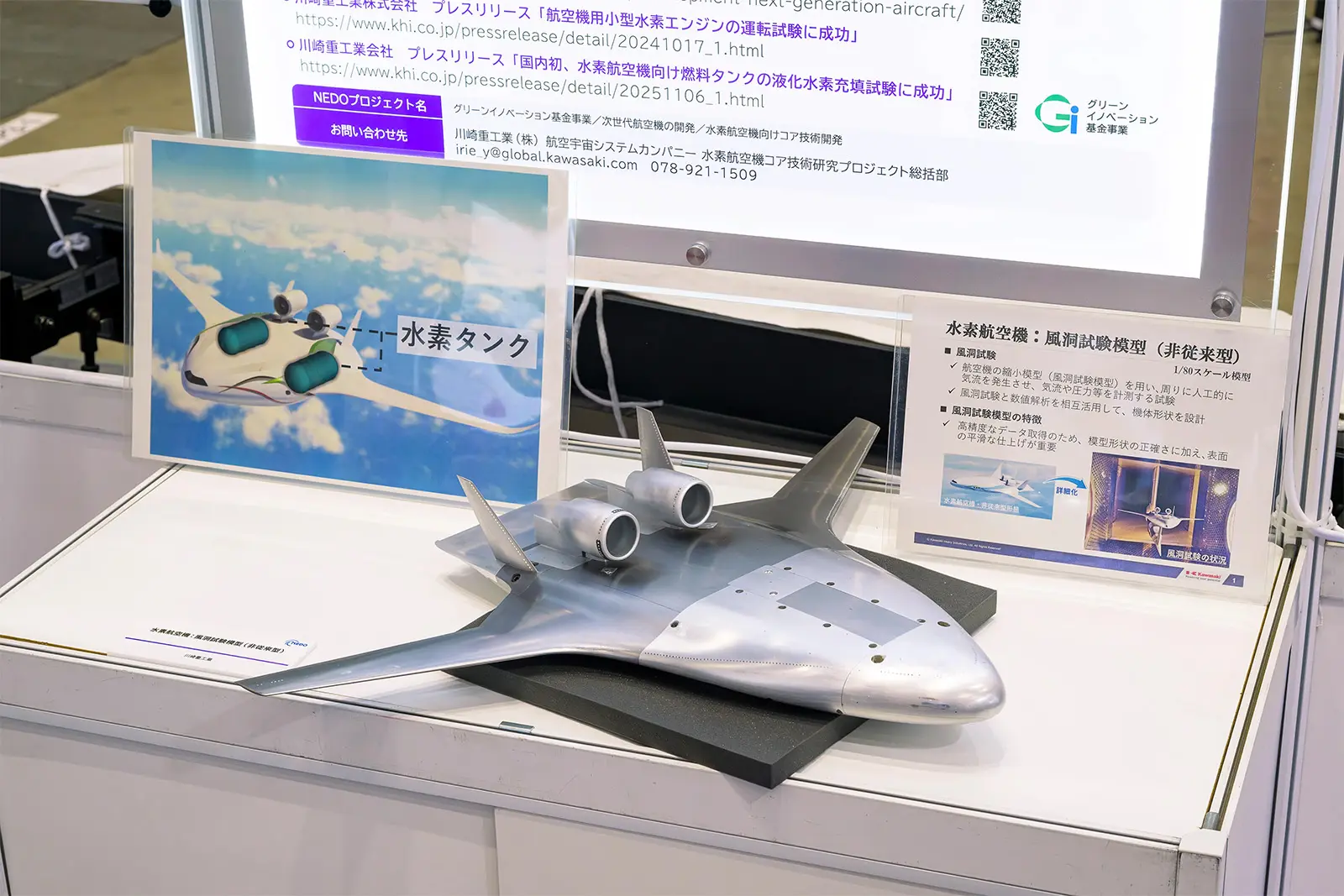
Kawasaki Heavy Industries’ exhibit at the NEDO booth at nano tech 2026
Driven by economic growth, particularly in emerging markets, the global aviation industry is expected to continue its expansion. At the same time, the Assembly of the International Civil Aviation Organization (ICAO) in October 2022 adopted a long-term goal of achieving carbon neutrality by 2050 for international aviation, making decarbonization an urgent challenge for the sector.
To respond to these challenges, the Next-generation Aircraft Development project under NEDO’s GI Fund Projects is advancing technologies essential for carbon-neutral aviation. The effort also seeks to turn the aviation sector’s green transformation into an opportunity to strengthen the global competitiveness of Japan’s aerospace industry, said Hiroyuki Sato, Project Manager and Leader, Aircraft/Equipment Unit, Aerospace Department, NEDO.
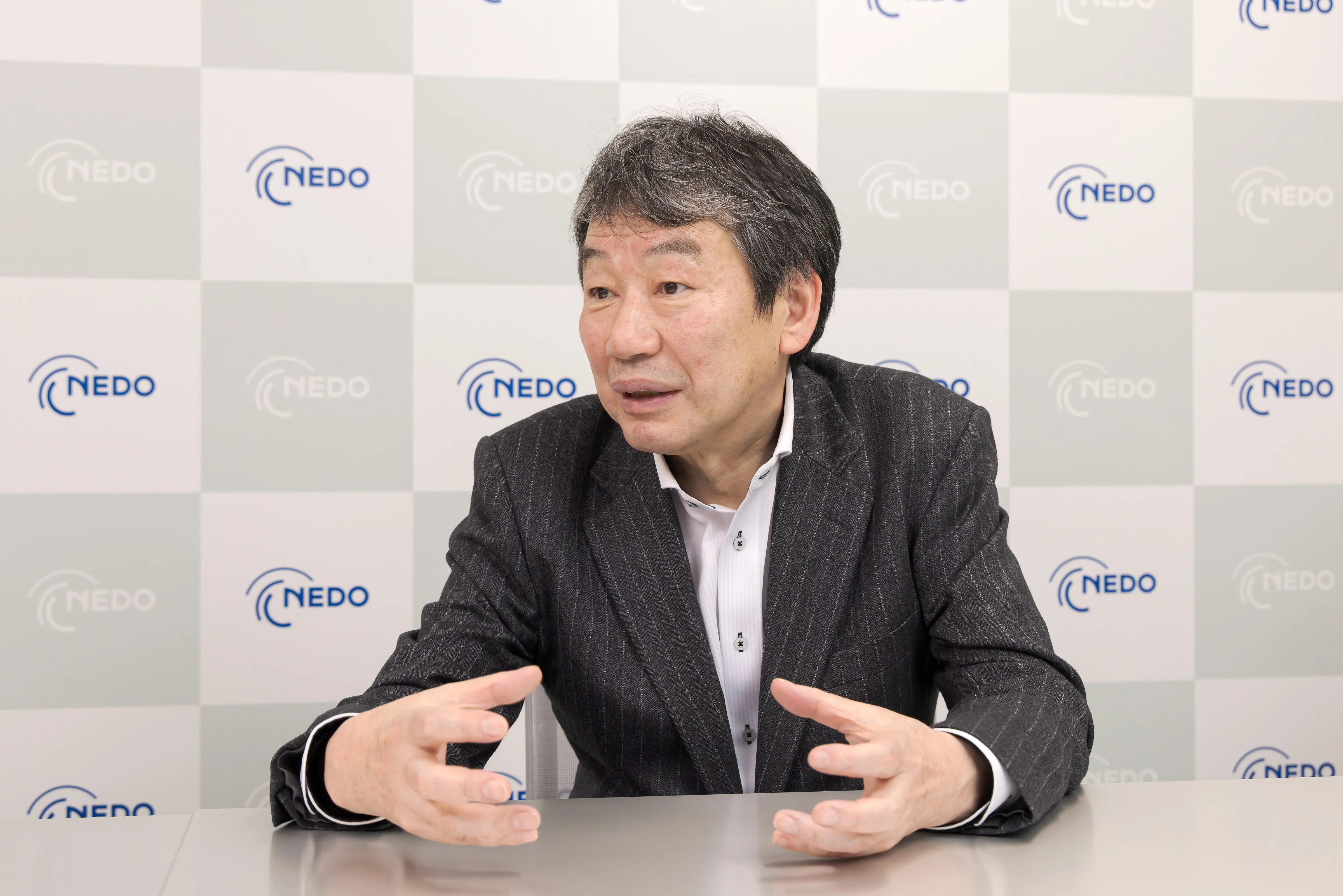
Hiroyuki Sato, Project Manager and Leader, Aircraft/Equipment Unit, Aerospace Department, NEDO
The project is advancing four research areas: development of core technologies for hydrogen aircraft; primary aircraft structures; fuel-cell electric propulsion systems using liquid hydrogen fuel; and technologies for power control and thermal and air management systems. “Until a clear technological frontrunner emerges, it is necessary to explore several possibilities in parallel,” Sato said. Work on core technologies for hydrogen aircraft and aircraft structural components began in fiscal 2021 and has already produced tangible results.
Power-Generation Engine Expertise Applied to Aircraft
The development of core technologies for hydrogen aircraft is being led by Kawasaki Heavy Industries. Hydrogen produces no CO2 when burned, and several initiatives under the GI Fund Projects focus on harnessing it as an energy source. Kawasaki is developing core technologies for aircraft powered by hydrogen-fueled jet engines, with an eye toward future commercial use. “We are applying expertise built over years of work on hydrogen gas turbine engines for power generation to aircraft development,” said Dr. Masahide Kazari, Executive Fellow, Hydrogen Aircraft Core Technology, Aerospace Systems Company, Kawasaki Heavy Industries.
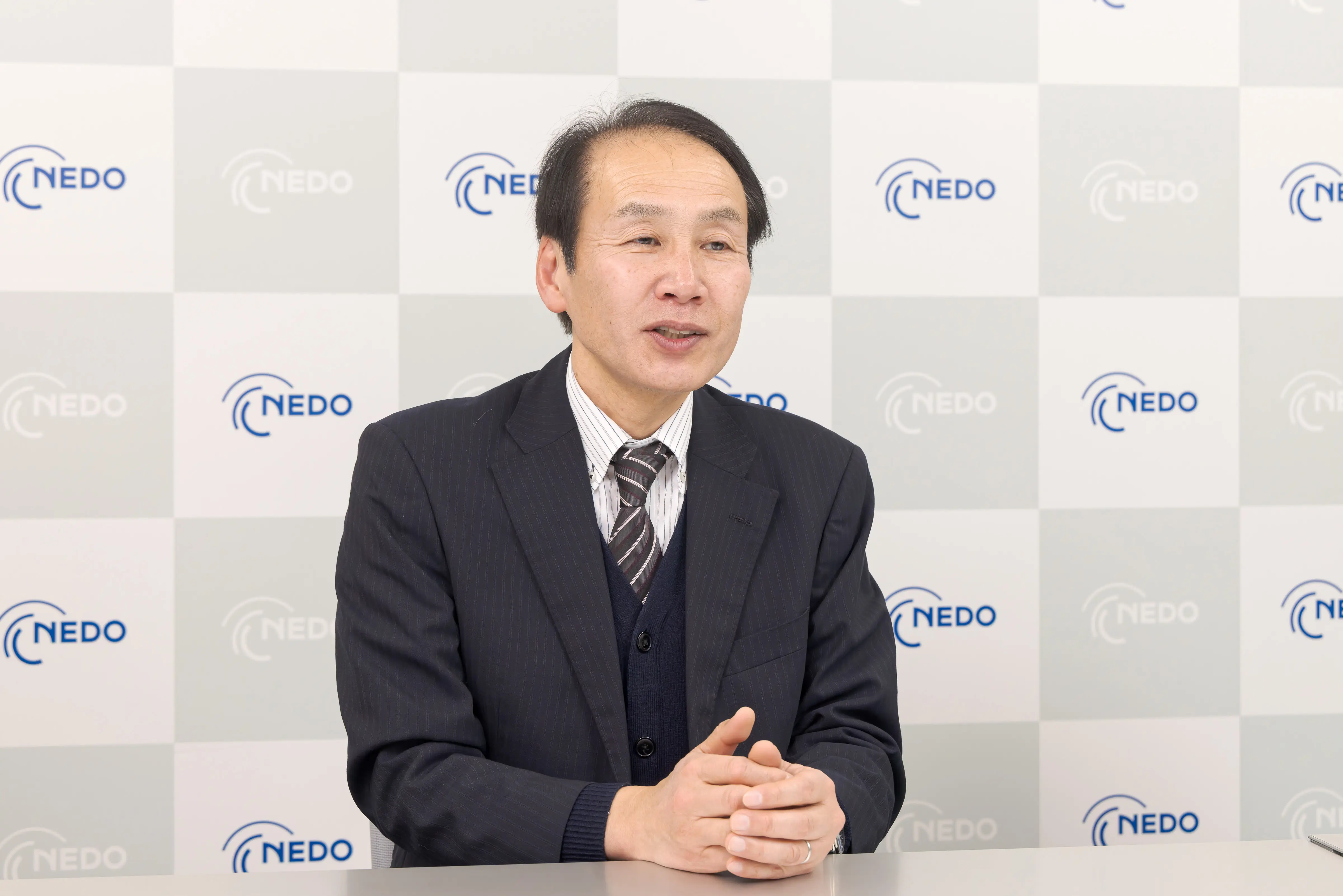
Dr. Masahide Kazari, Executive Fellow, Hydrogen Aircraft Core Technology, Aerospace Systems Company, Kawasaki Heavy Industries
The research focuses on three themes. The first is the development of combustor and system technologies for hydrogen-powered aircraft engines. Hydrogen tends to produce nitrogen oxides (NOx), a major air pollutant, during combustion, and the project aims to reduce NOx emissions to levels below those generated by conventional fossil fuels.
The second theme focuses on technologies for liquefied hydrogen fuel storage tanks. Because hydrogen must be stored in liquid form, it requires about four times the volume of the kerosene used in conventional jet engines to travel the same distance. Liquefied hydrogen must also be kept at an extremely low temperature of −253°C and withstand vibration and shock during flight. Large-capacity tanks therefore need structures that combine thermal insulation, impact resistance and lightweight design.
The third theme examines airframe structures for hydrogen-powered aircraft. Because of the characteristics of the engines and fuel tanks described above, conventional aircraft designs may not meet the requirements. Fuel tanks will need to be much larger. This makes it necessary to explore airframe structures better suited to hydrogen-powered aircraft.
Lowering NOx Emissions with Micro Hydrogen Injection
Kawasaki Heavy Industries is one of the few manufacturers to have established hydrogen-only combustion technology. But further reductions in NOx emissions are still needed. Aircraft engines must also operate under far more demanding conditions than stationary power-generation engines. They must withstand rapid changes in pressure and temperature caused by shifts in altitude and function across a wide output range, from takeoff to cruise.
A key challenge in developing combustor and system technologies for hydrogen-powered aircraft engines lies in the temperature distribution of the flames produced during hydrogen combustion. “We control the process so that the high-temperature regions of the flame remain as small as possible,” Dr. Kazari explained. The higher the flame temperature, the more readily nitrogen oxides (NOx) are formed. Because hydrogen burns at higher temperatures than fossil fuels, conventional combustor designs tend to increase NOx emissions.
To address this challenge, researchers use a method known as micro-mix combustion, in which hydrogen fuel burns as numerous microscopic flames, limiting the formation of high-temperature regions. The concept was developed at FH Aachen University of Applied Sciences, and through more than a decade of joint research with the university, Kawasaki Heavy Industries has adapted the technology for gas turbine engines used in power generation.
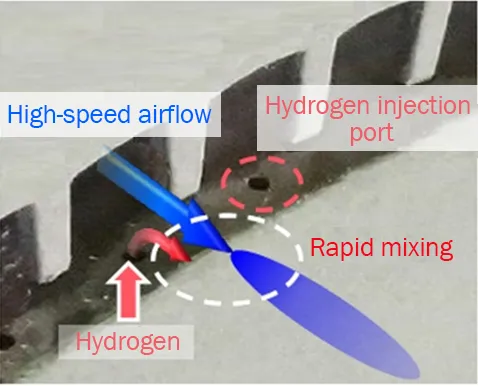
Structure of the burner: Hydrogen is injected through micro injection ports, generating numerous small flames. (Source: Kawasaki Heavy Industries)
In the micro-mix combustor, numerous tiny injection ports—each less than one millimeter in diameter—are arranged around an annular burner. Fuel is injected through these ports in small amounts, forming many microscopic flames. Achieving both low NOx emissions and stable combustion required careful optimization of the burner and combustor geometry. Repeated testing, including combustion simulations and performance measurements of individual components, confirmed that the prototype combustor meets the target performance.
Double-Shell Aluminum Tank for Cryogenic Liquid Hydrogen Storage
Selecting suitable materials posed a major challenge in developing liquefied hydrogen fuel storage tanks. Stainless steel is widely used for such tanks because it combines strength, manufacturability and corrosion resistance. But in aviation, weight quickly becomes a critical constraint.
“Our target was to keep the tank weight to less than twice the weight of the hydrogen fuel,” Dr. Kazari said. Hydrogen requires about four times the volume of conventional fuels but weighs only about one-third as much. If the tank can be kept light enough, the combined weight of the fuel and tank could be lower than that of conventional aircraft.
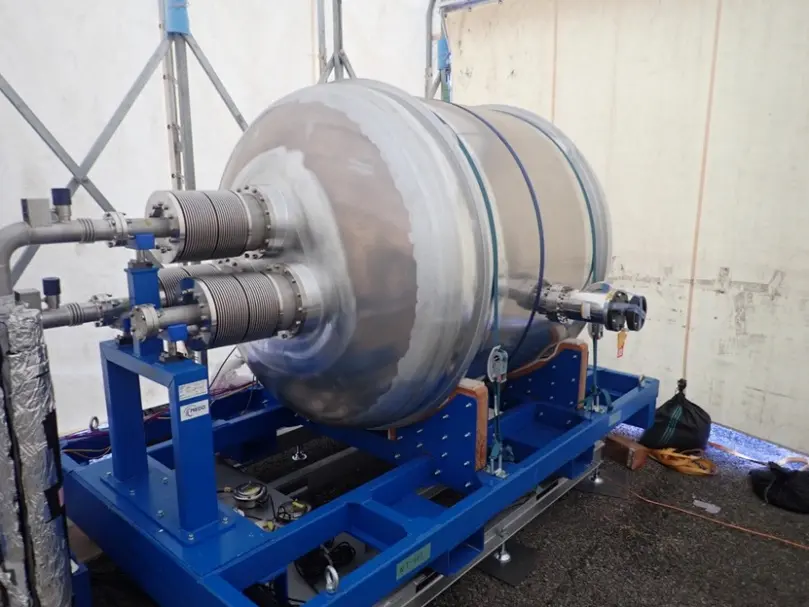
Testing the filling of liquefied hydrogen into the prototype tank (Source: Kawasaki Heavy Industries)
The material chosen was aluminum. At roughly one-third the weight of stainless steel, it offers a significant reduction in mass. Because it is a metal, existing expertise in manufacturing and quality control can also be applied. The tank uses a vacuum-insulated double-shell structure, similar to a thermos, achieving both high thermal insulation and airtightness. Tests have already confirmed that liquefied hydrogen can be filled while maintaining the target weight.
The team is also exploring composite-material tanks. These could further reduce weight, but they also introduce new technical challenges, including preventing leakage at joints with metal components such as piping. For now, the approach will be evaluated in parallel with aluminum tanks.
New Airframe Structures for Hydrogen Aircraft with Fuselage-Mounted Tanks
In studying airframe structures for hydrogen aircraft, the greatest challenge was where to place the fuel storage tanks. Because hydrogen requires about four times the volume of conventional fuels and the tanks must use a large vacuum-insulated double-shell structure, installing them inside the wings, as in conventional aircraft, is not realistic. Hydrogen engines also require dedicated equipment, including liquefied hydrogen pumps and heat exchangers. At the same time, designers must provide sufficient passenger space and incorporate safety measures such as ventilation in case of fuel leakage.
Two airframe configurations are being considered. One closely resembles conventional aircraft in appearance. The fuel tanks are positioned at two locations around the passenger cabin—behind the cockpit and ahead of the tail. Although the fuselage becomes longer, the overall form remains similar to that of existing aircraft.
The other approach places the fuel tanks on both sides of the passenger cabin. In this configuration, the wing and fuselage are integrated, requiring changes to the layout and shape of the main wings and tail. One drawback is that installing windows in the passenger cabin becomes difficult. “One idea under consideration is to place monitors on the cabin walls that display outside views,” said Dr. Ryoichi Tsuzuki, Senior Staff Officer, Project Planning Department, Hydrogen Aircraft Core Technology Research Project Group, Aerospace Systems Company, Kawasaki Heavy Industries.
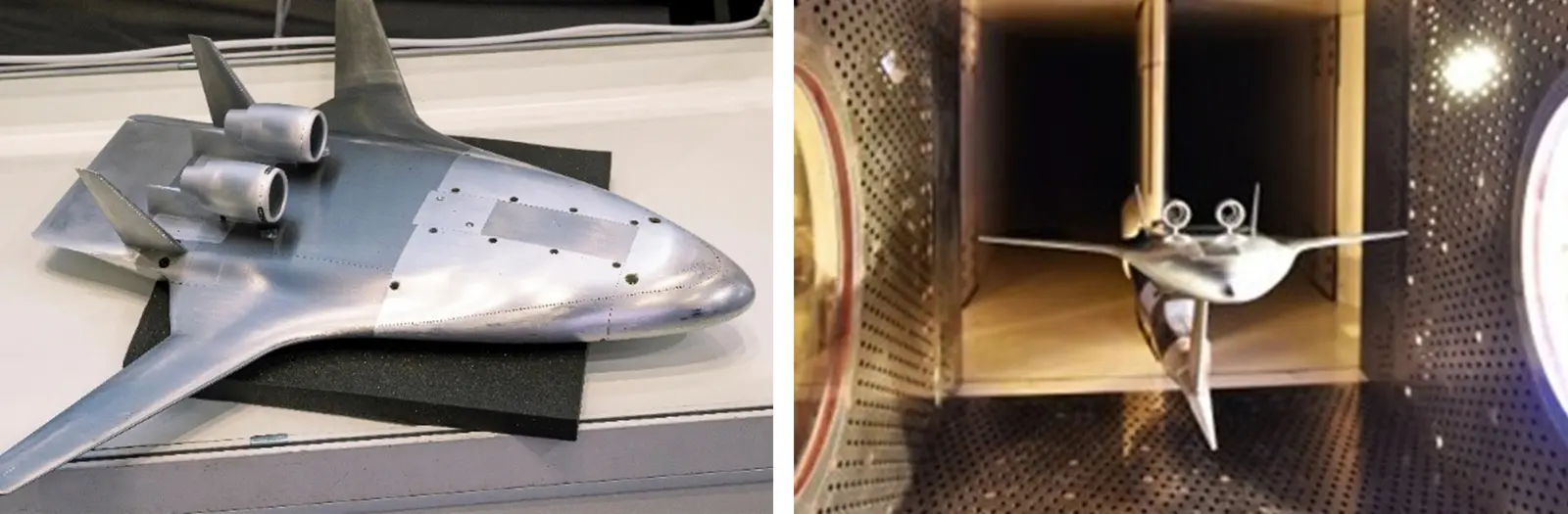
Prototype aircraft model and wind tunnel testing of the design (Source: Kawasaki Heavy Industries)
A test model reproducing these configurations was built, and wind tunnel tests were conducted. The tests, carried out under a range of flight conditions, provided aerodynamic performance data. Going forward, further aerodynamic analysis will be used to optimize component shapes.
From Component Tests to Subsystems and Integrated Testing
Beginning in fiscal 2026, testing of the hydrogen combustor and fuel storage tank will move from individual components to subsystem-level verification that includes surrounding equipment. The combustor will be incorporated into the company’s small jet engine and tested together with heat exchangers and valves. The fuel tank will likewise undergo subsystem testing with pumps, valves and other components. The ultimate goal is an integrated system test connecting the tank to the engine. “We aim to complete subsystem verification by 2028 and conduct integrated testing around 2029,” Dr. Kazari said.
For the airframe structure, the team will continue refining the design while incorporating the results of subsystem verification. It also plans to exchange views with standards organizations based on the knowledge gained through the project. Because hydrogen-powered aircraft require design concepts and safety requirements different from those of conventional aircraft, establishing appropriate standards will be essential. “Through continued discussions with stakeholders, we hope to accelerate the practical realization of hydrogen-powered aircraft,” Dr. Kazari said.
The development of core technologies for hydrogen aircraft will run as a GI Fund Project through 2030. Beyond that, however, the initiative envisions nearly another decade of work toward social implementation, reflecting the scale and long-term vision of this effort.
“From a technological standpoint, development is steadily producing results,” said Takashi Horiumi, Project Coordinator, Aircraft/Equipment Unit, Aerospace Department, NEDO. “But another challenge is how to build momentum across the aviation industry—particularly among aircraft OEMs—for the introduction of hydrogen-powered aircraft. This is an issue that NEDO and the Ministry of Economy, Trade and Industry will need to address together with companies such as Kawasaki Heavy Industries and other participating organizations.”
Horiumi added that broader social and environmental challenges must also be addressed. “Reducing the cost of hydrogen fuel and developing hydrogen infrastructure are challenges that cannot be solved by Japan alone,” he said. “They will require a global effort involving many countries. It is extremely difficult, but it is also a theme full of promise and aspiration.”
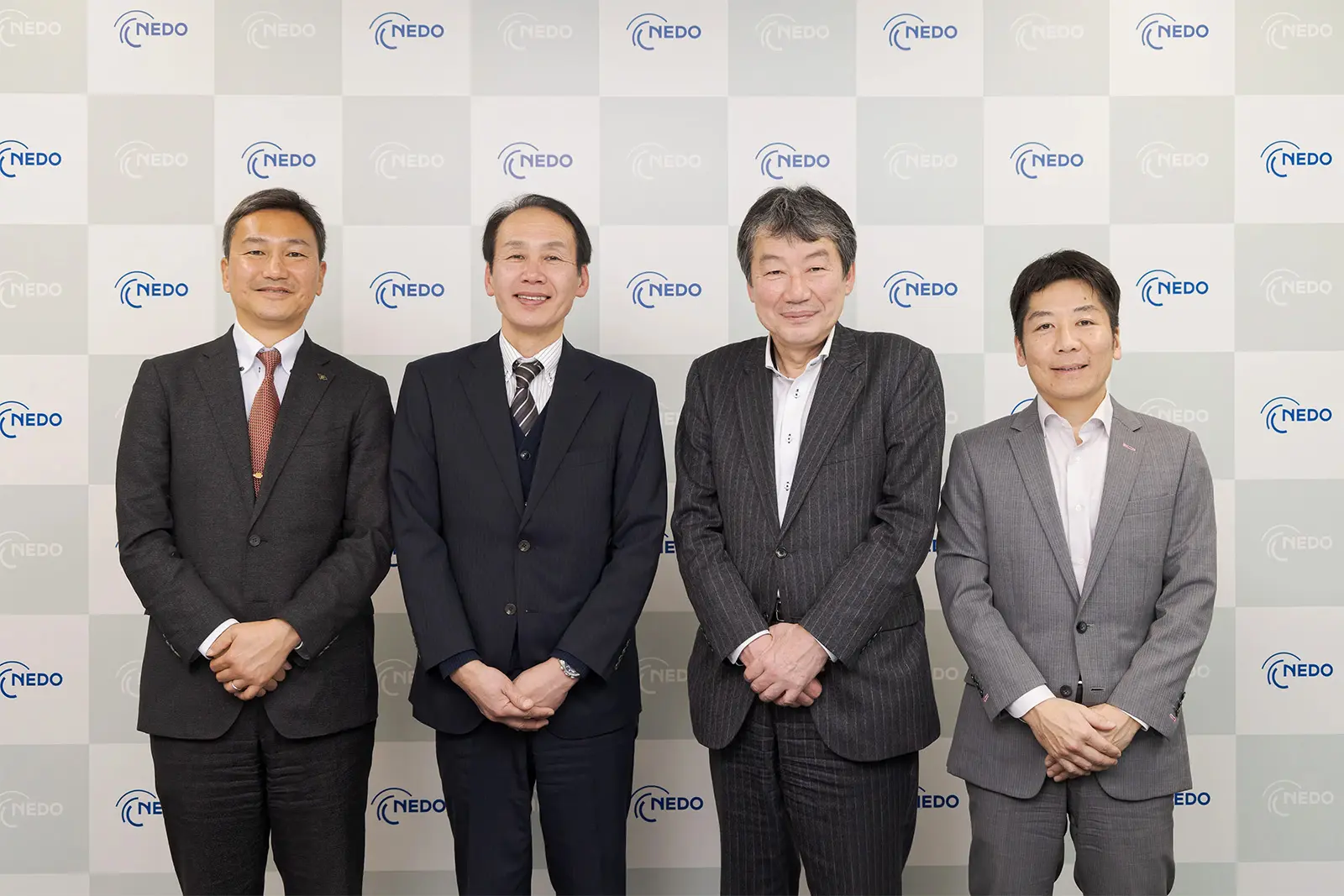
From left: Dr. Ryoichi Tsuzuki, Senior Staff Officer, Hydrogen Aircraft Core Technology Research Project Group, Kawasaki Heavy Industries; Dr. Masahide Kazari, Executive Fellow, Hydrogen Aircraft Core Technology, Kawasaki Heavy Industries; Hiroyuki Sato, Project Manager, Aerospace Department, NEDO; and Takashi Horiumi, Project Coordinator, Aerospace Department, NEDO.
Aileron Weight Cut by 30% with Integrated Composite Structure
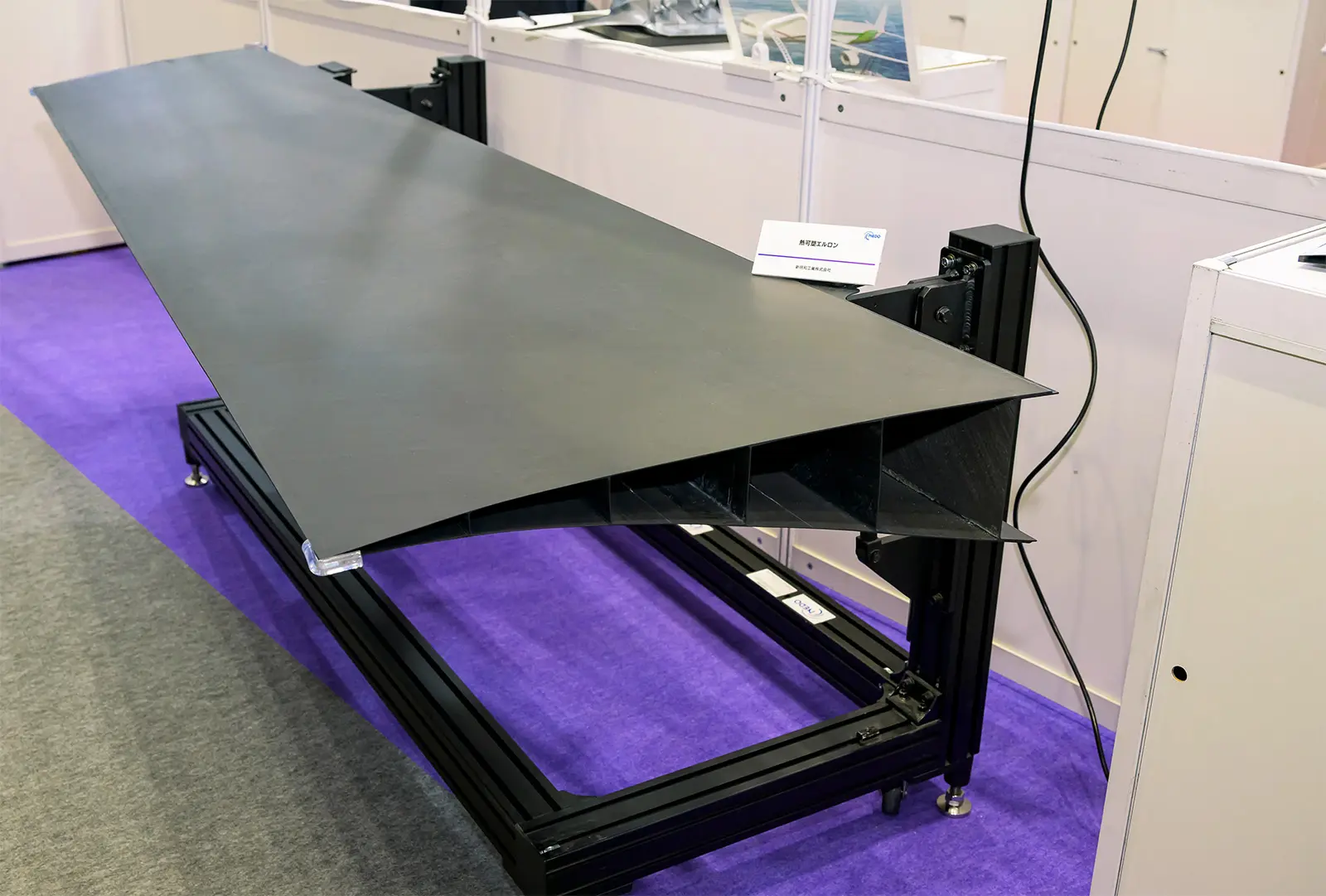
Thermoplastic composite aileron with an integrated structure for weight reduction
At NEDO’s booth at nano tech 2026, a lightweight aileron drew particular attention. Developed by ShinMaywa Industries as part of the primary aircraft structures initiative, it uses thermoplastic composites. The prototype, measuring about 2,500 mm by 700 mm, was showcased as a result of five years of research and development under the GI Fund Projects.
An aileron is a movable control surface mounted on the outer trailing edge of the wing that controls an aircraft’s rolling motion. As aviation seeks to decarbonize, improving fuel efficiency is critical, making weight reduction of structural components essential. Traditionally made of metal, the aileron has been redesigned using thermoplastic composites, achieving about a 30% reduction in weight while maintaining comparable strength and durability.
The aileron’s cross section has a slender, triangular profile. In the thermoplastic composite design, multiple plates, referred to as a core, are sandwiched between the upper and lower skins. Each component has a complex shape and must be firmly joined to withstand the harsh conditions of flight. Using proprietary press-forming and welding technologies, the team succeeded in integrating multiple components into a single structure. As a result, manufacturing steps were reduced by about 80% and production costs by roughly 50%, in addition to weight reduction.
Based on the results, ShinMaywa Industries aims to commercialize the technology by fiscal 2035.
Efforts by Kawasaki Heavy Industries and ShinMaywa Industries to advance next-generation aircraft are “among the most advanced initiatives in the world,” said Sato, the project manager. Although Japan currently has no aircraft OEMs, these advances in key component technologies could help lay the groundwork for a new aviation industry. By supporting the development of cleaner aircraft, NEDO aims to help drive the decarbonization of the aviation sector.
Note: Titles are as of February 2026, at the time of the interview.