
Building Carbon-Neutral Cities – Part 1
Turning Concrete Into a Carbon Sink


As cities move toward carbon neutrality, efforts can broadly be divided into two phases: how cities are built and how they operate.
The construction works of civil engineering structures, e.g. roads and buildings forms the foundation of urban development. Much of the urban landscape is supported by concrete structures, and concrete and its main component, cement, are attracting attention because of their high potential to store and fix CO2. In recent years, high-rise timber buildings have also been gaining attention, highlighting the potential of timber to store large amounts of CO2 over long periods.
The other key pillar of urban carbon neutrality is energy use during urban operation. In particular, next-generation perovskite solar cells, which are lightweight, flexible, and potentially low-cost, are attracting growing interest for installation on building roofs and walls.
NEDO’s Green Innovation (GI) Fund Projects are tackling these aspects of urban carbon neutrality through three projects: the Development of Technology for Producing Concrete and Cement Using CO2, the Development of Negative Emissions Technologies in Agriculture, Forestry, and Fisheries Industries, and the Development of Next-Generation Solar Cells.
This two-part series explores the challenges these projects address in urban development and the benefits they are expected to bring.
The Development of Technology for Producing Concrete and Cement Using CO2 project, featured in this first part, focuses on concrete and cement, which are widely used in civil engineering structures and buildings. By reducing CO2 emissions, increasing CO2 sequestration, and lowering associated costs, the project aims to expand the use of these materials.
In concrete, initiatives include “Development of materials, manufacturing methods, and quality control systems for innovative carbon negative concrete” and “Development of carbon pool concrete and implementation in pavements and structures.” In cement, efforts are underway, including “Development of cement manufacturing processes with CO2 recovery and Related Technologies.”
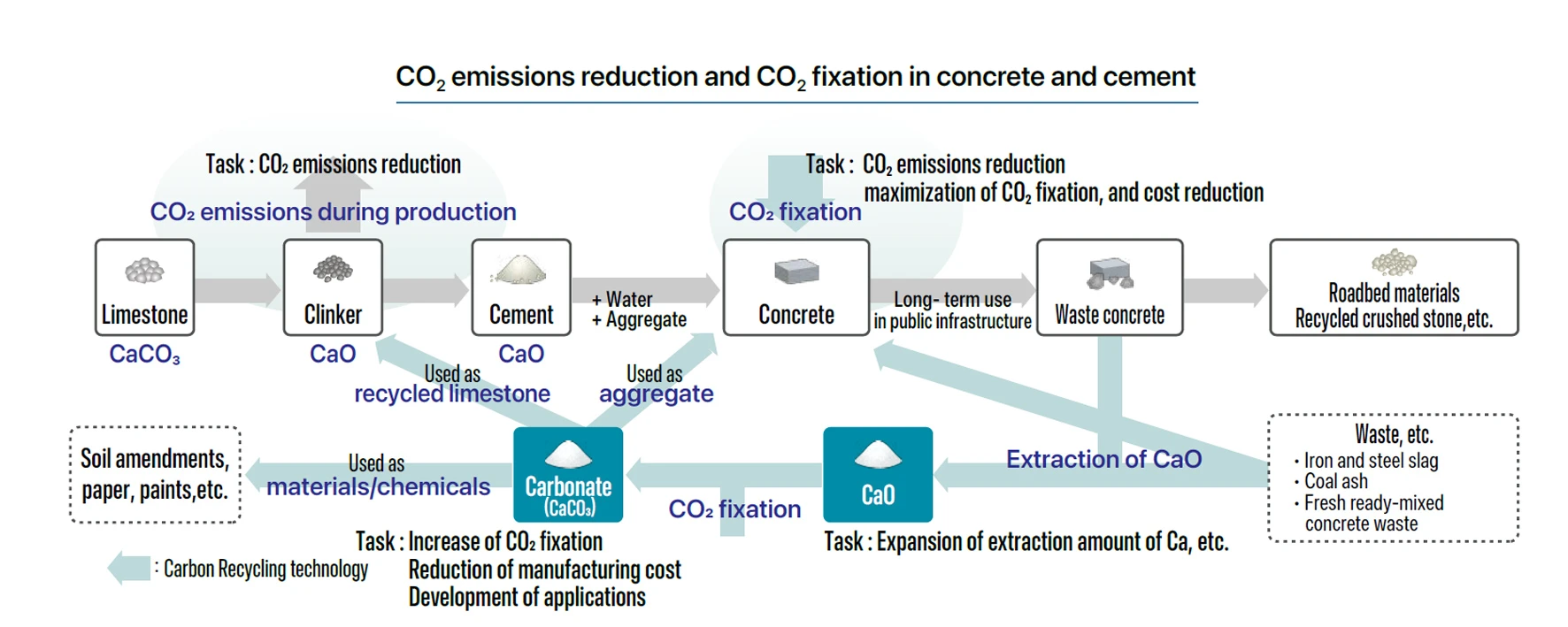
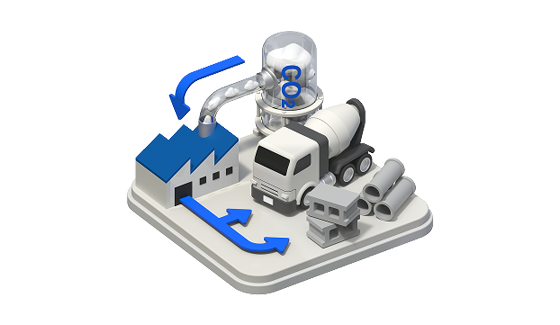
Conceptual Diagram of the Carbon Recycling Cycle for Concrete and Cement under NEDO’s Green Innovation (GI) Fund Projects – Development of Technology for Producing Concrete and Cement Using CO2
Three Concrete Technologies for Diverse Applications
“Stop increasing CO2 emissions and reduce them below zero.” Guided by this goal, 54 companies, universities, and research institutions are working together under the initiative known as CUCO, which is part of the project “Development of materials, manufacturing methods, and a quality control system for innovative carbon negative concrete.”
“If the three concrete technologies being developed under the GI Fund Projects are increasingly adopted in urban development, carbon neutrality in cities will advance,” says Kazuhisa Yoda, Project Manager of the Mineralization Section, Circular Economy Department, NEDO. The three technologies are collectively known as environmentally friendly concrete.
The first is cement-reduced concrete, in which part of the cement is replaced with materials such as ground granulated blast furnace slag, a by-product of steel production, thereby reducing calculated CO2 emissions.
The second is CO2-fixing concrete, which fixes CO2 as calcium carbonate (CaCO3) through a process known as carbonation curing, where the concrete is exposed to CO2.
The third is CCU (Carbon Capture and Utilization) material-based concrete. In this approach, CO2 is reacted in advance with calcium derived from waste materials to produce calcium carbonate powder or aggregate, which are then mixed into the concrete to store CO2.
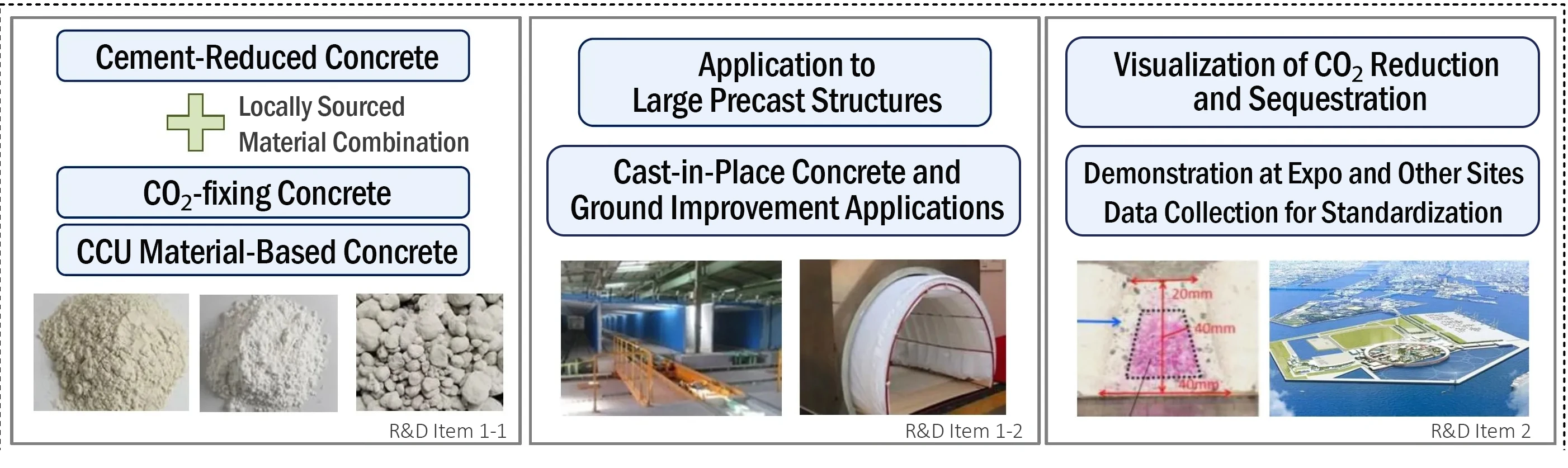
Research and development scope of the project “Development of materials, manufacturing methods, and a quality control system for innovative carbon negative concrete”
Source: NEDO, Project Strategic Vision for Innovative Carbon-Negative Concrete
The project aims to develop concrete that achieves CO2 reduction and fixation of 310–350 kg/m3, including 120–200 kg/m3 of CO2 fixed in the concrete, by combining these technologies and further developing them while reducing costs. The target applications include both building construction and civil engineering, covering both precast and cast-in-place concrete.
“Our ultimate goal is to maximize the amount of CO2 that can be absorbed and permanently stored. However, depending on the construction site, certain types of cement may not be available due to logistics constraints, and in some cases cast-in-place concrete may not be feasible. Taking these conditions and cost considerations into account, CUCO can provide concrete solutions tailored to local needs, which is one of its key strengths. As the project is still at an early stage, we plan to respond flexibly using currently available technologies,” says Yoda.
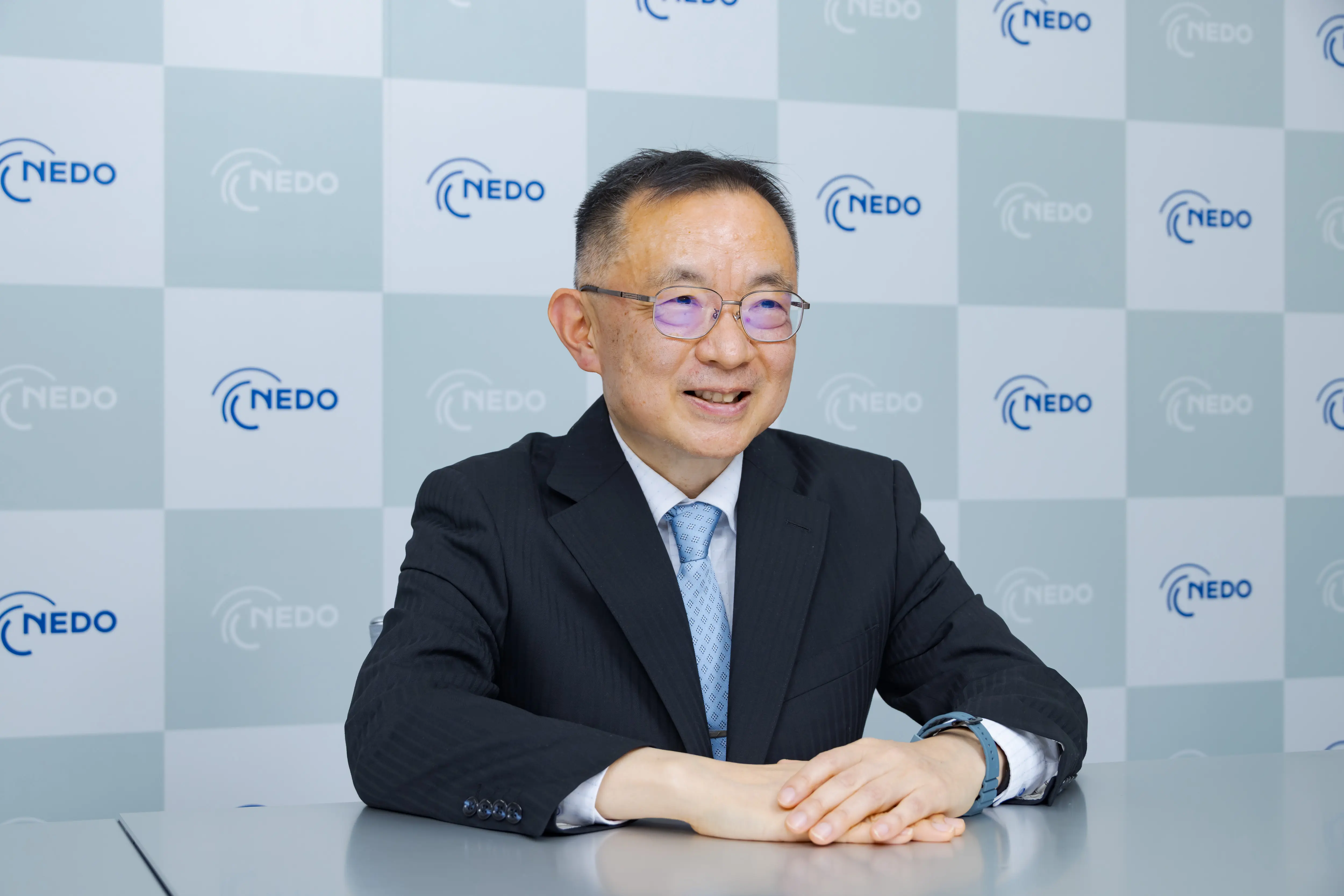
Kazuhisa Yoda, Project Manager, Mineralization Section, Circular Economy Department, NEDO
The main challenge at present is cost. “Using the technologies currently under development, the cost is several times higher than that of conventional concrete at this stage. In addition, the cost of procuring CO2 for absorption and storage in concrete remains high. To reduce procurement costs, we believe it will be necessary to use lower-concentration CO2 sources, such as flue gas from industrial facilities, rather than purified industrial CO2, and to adopt a local production for local consumption approach,” notes Yoda, outlining how these challenges can be addressed.
Another key issue is compliance with regulations and standards. In the building sector, the Building Standards Act defines quality standards for concrete used in structural components, and such concrete cannot generally be used as a structural material unless it complies with Japanese Industrial Standards (JIS) or has received ministerial approval. Yoda explains, “In civil engineering, another challenge is that project owners tend to place strong emphasis on past performance when deciding whether to adopt a new material. One of the quickest ways to increase adoption is to get included in government initiatives such as action plans by the Ministry of Land, Infrastructure, Transport and Tourism and to build a track record through government procurement.”
In the building sector, the technology has already been demonstrated at Expo 2025 Osaka, Kansai. One example is the environmentally friendly concrete dome, the CUCO®-SUICOM Dome, which was built using cement-reduced concrete and CO2-sequestering concrete. This CO2-sequestering concrete was also used for paving blocks at the EXPO Arena.
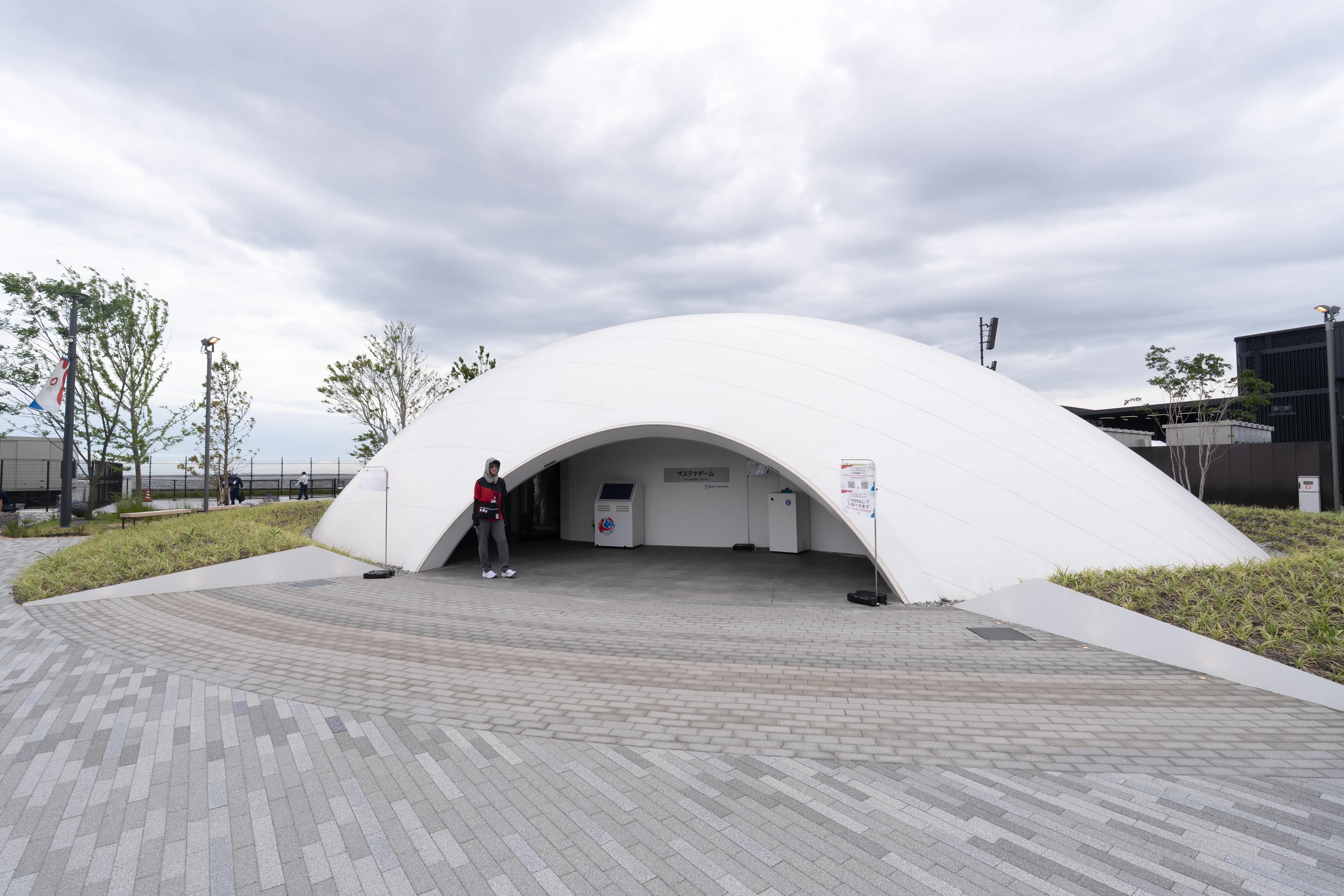
The CUCO®-SUICOM Dome, an environmentally friendly concrete dome located near the West Gate Plaza at Expo 2025 Osaka, Kansai
In parallel with the technological development of CUCO, methods for evaluating the amount of CO2 absorbed and stored are also being developed. Yoda explains, “We are also looking at the use of the J-Credit Scheme, which certifies CO2 emission reductions and removals as credits. Once we establish a reliable evaluation method, it can be incorporated into J-Credits and similar schemes, which we believe will help promote wider adoption of environmentally friendly concrete. By combining these hardware technologies with evaluation methods, we can clearly demonstrate the performance and reliability of the concrete.”
Using Construction Waste to Store CO2 for Ready-Mix Concrete
Another initiative is CPCC, the Carbon Pool Concrete Consortium. A total of 15 companies, universities and research institutions are participating in the development of new technologies aimed at reducing and storing CO2 to help mitigate global warming. The technology, known as CP Concrete (Carbon Pool Concrete), has a key feature: “Waste from the ready-mix concrete business and the construction industry is recycled as a resource and used as a material to store CO2,” says Tetsuo Kurimoto, Project Manager of the Mineralization Section in NEDO’s Circular Economy Department.
Ready-mix concrete plants generate several types of waste, including sludge water, sludge cake, and returned concrete. Demolition sites also generate concrete rubble. These wastes are collected at facilities called CP Centers, where CO2 is fixed in the materials to produce CCU (carbon capture and utilization) materials. The materials are then transported to ready-mix concrete plants to produce CP Concrete. The CO2 used at the CP Centers is expected to come from municipal waste incineration plants and biomass power plants.
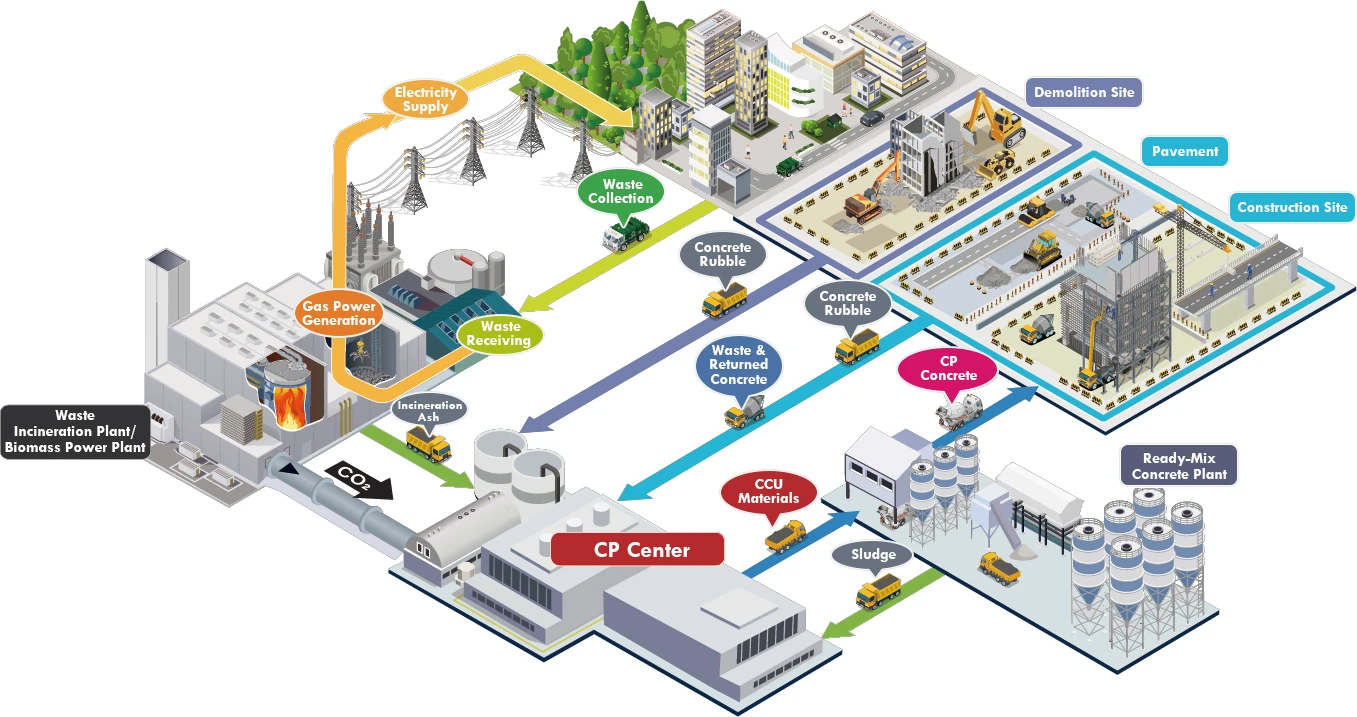
Conceptual diagram of regional resource circulation centered on CP Centers
Source: Business Strategy Vision, “Development of carbon pool concrete and implementation in pavements and structures”
Another advantage of CP Concrete is that it can be produced using existing equipment at ready-mix concrete plants. “Some members of the consortium operate ready-mix concrete plants, and many ready-mix concrete businesses are small and medium-sized enterprises. We are therefore exploring ways to make this feasible through local production for local consumption without requiring excessive capital investment,” says Kurimoto.
Concrete is essential to urban development. The central idea of this project is to make effective use of waste generated through urban activities and put it to effective use in building cities.
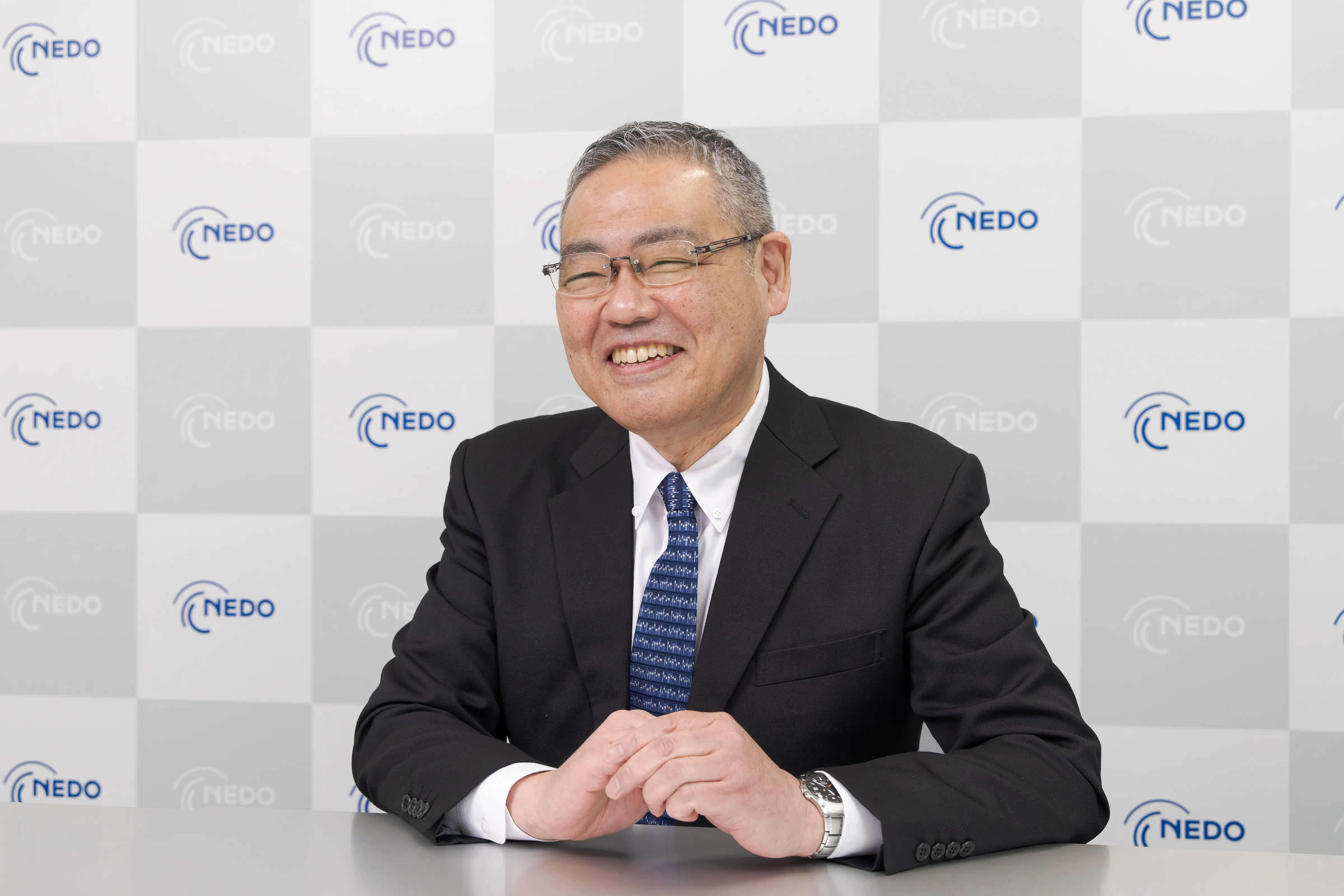
Tetsuo Kurimoto, Project Manager, Mineralization Section, Circular Economy Department, NEDO
CP Concrete aims to fix between 120 and 160 kg of CO2 per cubic meter. This target is based on the R&D and social implementation plan formulated by the Ministry of Economy, Trade and Industry (METI). The plan calls for reducing to zero the roughly 310 kg of CO2 emitted per cubic meter of ready-mix concrete made with ordinary Portland cement, the most widely used cement. About 190 kg of this is expected to be reduced through low-carbon cement. The remaining emissions will be reduced through the technologies being developed in this project.
When fixing CO2 into materials made from waste, the key is to keep the process both affordable and fast. “The R&D and social implementation plan also states that costs should be comparable to conventional concrete, so cost considerations are essential,” says Kurimoto. “For example, we are exploring methods to dissolve CO2 in water as fine bubbles invisible to the eye and then fix it into the material through an efficient adsorption process.”
Looking ahead to social implementation, paving has been positioned as the first main application, as the consortium includes paving companies. “We are also considering civil engineering and building structures. From the perspective of urban development, safety and reliability must be ensured. In construction, there is the Building Standards Act, and in civil engineering there are various rules and regulations set by the Ministry of Land, Infrastructure, Transport and Tourism and the Ministry of Economy, Trade and Industry. We are studying how to meet these requirements as we move forward,” says Kurimoto.
At Expo 2025 Osaka, Kansai, CP Concrete was used in demonstration tests for benches and sections of pavement at the Future City Pavilion. The project was also showcased in a booth at the pavilion, which attracted more than 300,000 visitors in total.
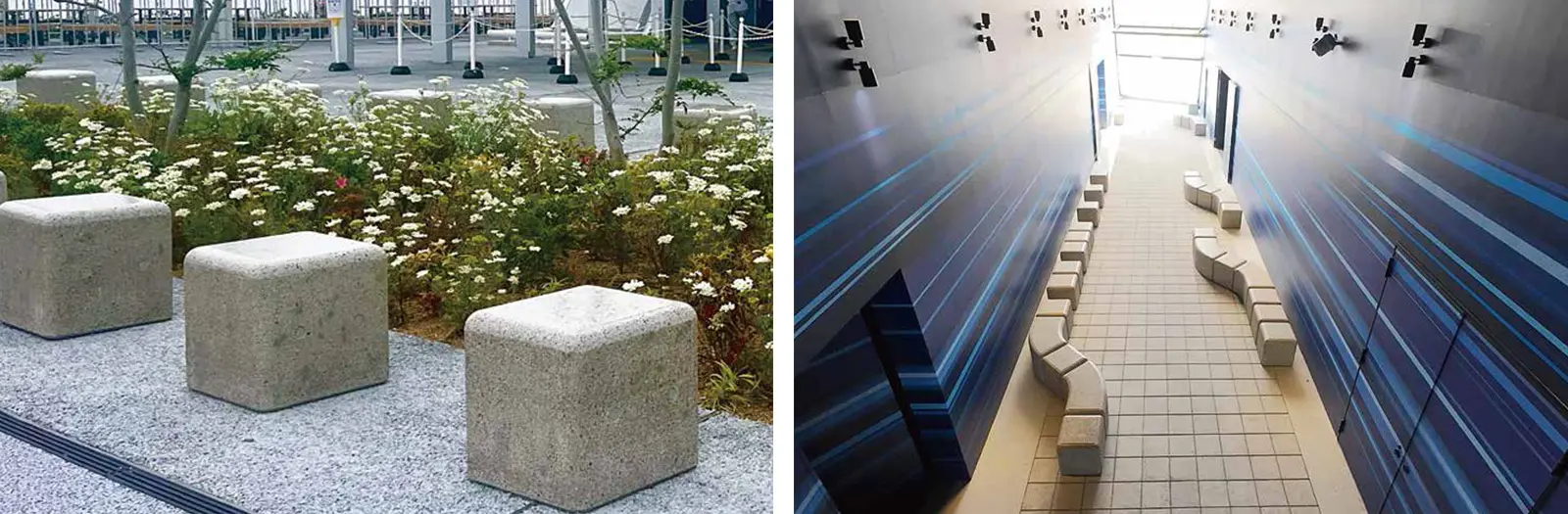
CP Concrete applications at Expo 2025 Osaka, Kansai (Future City Pavilion: benches and pavement).
Source: Carbon Pool Concrete Consortium website (https://carbon-pool.com/)
Collaboration with municipal waste incineration plants and biomass power plants will be a major challenge in establishing regional resource circulation with CP Centers at the core. “Implementation will not progress without cooperation from these stakeholders. Another important issue is how widely CP Centers should be distributed,” Kurimoto notes. “Gravel and sand used as CCU materials are heavy and inexpensive, so a distributed setup would shorten transport distances. However, this would also reduce the supply area for CP Concrete and increase construction costs per unit of output. The optimal balance between distribution and centralization will need to be determined through demonstration projects.”
Capturing CO2 in the Cement Production Process
The cement industry plays a significant role in resource circulation, incorporating waste and industrial by-products as raw materials accounting for about 10% of total recycled resources. Japan is also among the global leaders in energy-efficient cement production. However, the calcination of limestone generates large amounts of CO2, with raw material-related emissions accounting for roughly 60% of the total. The cement industry accounts for about 3–4% of Japan’s total CO2 emissions, making emissions reduction a major challenge on the road to carbon neutrality.
Cement is an essential material supporting urban development and social infrastructure. However, like the steel industry, it is one of the hard-to-abate sectors where reducing CO2 emissions remains challenging with conventional technologies, highlighting the need for technological breakthroughs.
To address these challenges, the GI Fund Project is advancing two R&D initiatives: the Design and demonstration of CO2-capturing cement production process, and the Establishment of carbonation technology using various calcium sources.
The first initiative involves capturing raw material-derived CO2 using a CO2 capture calciner and converting it into fuel by synthesizing methane from the captured CO2 and hydrogen. Technologies for methane synthesis and utilization suitable for cement production are currently being demonstrated at a pilot facility, and feasibility studies are planned for the implementation phase.
Shunichiro Uchida, Project Manager, Mineralization Section, Circular Economy Department, NEDO
A CO2 capture calciner integrates a CO2 capture process into the calciner of a conventional preheater system, further advancing an already world-class energy-efficient technology. The system utilizes existing preheaters and rotary kilns, while using oxygen instead of air in the CO2 capture calciner, enabling the recovery of highly concentrated CO2 from a separate exhaust gas stream from the kiln. Demonstration tests have been underway since 2024 at a pilot facility in Sanyo-Onoda City, Yamaguchi Prefecture, with demonstration at a commercial plant scheduled to begin in fiscal year 2026.
“Overseas, CO2 capture is mainly carried out using chemical absorption technology known as the amine method. However, at domestic cement plants, installing the large-scale equipment required for the amine method is often difficult due to site constraints,” says Shunichiro Uchida, Project Manager of the Mineralization Section, Circular Economy Department at NEDO. “To address this, the project incorporates a process that directly captures CO2 during limestone calcination, enabling efficient recovery with compact equipment.”
The section aims to reduce the energy required for CO2 capture by more than 20% compared with conventional amine-based systems.
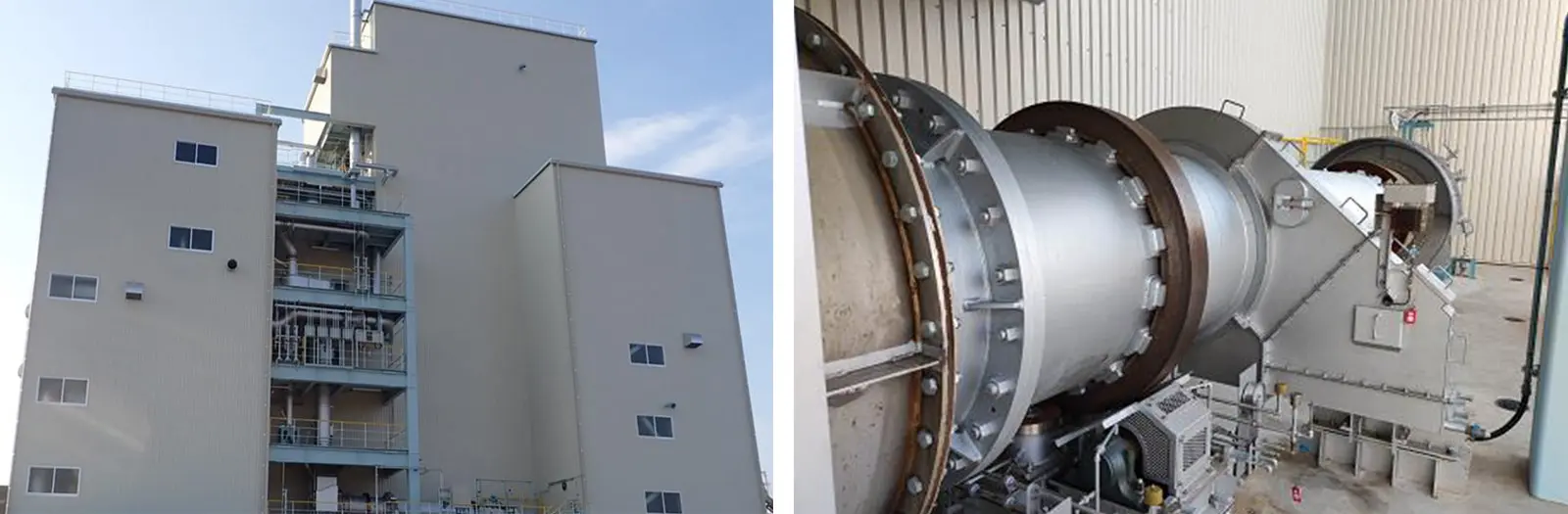
Pilot facility in Sanyo-Onoda City, Yamaguchi Prefecture, equipped with a CO2 capture calciner
Source: Project Strategic Vision, “Design and demonstration of CO2-capturing cement production process”
Meanwhile, the second initiative (Establishment of carbonation technology using various calcium sources)is developing technologies that combine calcium-rich waste materials with CO2 emitted from cement plants.
“This process produces artificial limestone that can substitute for natural limestone. Because the artificial limestone incorporates CO2, it contributes to carbon neutrality, and that idea led to the launch of this development project,” says Koji Kawamata, Project Manager of the Mineralization Section, Circular Economy Department at NEDO.
As its name suggests, the project explores a variety of waste materials. Initial targets include municipal incineration ash and waste gypsum board from building demolition and reconstruction. Using exhaust gas from cement plants, these materials are converted through an efficient indirect carbonation process into artificial limestone with a purity CaCO3 of around 95%.
Sludge water from ready-mixed concrete plants and precast concrete product factories is also being targeted. At precast concrete plants, CO2 generated during steam curing can be mixed into sludge water to produce artificial limestone that incorporates CO2.
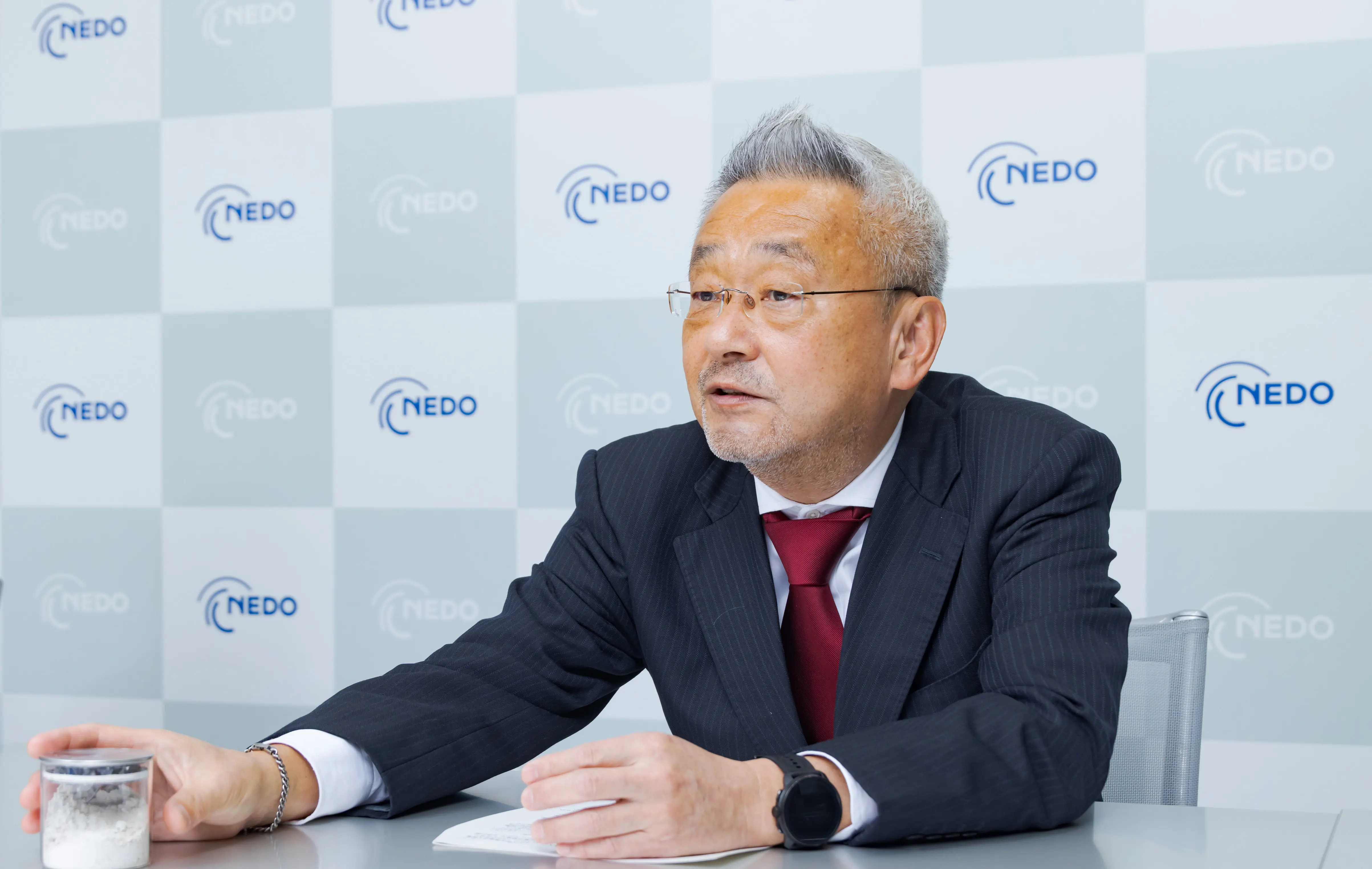
Koji Kawamata, Project Manager, Mineralization Section, Circular Economy Department, NEDO, holding a bottle containing a sample of artificial limestone produced from waste gypsum board powder
“This process uses direct carbonation, in which CO2 is bubbled through sludge water. Because it requires only simple equipment, it can be widely adopted across the country as a local production for local consumption model. Improving purity remains a challenge, but we are developing these technologies in parallel,” says Kawamata.
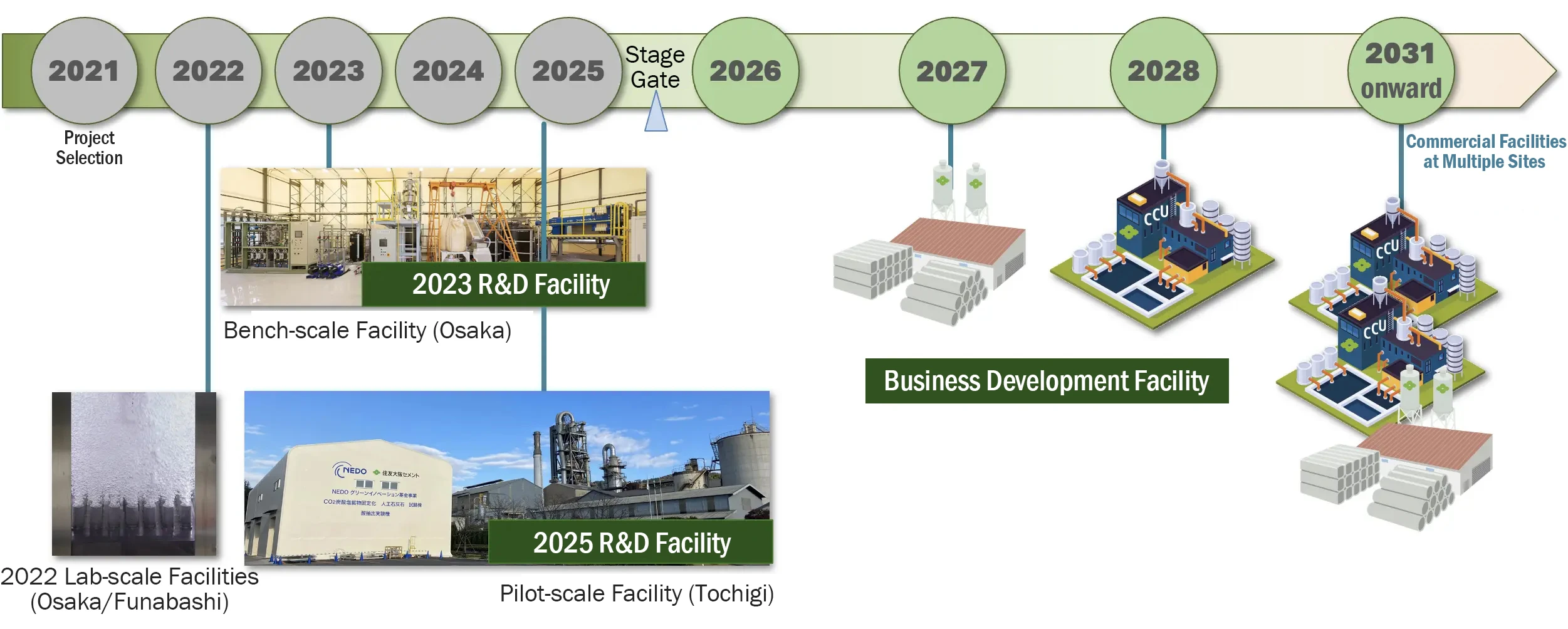
Project roadmap after selection in 2021, with a pilot facility in operation since 2025
Source: Sumitomo Osaka Cement
Following the revision of the JIS standard for Portland cement, the allowable proportion of minor additional constituents is expected to increase from 5% to 10%. Because artificial limestone has quality comparable to natural limestone, it can be used as a minor additional constituent. Cement produced with artificial limestone complies with JIS standards and can therefore be used in civil engineering structures and buildings in the same way as conventional cement.
Demonstration projects are expanding across a variety of applications. For example, at Expo 2025 Osaka, Kansai, concrete blocks made with artificial limestone were used in the exterior landscaping of the Sumitomo Pavilion. Artificial limestone has also been used in road marking paint, taking advantage of its white color. Another example is semi-flexible pavement, in which special cement milk containing artificial limestone is poured into porous asphalt mixtures. This type of pavement has been adopted at intersections and bus stops to prevent rutting.
Through collaboration among participating companies, the project aims to capture CO2 emitted from cement plants and use it to carbonate waste materials.
Part 1 of this urban development feature series highlighted concrete manufacturing technologies using CO2 and introduced related GI Fund Projects. Part 2 will highlight the development of isotropic large cross-section timber members for high-rise timber buildings, as well as the establishment of mass production technology and field demonstrations for lightweight flexible perovskite solar cells.