
Japan's Largest Water Electrolysis Hub Begins Operation
A Key Step Toward 100 MW-Class Systems by 2030


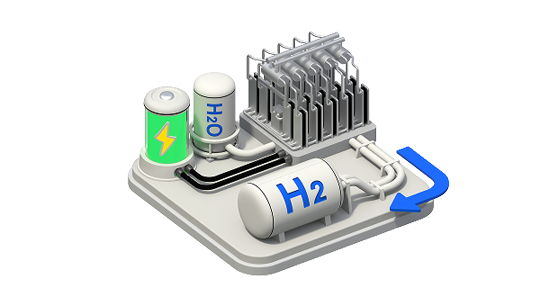
To enable the large-scale, cost-effective production and supply of hydrogen using renewable electricity, NEDO is advancing its Green Innovation (GI) Fund Projects, Hydrogen Production through Water Electrolysis Using Power from Renewables.
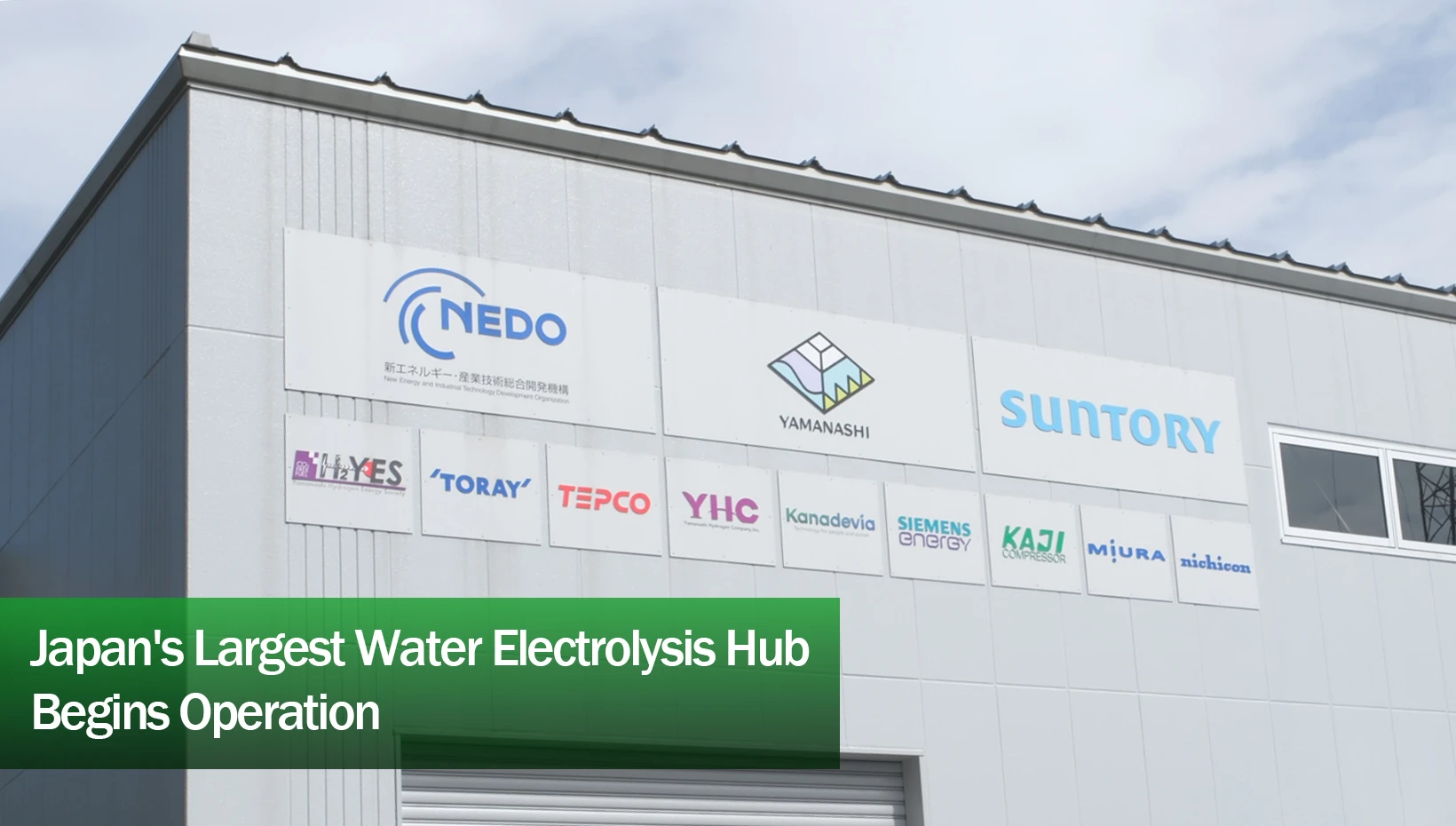
Under the leadership of the Yamanashi Prefectural Government Public Enterprise Bureau, a consortium of 10 organizations established Green Hydrogen Park -Hakushu- in Hokuto City, Yamanashi Prefecture. The park houses Japan's largest hydrogen production facility of its kind and represents the prefecture's vision of becoming a center for hydrogen- and fuel cell-related industries.
The facility produces green hydrogen, generated without emitting CO₂ during the production process. Since October 2025, it has been supplied to the neighboring Suntory Minami Alps Hakushu Water Plant as an alternative to fossil fuels.
The widespread adoption of hydrogen requires not only supply infrastructure but also the creation of demand. Green Hydrogen Park offers a model in which hydrogen supply and utilization are developed side by side.
16 MW Capacity, Up to 2,200 Tons of Hydrogen per Year
The water electrolysis facility installed at Green Hydrogen Park has a capacity of 16 MW, making it one of the largest facilities of its kind in Japan and a stepping stone toward the 100 MW-class hydrogen production systems the government aims to realize by 2030. Operating continuously 24 hours a day, 365 days a year, the facility can produce up to 2,200 tons of hydrogen annually and reduce CO₂ emissions by approximately 16,000 tons per year.
Hydrogen is produced using two water electrolysis systems: a 6 MW system developed by Kanadevia Corporation and a 10 MW system developed by Siemens Energy. Designed with future 100 MW-class systems in mind, the Kanadevia system consists of 2 MW modules that enable scalable expansion.
Both systems use Toray's hydrocarbon-based electrolyte membrane to produce hydrogen from purified water through electrolysis. This polymer electrolyte membrane (PEM) technology enables a more compact system configuration than other water electrolysis technologies, such as alkaline and solid oxide electrolysis cell (SOEC) systems, while also offering superior responsiveness to fluctuations in power supply. These characteristics make PEM technology well suited to pairing with renewable energy sources such as solar and wind power, whose output varies over time. In separate projects, NEDO is also advancing alkaline and SOEC technologies, each of which offers distinct advantages.
The hydrogen produced by the water electrolysis systems is supplied to the neighboring Suntory Minami Alps Hakushu Water Plant through a stainless-steel pipeline approximately 2 km in length. To align the output pressures of the two systems, the lower-pressure output from the Siemens Energy system is compressed to approximately 8 atmospheres—the same pressure as the Kanadevia system—using a dehumidifying compressor developed by Kaji Technology Corporation. At the Suntory Minami Alps Hakushu Water Plant, the hydrogen fuels hydrogen boilers developed by Miura Co., Ltd. The steam they generate is used in the sterilization process for the production of Suntory Tennensui.
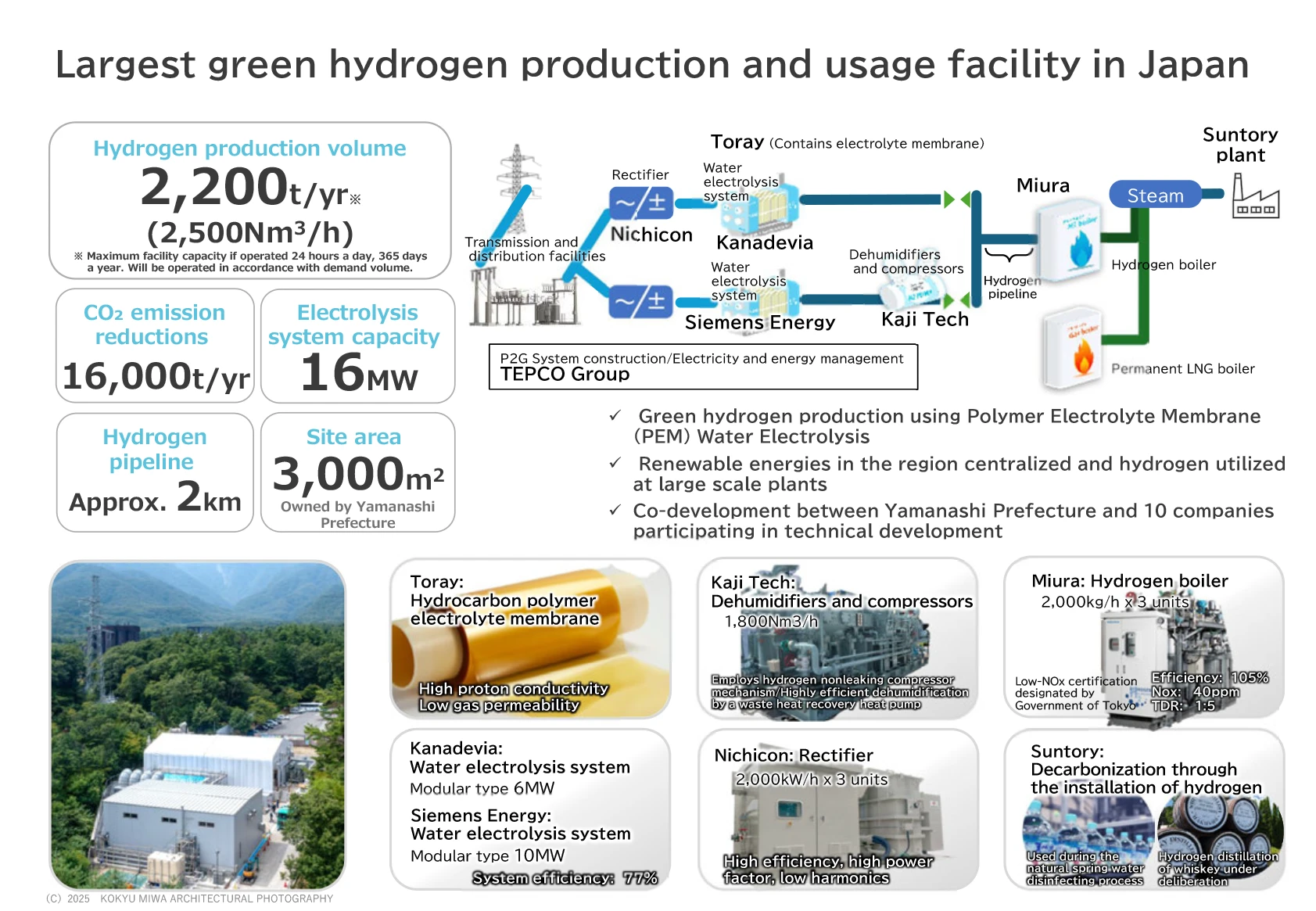
Japan's largest green hydrogen production and utilization facility, Green Hydrogen Park -Hakushu-, consists of two hydrogen production systems developed by Kanadevia and Siemens Energy and supplies hydrogen via pipeline to the neighboring Suntory Minami Alps Hakushu Water Plant for use as an alternative to fossil fuels. (Source: Yamanashi Prefectural Government Public Enterprise Bureau)
To ensure that hydrogen is produced using renewable electricity, Green Hydrogen Park uses power supplied under TEPCO's Green Basic Plan, which provides electricity with virtually zero CO₂ emissions. The electricity is received at high voltage and converted by Nichicon's transformer-rectifiers into the DC voltage required for the water electrolysis systems and the voltages required by other equipment.
Scaling Up Toward 100 MW-Class Systems
Realizing a hydrogen-based society will require progress on three fronts: expanding supply infrastructure, lowering production costs, and creating demand. The initiatives at Green Hydrogen Park embody this approach by addressing all three simultaneously. Specifically, NEDO's project advances "Development of energy demand conversion and utilization technology using a large-scale P2G system for achieving carbon neutrality" under its R&D category, "Technology development for increasing the size of water electrolysers, and Power-to-X large-scale demonstrations." The project includes: (1) Development of technology for increased size and modularization of water electrolysers; (2) Development of technology for mounting superior new materials on equipment; and (3) Demonstration of decarbonization of heat demand, industrial processes, etc.
The first focus is on developing technologies that enable water electrolysis systems to be scaled up and modularized for mass production. "The government has set a goal of realizing 100 MW PEM systems by 2030," says NEDO's Takanori Kugimiya. "To extend the achievements of the GI Fund Projects to future large-scale systems, we concluded that developing a core module and combining multiple units according to the required capacity would offer the most practical path forward."
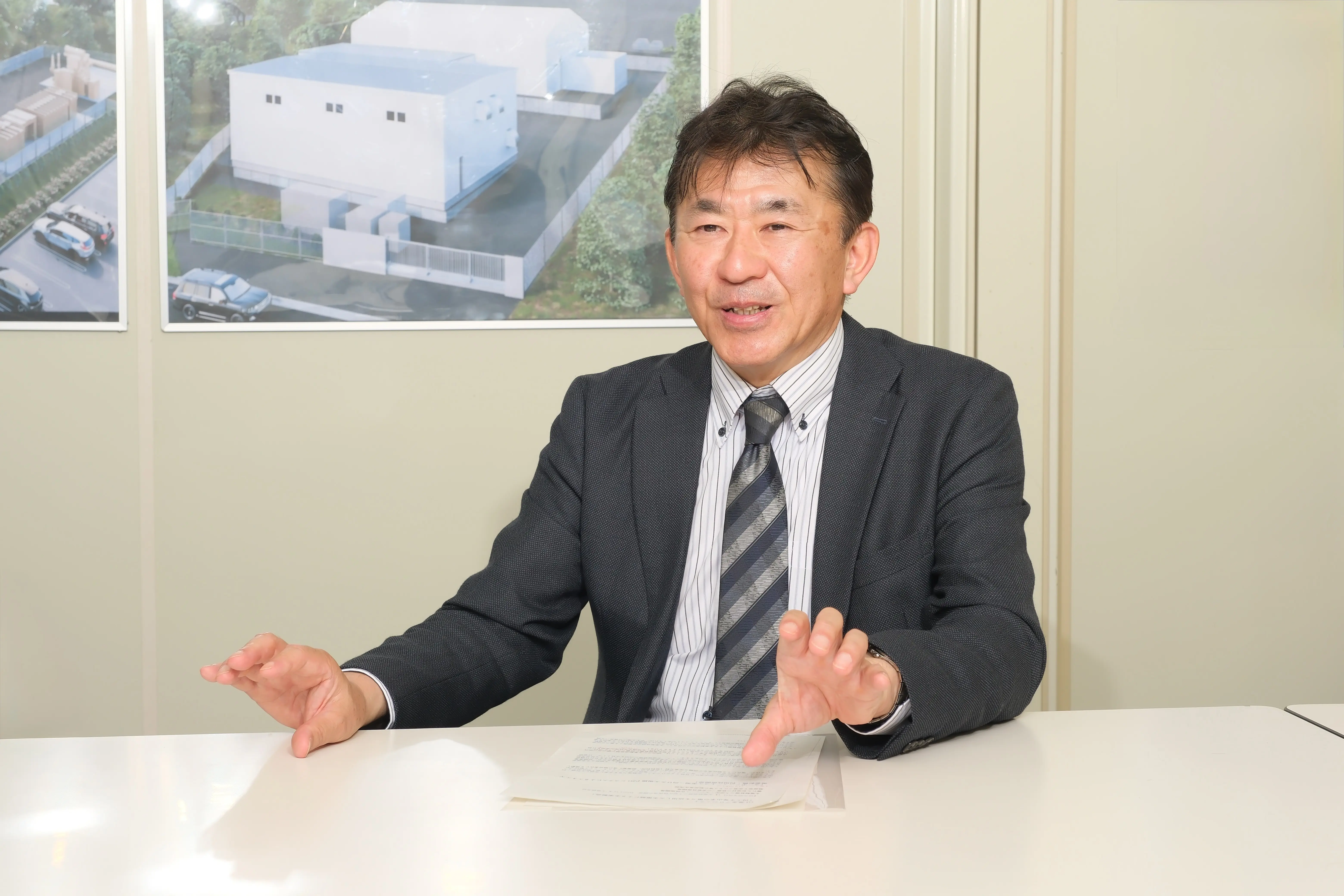
Takanori Kugimiya, Ph.D., Project Manager and Director, GI Hydrogen Section, Applied Technology Unit, Hydrogen and Ammonia Department, NEDO
To meet these requirements, Kanadevia developed a 2 MW module consisting of three 670 kW water electrolysis cells arranged side by side, each equipped with 125 electrolysis membranes. At Green Hydrogen Park, three of these modules are combined to achieve a total capacity of 6 MW. The modular architecture is designed with future scale-up in mind. Additional modules can be added as demand grows, enabling the same concept to be expanded into 100 MW-class hydrogen production facilities. Auxiliary equipment, including rectifiers, is shared across 10 MW blocks of five modules, reducing the need for additional supporting equipment as systems become larger.
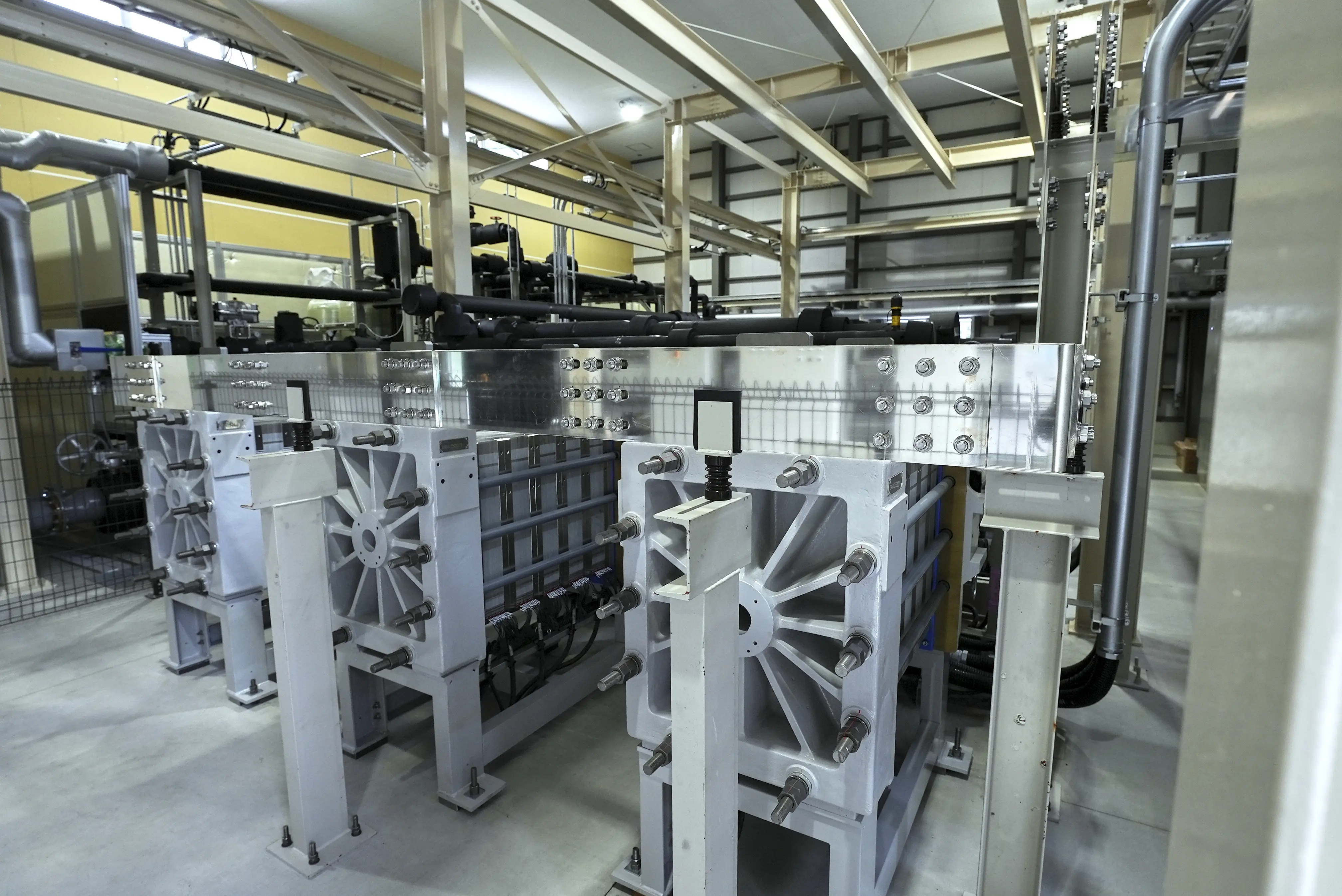
Kanadevia's hydrogen production system. Three 2 MW modules, each comprising three 670 kW water electrolysis cells, are arranged in rows. Auxiliary equipment, including rectifiers, can be seen in the far left background. (Source: Yamanashi Prefectural Government Public Enterprise Bureau)
The second focus is on developing technologies to integrate advanced components and materials into water electrolysis systems in ways that improve both cost efficiency and performance. Toray's hydrocarbon-based electrolyte membrane used in these systems offers world-leading performance. However, achieving the same level of performance in large-scale commercial systems requires close collaboration with electrolyser manufacturers to optimize stack structures and develop electrodes that reduce the use of costly catalyst metals. To this end, Siemens Energy's 10 MW water electrolysis system will be used to develop and validate technologies for integrating membranes and other key components. Another objective is the development of a large-scale drying and compression system for the moisture-laden hydrogen produced by the system, with Kaji Technology leading this effort.
The third focus is on developing models for shifting energy demand from fossil fuels to hydrogen through water electrolysis-based hydrogen supply systems. "The key to reducing CO₂ emissions through hydrogen lies in expanding its use as an alternative to fossil fuels," says Kugimiya. "Steam generation is a good example. Replacing heavy oil or LNG with renewable hydrogen as boiler fuel can virtually eliminate CO₂ emissions." The project is also working to package technologies that make hydrogen easier to adopt for companies operating factories and other facilities. This includes standardized approaches for deploying hydrogen boilers, as well as integrated operational models covering both hydrogen production and end use.
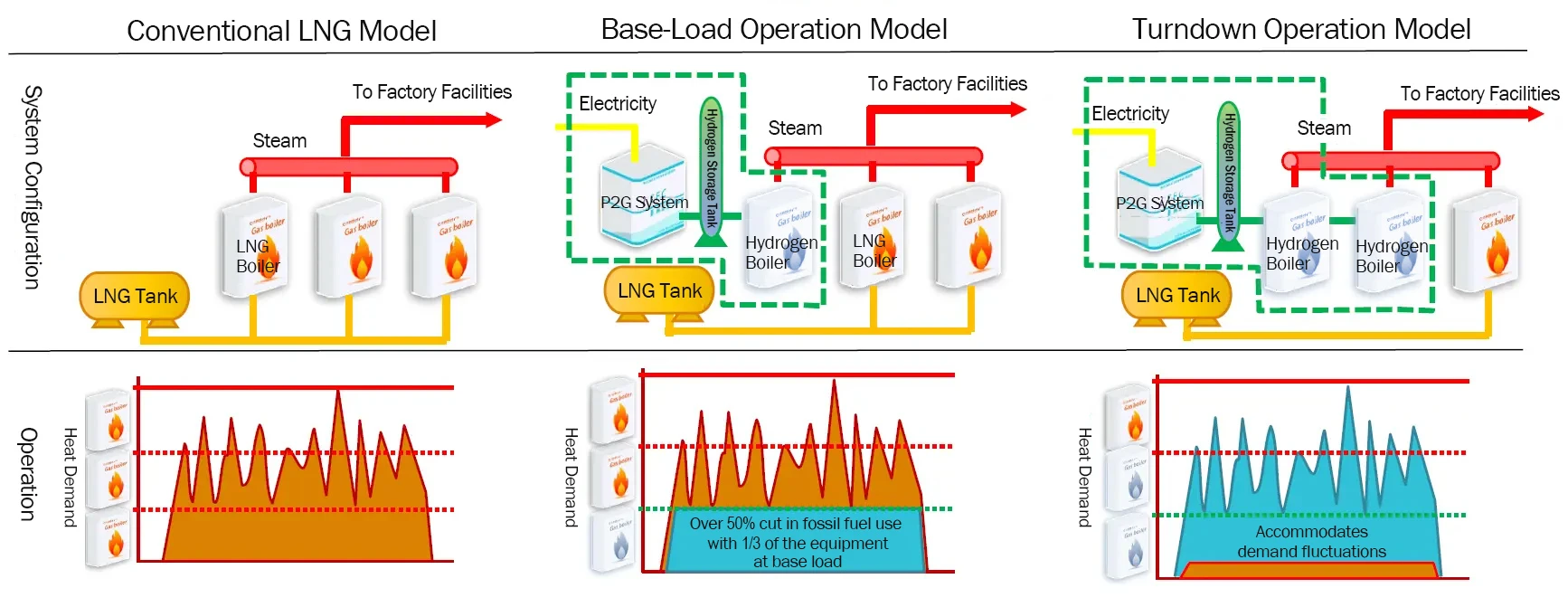
Conceptual diagram of a hydrogen-fueled system replacing LNG. The project is evaluating both a base-load model and a demand-responsive turndown model to develop operational know-how. (Source: Yamanashi Prefectural Government Public Enterprise Bureau)
The project aims to reduce hydrogen production costs to ¥1,050,000/Nm³/h (¥250,000/kW) by December 2026, with a long-term target of ¥272,000/Nm³/h (¥65,000/kW) by 2030. System efficiency is projected to reach 80% (4.4 kWh/Nm³) by 2030, while a target of 77% (4.6 kWh/Nm³) has been set for December 2026.
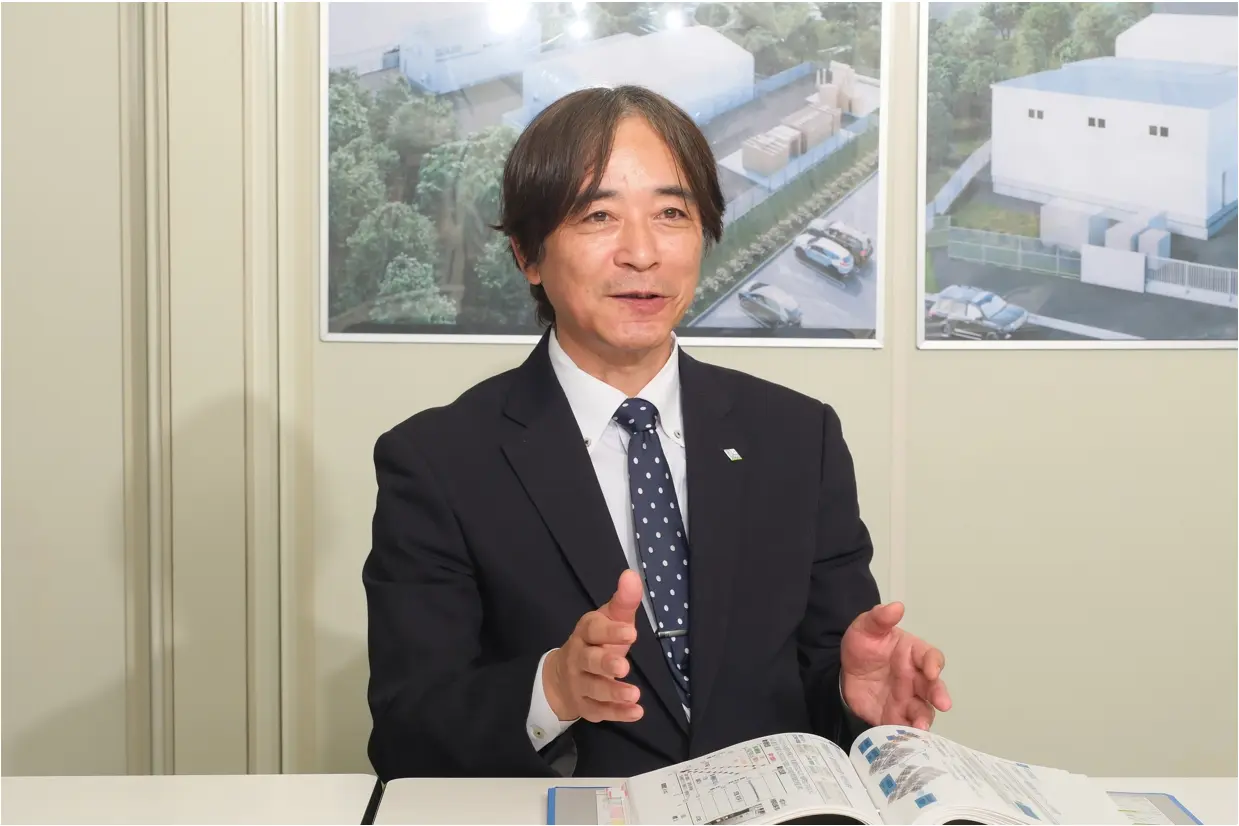
Noriaki Watanabe, Division Chief, New Energy System Promotion Division, New Energy System Promotion Section, Yamanashi Prefectural Government Public Enterprise Bureau
As development and evaluation of the three focus areas continue, Yamanashi Prefectural Government Public Enterprise Bureau and the participating companies are also building a body of operational know-how. “We use an energy management system to monitor conversion efficiency and other key performance indicators while tracking the impact of seasonal temperature changes and fluctuations in demand from Suntory, our hydrogen off-taker,” says Noriaki Watanabe of the Yamanashi Prefectural Government Public Enterprise Bureau. The project is also validating the reliability of the hydrogen supply system by demonstrating stable operation under changing weather and demand conditions.
Building on Experience from Komekurayama
The Yamanashi Prefectural Government Public Enterprise Bureau serves as the lead organization for this project theme. It is also spearheading the “Yamanashi Hydrogen and Fuel Cell Valley” initiative, which aims to establish the region as a hub for hydrogen and fuel cell industries.
From September 2016 to August 2022, Yamanashi Prefectural Government Public Enterprise Bureau developed and operated the Komekurayama Electric Power Storage Technology Research Site in Kofu City under NEDO's project entitled “Technology Development for the Realization of the Hydrogen Society: Technology Development of Systems Using Renewable Energy-Derived Hydrogen—P2G System Technology Development Aiming at Building a CO2-free Hydrogen Society.” The facility was centered on a PEM water electrolysis system with a capacity of 1.5 MW (maximum 2.3 MW) and was built adjacent to the Komekurayama Solar Power Plant.
Even after the NEDO project concluded, the site has continued to produce hydrogen and supply high-pressure hydrogen gas to local companies and other users as part of ongoing efforts to promote practical hydrogen applications. "Nearly five years have passed since the Komekurayama facility began operation,” says Watanabe. “It has been running steadily and reliably without any major problems."
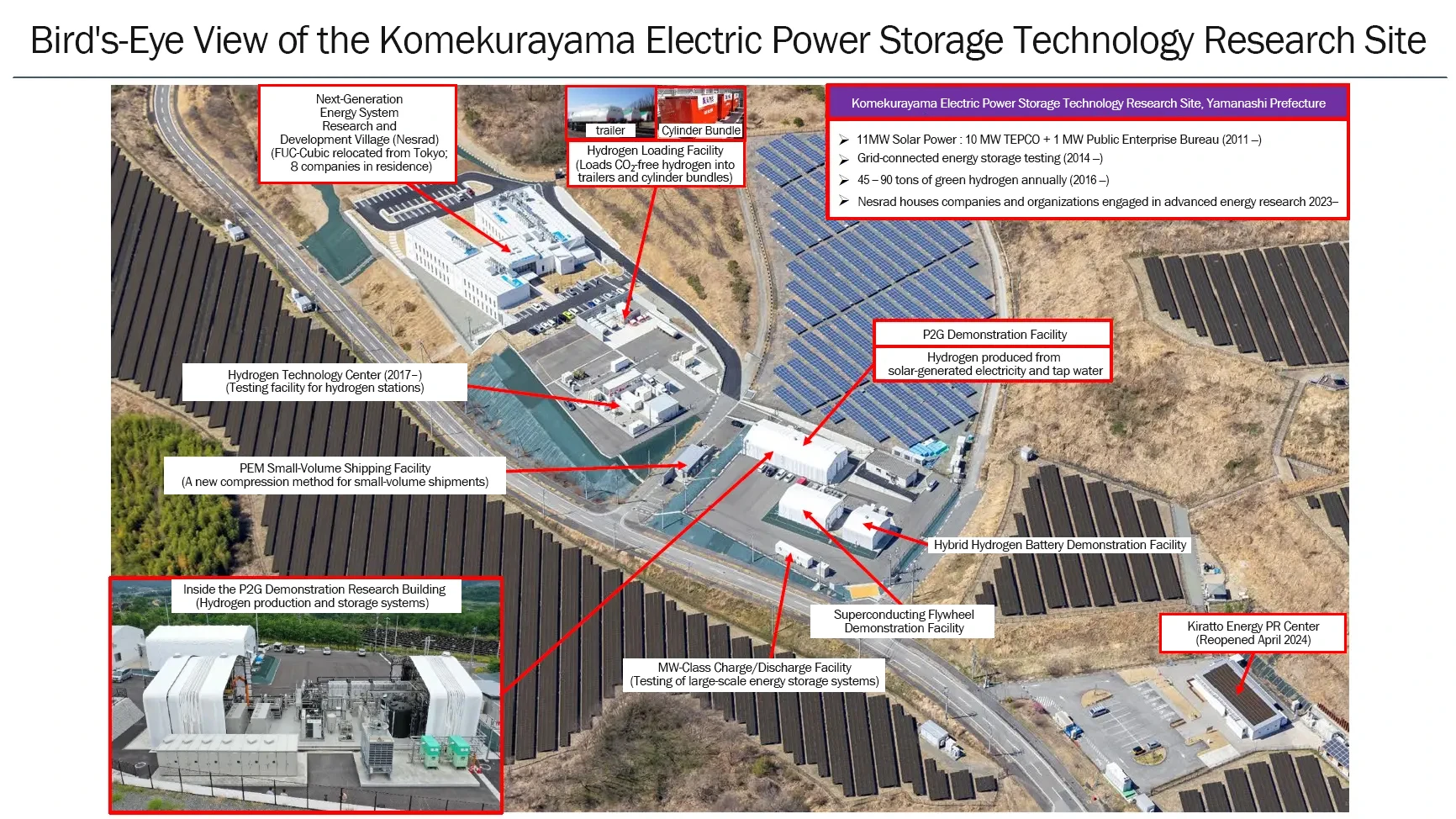
The Komekurayama Electric Power Storage Technology Research Site includes a mega-solar power plant, the Nesrad research village, a 1.5 MW (maximum 2.3 MW) PEM water electrolysis system, and hydrogen loading facilities. The site receives approximately 2,000 visitors from local governments and companies each year. (Source: Yamanashi Prefectural Government Public Enterprise Bureau)
The Komekurayama project brought together Toray, which developed the electrolyte membrane, and Kanadevia (then Hitachi Zosen), which supplied the water electrolysis system. As a result, much of the know-how accumulated there—including expertise in energy management and system operation—has been carried over to Green Hydrogen Park.
Yamanashi Prefecture operates 27 hydropower plants, including small-scale facilities, and has a more than 70-year history in the electricity business. It is also home to numerous hydrogen and fuel cell research centers, with the University of Yamanashi recognized globally for its fuel cell research. The addition of Green Hydrogen Park is expected to further accelerate the prefecture's hydrogen-related initiatives.
Yamanashi as a Hub-and-Spoke Center
Yamanashi Prefectural Government Public Enterprise Bureau and the participating companies continue to collect operational data from Green Hydrogen Park while building the expertise needed to ensure stable and efficient operation.
"Our goal is to successfully complete the demonstration project," Watanabe says. "While we can build on the experience gained at Komekurayama, Green Hydrogen Park operates on a significantly larger scale. Our immediate focus is therefore on accumulating operational data and verifying stable, reliable system performance."
The GI Fund Project is scheduled to conclude in December 2026. Looking beyond the demonstration phase, Yamanashi is also considering the installation of compression and loading facilities similar to those at Komekurayama, allowing hydrogen produced at Green Hydrogen Park to be supplied to external users.
"As Japan's leading hydrogen prefecture, we hope to expand hydrogen use within the region while strengthening collaboration with other local governments," Watanabe says. "By doing so, we aim to fully realize Yamanashi's role as a hub-and-spoke center for the hydrogen economy."
NEDO's Kugimiya is hopeful that Green Hydrogen Park will serve as a model for similar facilities in other regions, helping to expand both the production and use of hydrogen. He also sees opportunities to package the technologies and operational expertise developed through the project for overseas markets.
With future 100 MW-class systems in sight, Green Hydrogen Park represents an important milestone toward the broader adoption of renewable hydrogen. To help accelerate the transition to a carbon-neutral society, NEDO aims to expand hydrogen production through renewable-powered water electrolysis and promote its use as an alternative to fossil fuels.
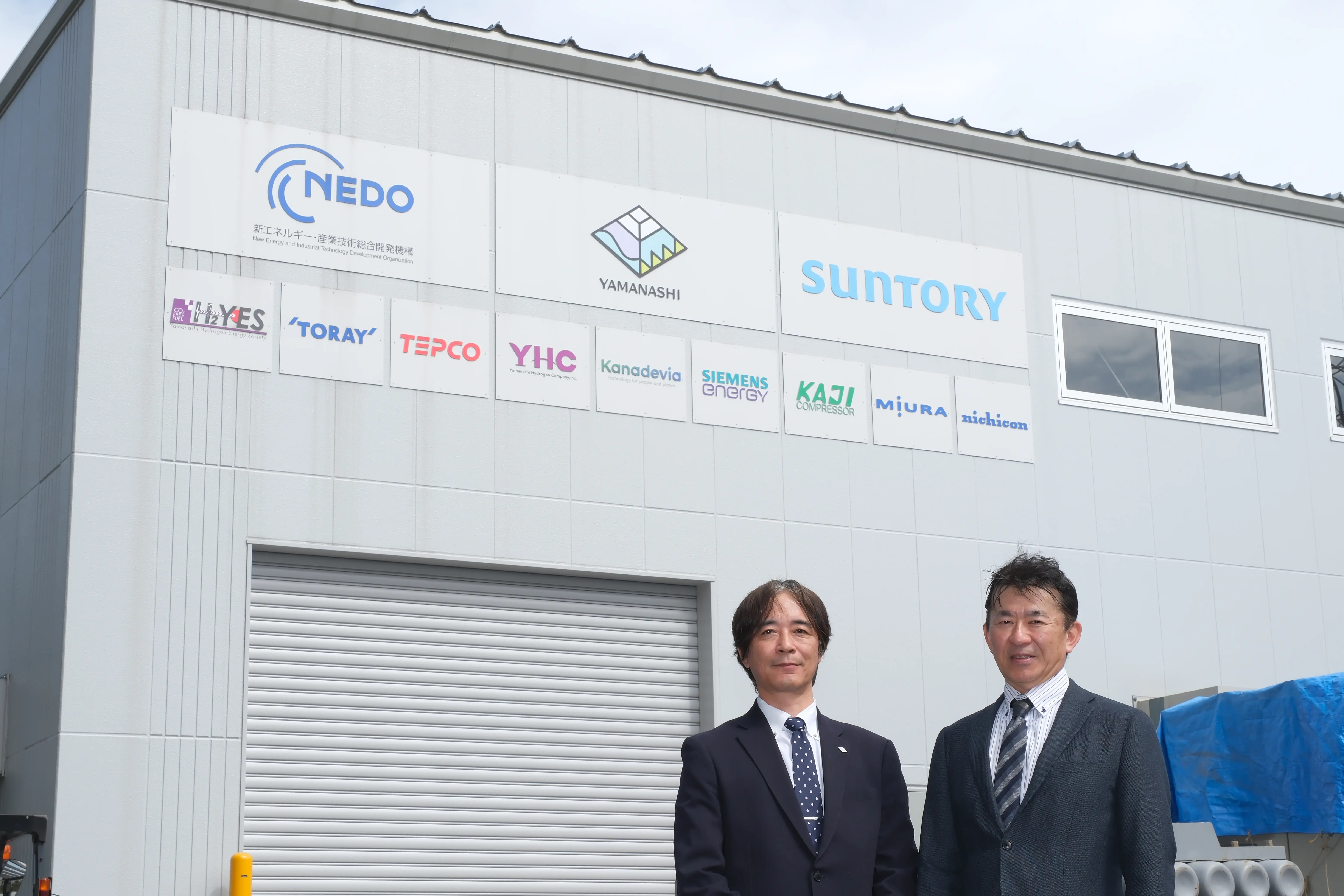
Noriaki Watanabe (left) and Takanori Kugimiya (right) in front of the Green Hydrogen Park facility building.