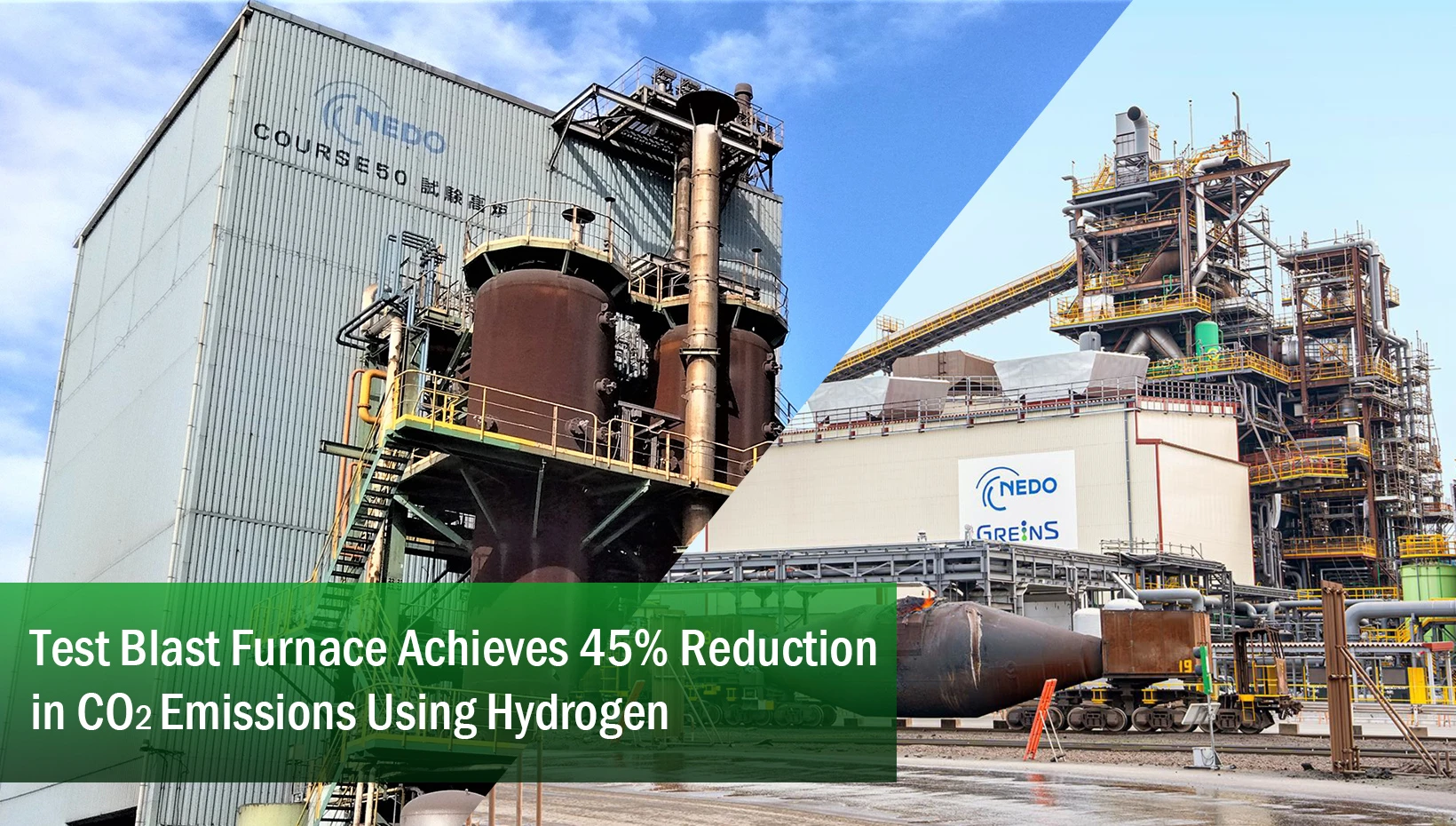
Test Blast Furnace Achieves 45% Reduction in CO2 Emissions Using Hydrogen
Pursuing 100% Hydrogen Reduction Technology


Hydrogen is beginning to reshape steelmaking on the path to decarbonization. One of NEDO’s Green Innovation Fund (GI Fund) Projects, “Hydrogen Utilization in Iron and Steelmaking Processes,” is now yielding tangible results. By using hydrogen to reduce iron ore—that is, to remove oxygen from it—the project has achieved substantial reductions in CO2 emissions. The undertaking is exceptionally ambitious: it aims to fundamentally rethink steelmaking technologies refined over centuries, and to do so within a remarkably short timeframe.
“The steel industry accounts for about 14% of Japan’s total CO2 emissions. Steelmaking is such a major source of emissions that, unless we can decarbonize it, I don’t think Japan will be able to achieve the government’s goal of carbon neutrality by 2050,” says NEDO’s Toru Kato, the project manager.
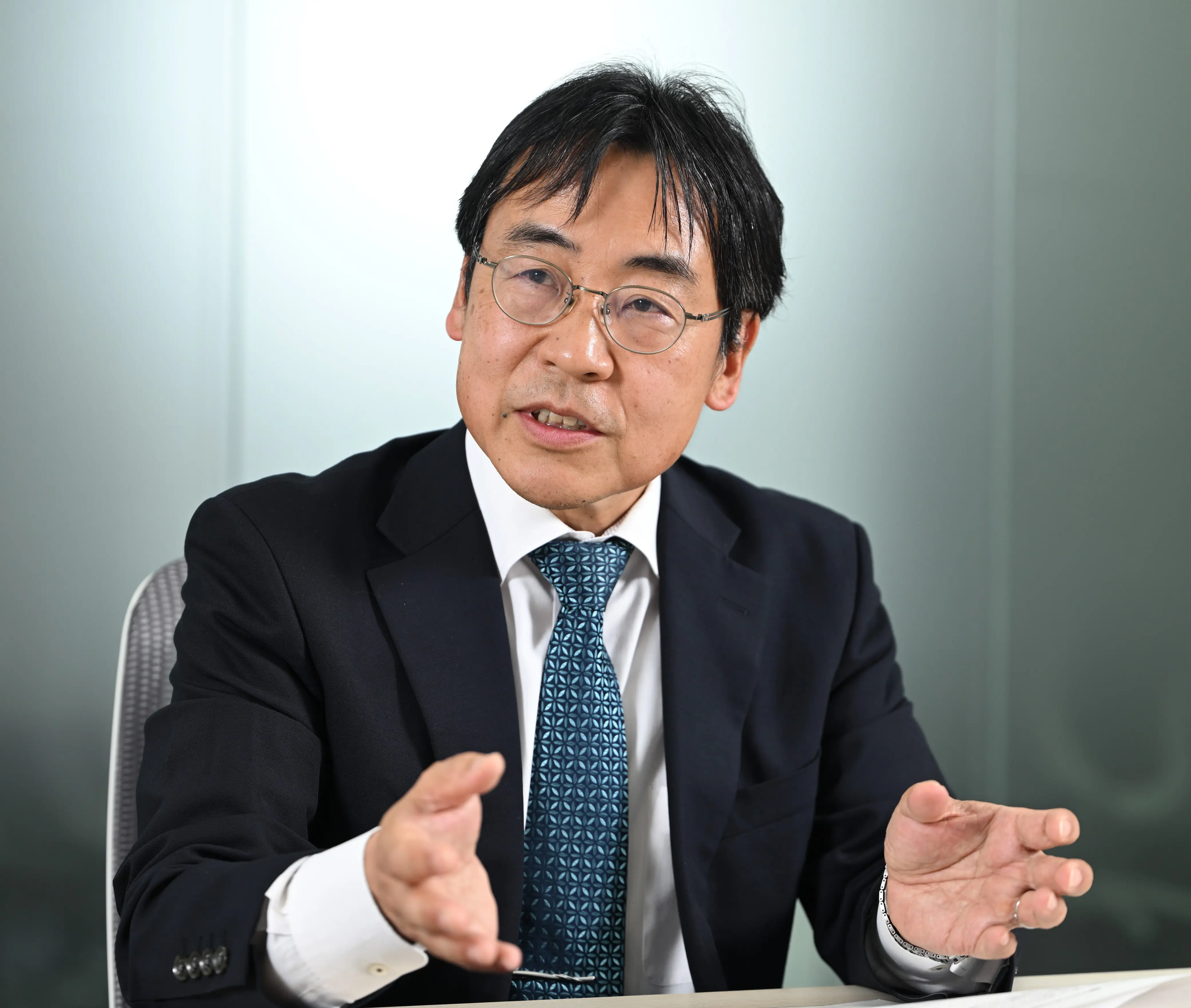
Toru Kato, Ph.D., Project Manager and Director, Steelmaking Section, Circular Economy Department, NEDO
For centuries, steelmaking has relied on coke to reduce iron ore. Coke is a porous carbon material produced by heating coal to around 1,000–1,200°C, driving off gases, moisture, and other volatile components. Fundamentally reworking such a long-established process within a short timeframe presents an extraordinary challenge.
“In the past, reducing CO2 emissions from blast furnaces meant working to squeeze out gains of 1%—or even fractions of a percent—by making reactions inside the furnace more efficient and using less carbon,” says Nippon Steel’s Seiji Nomura, the project leader. “Today, by contrast, this project is aiming for reductions of 30% or 40%. That is a leap of a completely different magnitude—a challenge on an entirely new level.”
To meet this formidable technological challenge, Japan’s major iron and steel companies have come together in a consortium, each taking on a distinct role in the project. The initiative is known as GREINS (Green Innovation in Steelmaking).
“Unlike many overseas decarbonization projects, where individual companies develop their own processes independently, Japan’s steel industry has traditionally had a strong culture of technical exchange and collaboration in manufacturing technology,” says Kato. “One of the defining features of this project is that we are drawing on the strengths of each company and moving forward through a distinctly Japanese model of collaboration.”
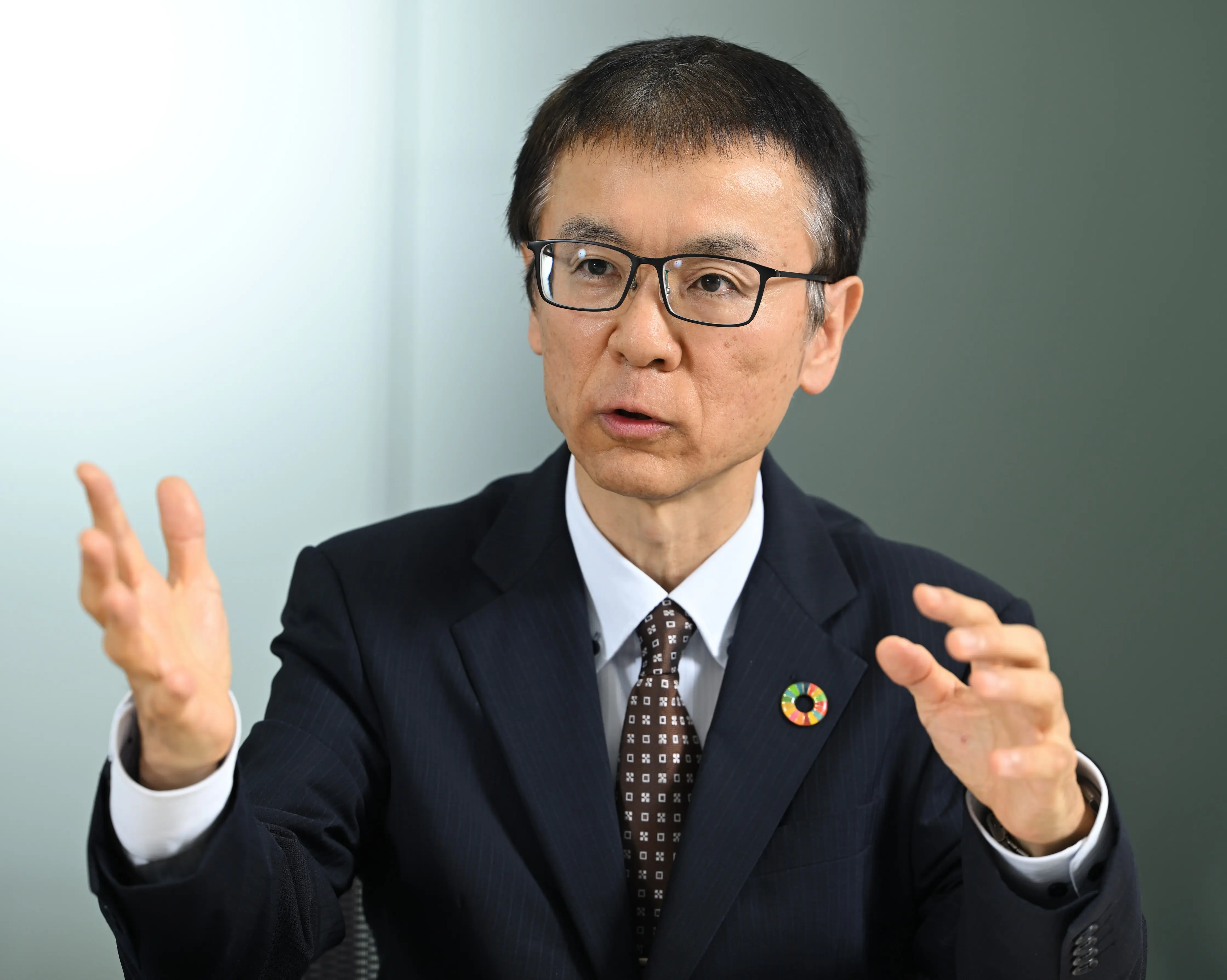
Seiji Nomura, Ph.D., Fellow and Head of Laboratories, Process Research Laboratories, Nippon Steel Corporation; Project Leader
Three Hydrogen-Reduction Approaches Using Existing Blast Furnaces
One key approach is to retain as much of the existing blast furnace infrastructure as possible while progressively increasing the use of hydrogen for reduction. A blast furnace is a large vertical furnace in which molten pig iron is produced by removing oxygen from iron ore. Within this framework, three innovative hydrogen-reduction processes are being developed in parallel, varying in both technological maturity and approach: (1) COURSE50, which injects hydrogen at room temperature; (2) Super-COURSE50, which injects hydrogen at high temperature; and (3) the carbon-recycling blast furnace, which uses hydrogen indirectly through methanation.
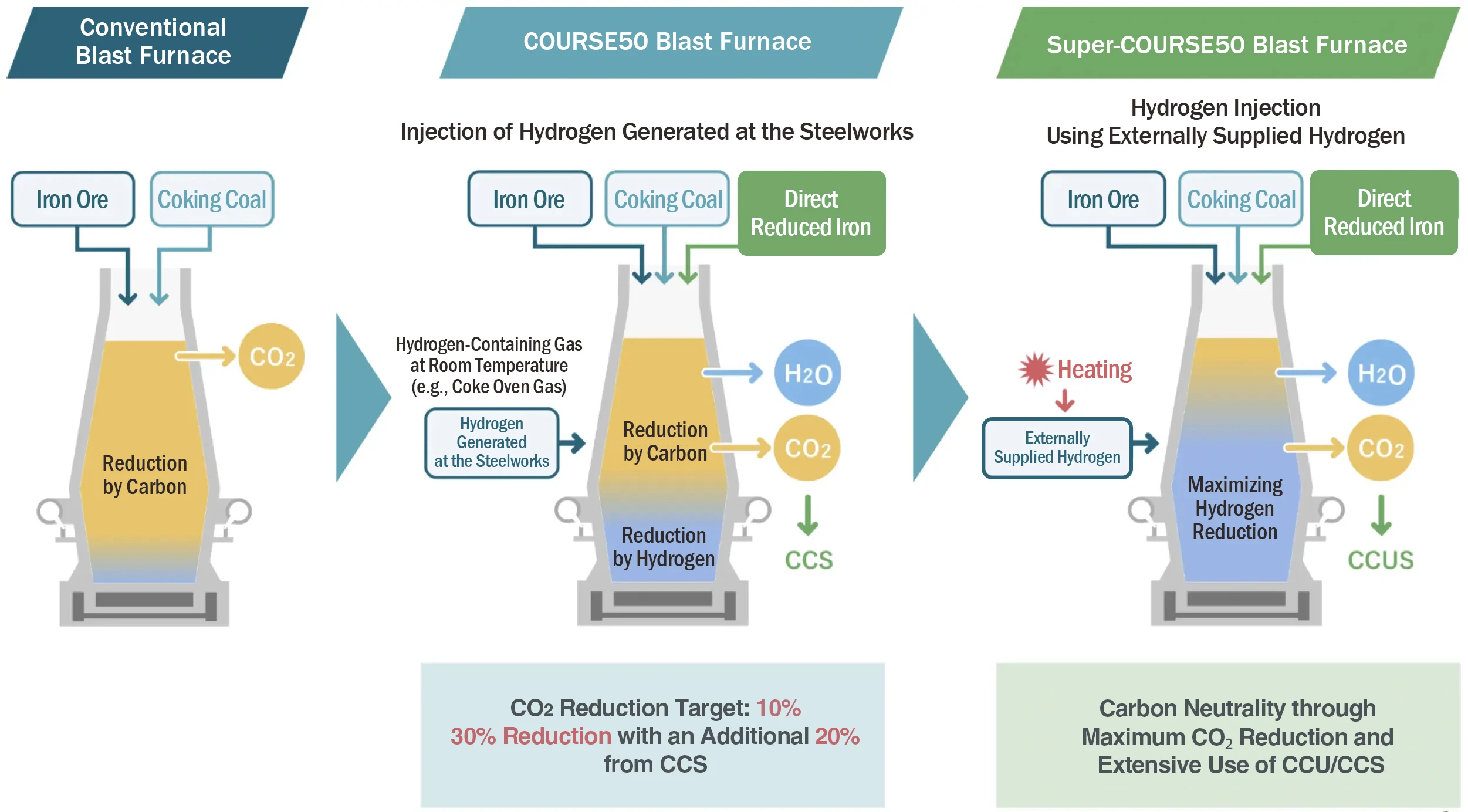
Hydrogen Reduction in Blast Furnaces through Direct Hydrogen Use (Source: NEDO Decarbonization Technology Results Presentation 2025, Program No. 1, “Overview and Progress of the GI Fund Projects: Hydrogen Utilization in Iron and Steelmaking Processes,” July 16, 2025)
COURSE50 is the first step in hydrogen reduction using blast furnaces and, with its long history of development, is the most technologically mature of the three processes. It makes use of coke oven gas (COG), a by-product of coke production that contains about 50% hydrogen and 30% methane, injecting hydrogen or hydrogen-containing gas into the blast furnace at room temperature. Tests using an experimental blast furnace have already achieved the target of reducing CO2 emissions from the blast furnace by 10%.
Development of COURSE50 began in 2008 as a NEDO project, well before the launch of the GI Fund Projects, and the technology has since progressed steadily toward commercial-scale application. Building on these achievements, a large-scale demonstration using a commercial blast furnace at Nippon Steel’s East Nippon Works in Kimitsu is planned to begin during fiscal 2026 under the GI Fund Projects.
The next approach being developed under the GI Fund Projects is Super-COURSE50. Building on COURSE50, it aims to cut CO2 emissions from the steelmaking process by 50% or more. Because hydrogen reduction is highly endothermic, injecting large volumes of hydrogen can lower the temperature inside the furnace. To counteract this cooling effect, the hydrogen must be heated to a high temperature before being injected directly into the blast furnace.
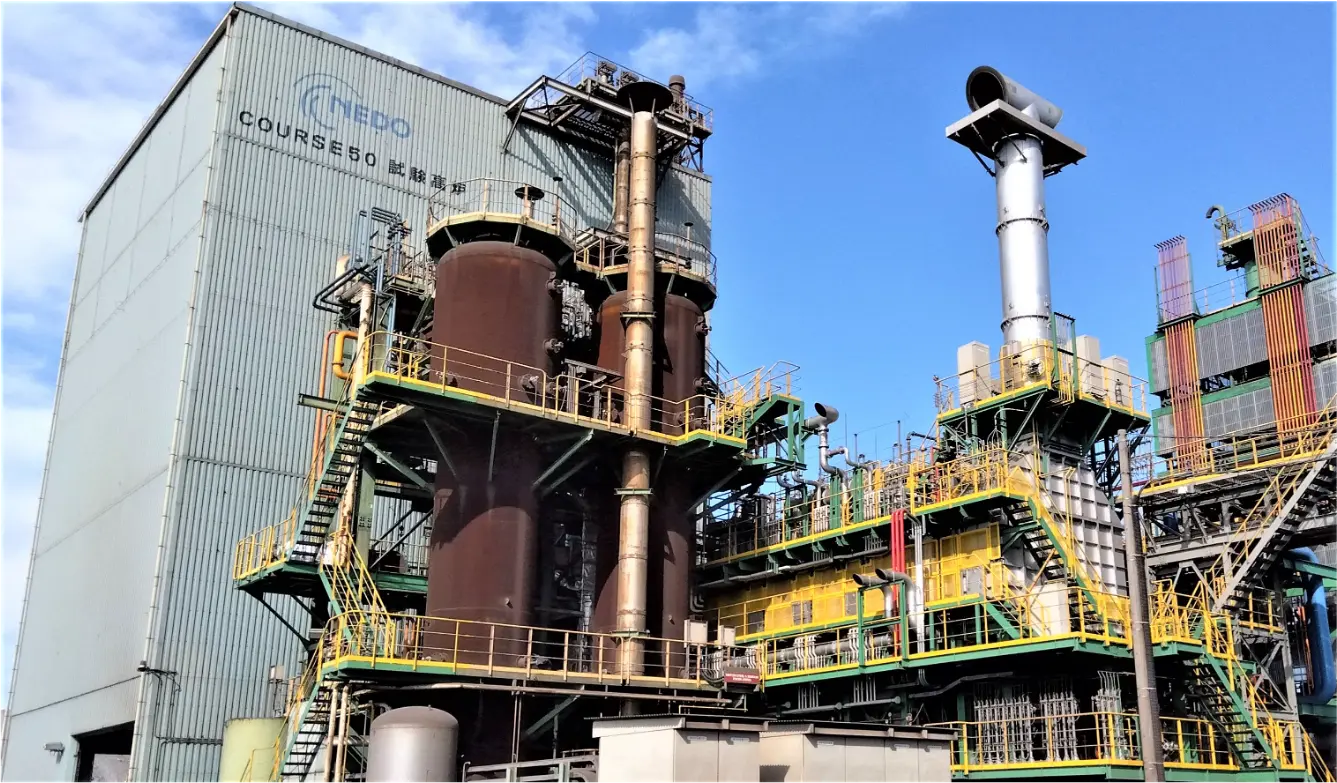
Super-COURSE50 Experimental Blast Furnace (Courtesy of Nippon Steel)
“In our latest operation of the test blast furnace, we achieved a 45% reduction in CO2 emissions, exceeding our target,” says Nomura. The result came after the team encountered and overcame unexpected furnace behavior and challenges in controlling reactions while optimizing hydrogen supply conditions such as temperature and flow rate. The achievement is the first of its kind in the world.
Stable continuous operation while maintaining the 45% reduction level has also been confirmed, marking a major step toward establishing the necessary operating techniques. “We are still working with a small experimental blast furnace. Our next goal is to overcome the remaining challenges as we scale up and move toward commercialization,” says Nomura.
The third approach, the carbon-recycling blast furnace, captures and separates blast-furnace off-gas, which consists mainly of CO2 and CO. The recovered gas is reacted with externally supplied hydrogen (H₂) to produce methane (CH4), which is then injected back into the blast furnace. This conversion process is known as methanation. By circulating carbon in this way and using hydrogen indirectly, the technology aims to reduce CO2 emissions from the steelmaking process by 50% or more. Development is being led by JFE Steel.
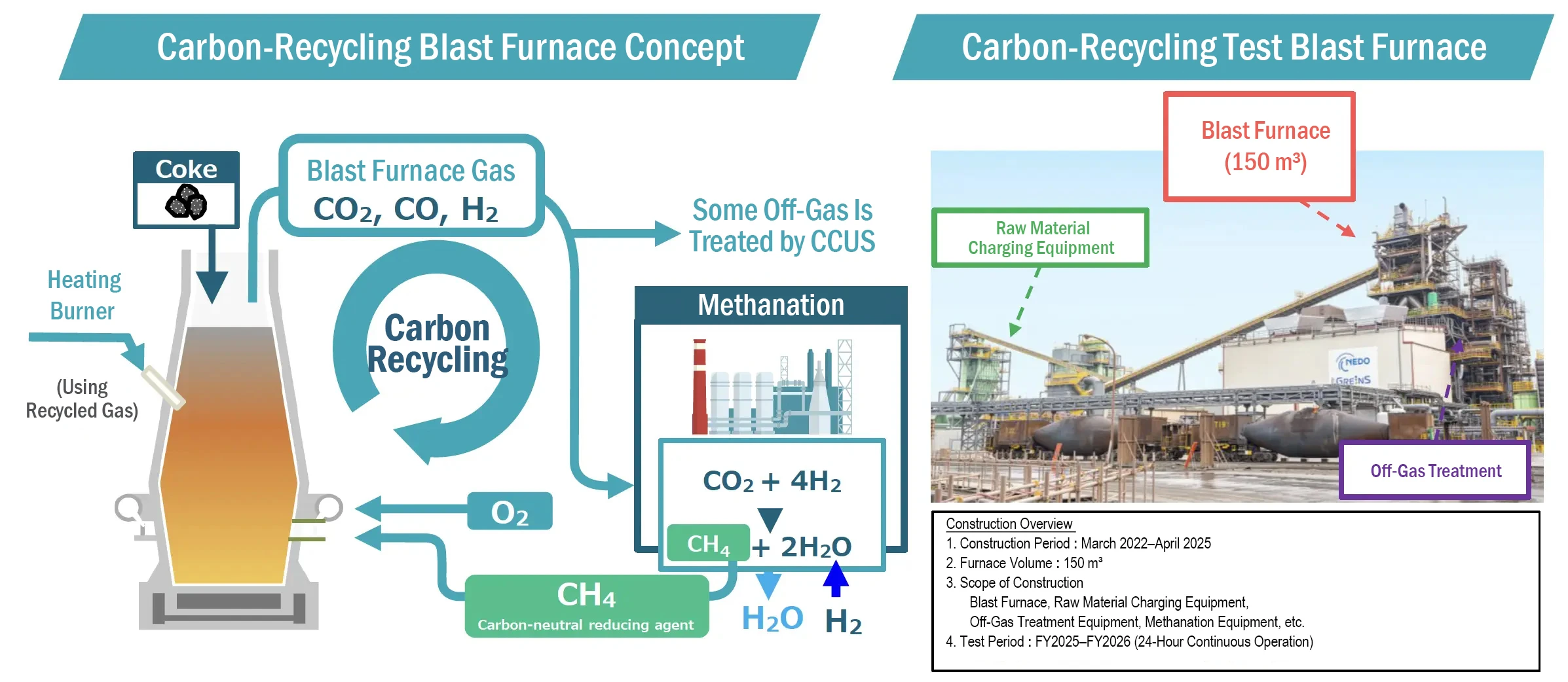
Hydrogen Reduction in Blast Furnaces through Indirect Hydrogen Use (Source: NEDO Decarbonization Technology Results Presentation 2025, Program No. 1, “Overview and Progress of the GI Fund Projects: Hydrogen Utilization in Iron and Steelmaking Processes,” July 16, 2025)
To achieve even greater CO2 reductions by increasing the use of recycled methane, the technology employs an oxygen blast furnace, replacing the conventional hot-air blast with pure oxygen. This represents a new and technically demanding approach, bringing with it a different set of operational challenges.
“Using pure oxygen eliminates nitrogen from the blast, which lowers the overall volume of high-temperature reducing gas generated in front of the tuyeres, the nozzles near the bottom of the blast furnace,” explains JFE Steel’s Naoki Kikuchi, the sub-project leader. “As a result, heat transfer becomes less effective and the temperature distribution inside the furnace is significantly affected. This requires sophisticated operational control that takes into account both reduction reactions and heat transfer.”
At JFE Steel’s East Japan Works (Chiba), an unprecedentedly large test blast furnace with a volume of about 150 m³—more than ten times the conventional scale—is now in operation. The team is working toward establishing the technology while systematically addressing the challenges that arise with scale-up. Operational trials are continuing with the aim of compiling the results by March 2027.
Another challenge is methanation of the enormous volume of CO2 gas involved. “The gas flow rate is roughly 100 times that of a typical chemical plant,” Kikuchi says. “If realized, this would be one of the world’s largest methanation facilities. Because methanation—the reaction of CO2 with hydrogen to produce methane—is exothermic, precise adjustment and control of the reaction conditions are critical to keeping the process efficient and stable.”
Direct Reduction of Low-Grade Iron Ore Using 100% Hydrogen
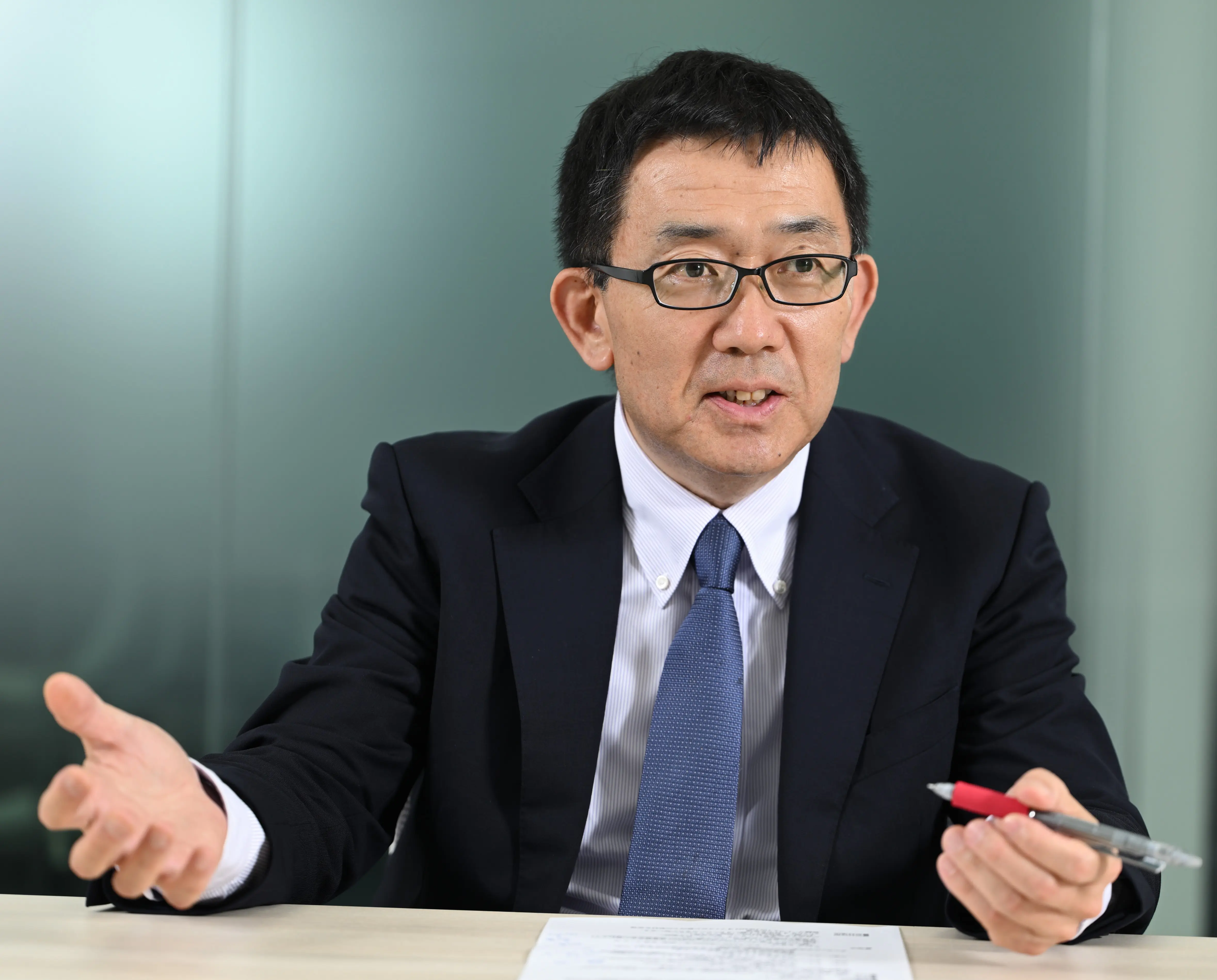
Naoki Kikuchi, Ph.D., Fellow, Steel Research Laboratory, JFE Steel Corporation; Sub-Project Leader
Another approach is to produce direct reduced iron (DRI) using 100% hydrogen without relying on a blast furnace. The project is developing this direct hydrogen reduction technology to enable the use of low-grade iron ore. Even with very high levels of hydrogen use, blast furnaces still require a minimum amount of carbon (coke) for structural reasons. Direct hydrogen reduction, by contrast, can theoretically bring CO2 emissions close to zero.
Commercial direct-reduction furnaces worldwide generally rely on high-grade iron ore pellets with high iron content and few impurities. However, supplies of high-grade ore are limited. Ensuring stable operation in the future will therefore require technologies capable of using more abundant low-grade ore. Using low-grade ore presents significant technical challenges, as it is prone to degradation during reduction and its reactivity is difficult to control.
For this area of research, the project has established test facilities of varying scales and approaches, supported by a strong collaborative network that brings together researchers from numerous universities. Experimental results are shared every six months, allowing researchers to integrate insights from fundamental research and larger-scale trials. Through ongoing discussion, they are advancing the development effort.
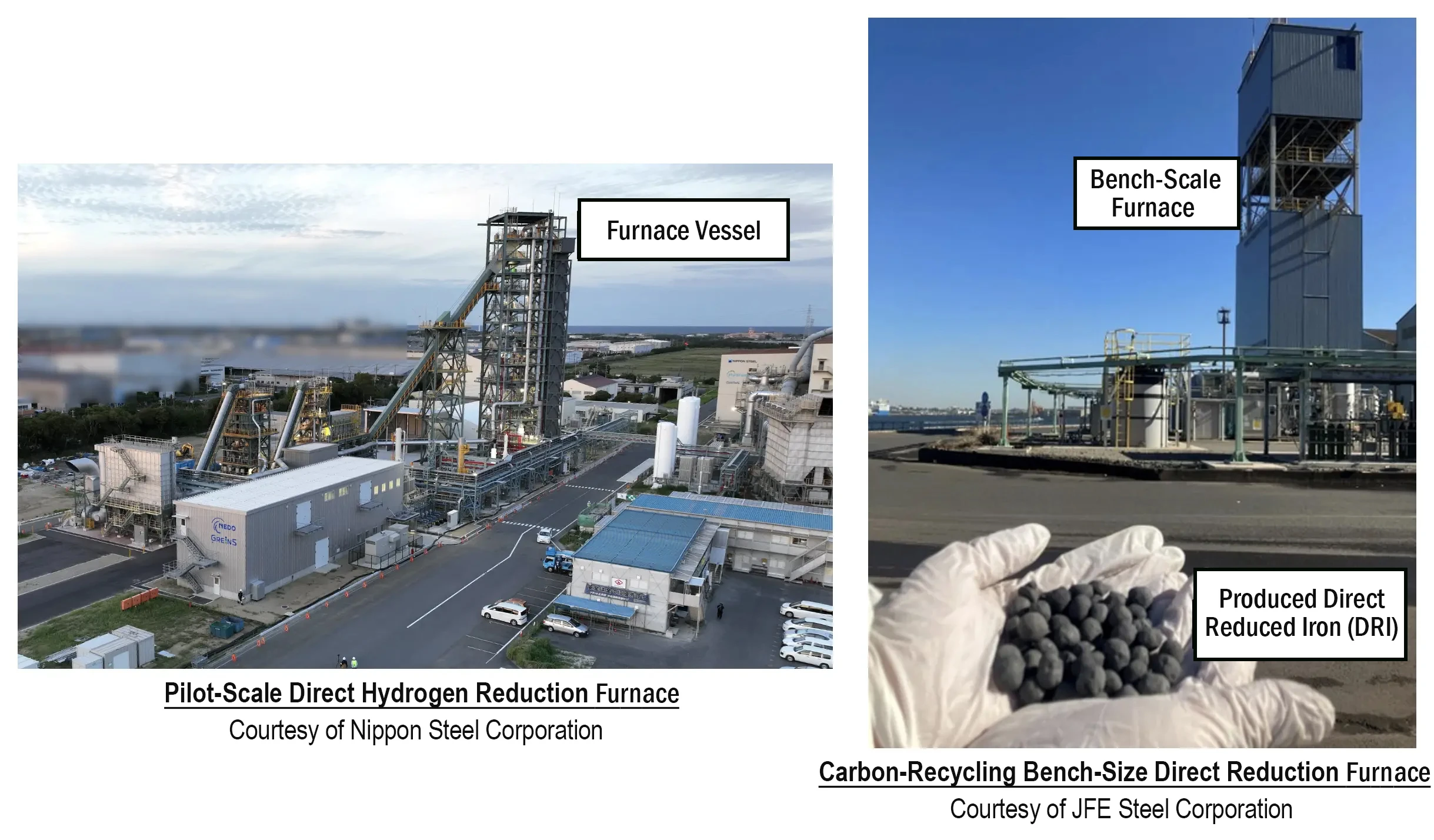
Test Facilities for 100% Hydrogen Direct-Reduction Shaft Furnaces (Courtesy of Nippon Steel and JFE Steel)
Under the GI Fund Projects, two shaft-furnace test facilities have been built. A shaft furnace is a tall, cylindrical furnace in which iron ore pellets are continuously fed from the top while heated reducing gas is injected from below, enabling efficient heat exchange and reduction reactions to proceed continuously. Unlike a blast furnace, it reduces the iron ore without melting it. The resulting iron is discharged from the bottom either as DRI pellets—marble-sized solid pellets—or as HBI, pillow-shaped solids made by compacting DRI pellets.
The shaft furnace built at Nippon Steel’s Hasaki Research and Development Center is a large-scale pilot plant approximately 60 meters tall, with a production capacity of about 1 metric ton per hour. “The facility began operating in March 2026, and we successfully ran it continuously for 72 hours using 100% hydrogen,” says Nomura. “We are continuing to optimize hydrogen preheating to offset the cooling effect of the endothermic reaction and refine the optimal reduction conditions.”
The shaft furnace built at JFE Steel’s East Japan Works (Chiba) is a bench-scale plant approximately 30 meters tall, with a production capacity of about 15 kg per hour. “The facility has been operating since December 2024 and is flexible enough to conduct reduction tests using both 100% hydrogen and gas produced through methanation,” says Kikuchi. “We have repeatedly carried out continuous runs lasting about a week under a range of conditions. The valuable process data obtained from these tests is quickly shared with Nippon Steel and fed back into the operation of its test furnace.”
Converting Solid Hydrogen-Reduced Iron into Molten Steel
Solid hydrogen-reduced iron (hydrogen DRI) produced through direct reduction must be melted and refined in downstream processes, with its composition adjusted to produce molten steel. Existing electric-furnace technology cannot simply be applied as is. Conventional DRI contains a certain amount of carbon, whereas DRI reduced with 100% hydrogen contains none. As a result, its melting behavior, refining conditions, and operating parameters all need to be fundamentally reconsidered.
The GI Fund Projects are exploring two approaches to melting and refining hydrogen DRI. The first is a new type of electric furnace optimized for the properties of hydrogen DRI. JFE Steel aims to begin commercial operation in fiscal 2028, followed by Nippon Steel in fiscal 2029–2030. By incorporating technologies developed through the GI Fund Projects, both companies plan to achieve major gains in efficiency while reducing CO2 emissions.
The second approach is to use a melter, or electric melting furnace. The melter rapidly melts DRI into a state similar to molten pig iron produced in a blast furnace. This makes it possible to continue using existing downstream equipment and technologies, including basic oxygen furnaces, which remove carbon and impurities from high-carbon molten iron to produce steel.
Laying the Groundwork for Commercial Deployment
“Across several areas, the project is steadily moving into the next stage of scale-up,” says Kato. But commercial deployment will require more than technological development alone. “Changes to the broader social infrastructure and systems will also be essential,” he adds. This includes securing large supplies of affordable green hydrogen and clean electricity, as well as developing infrastructure for carbon capture and storage (CCS).
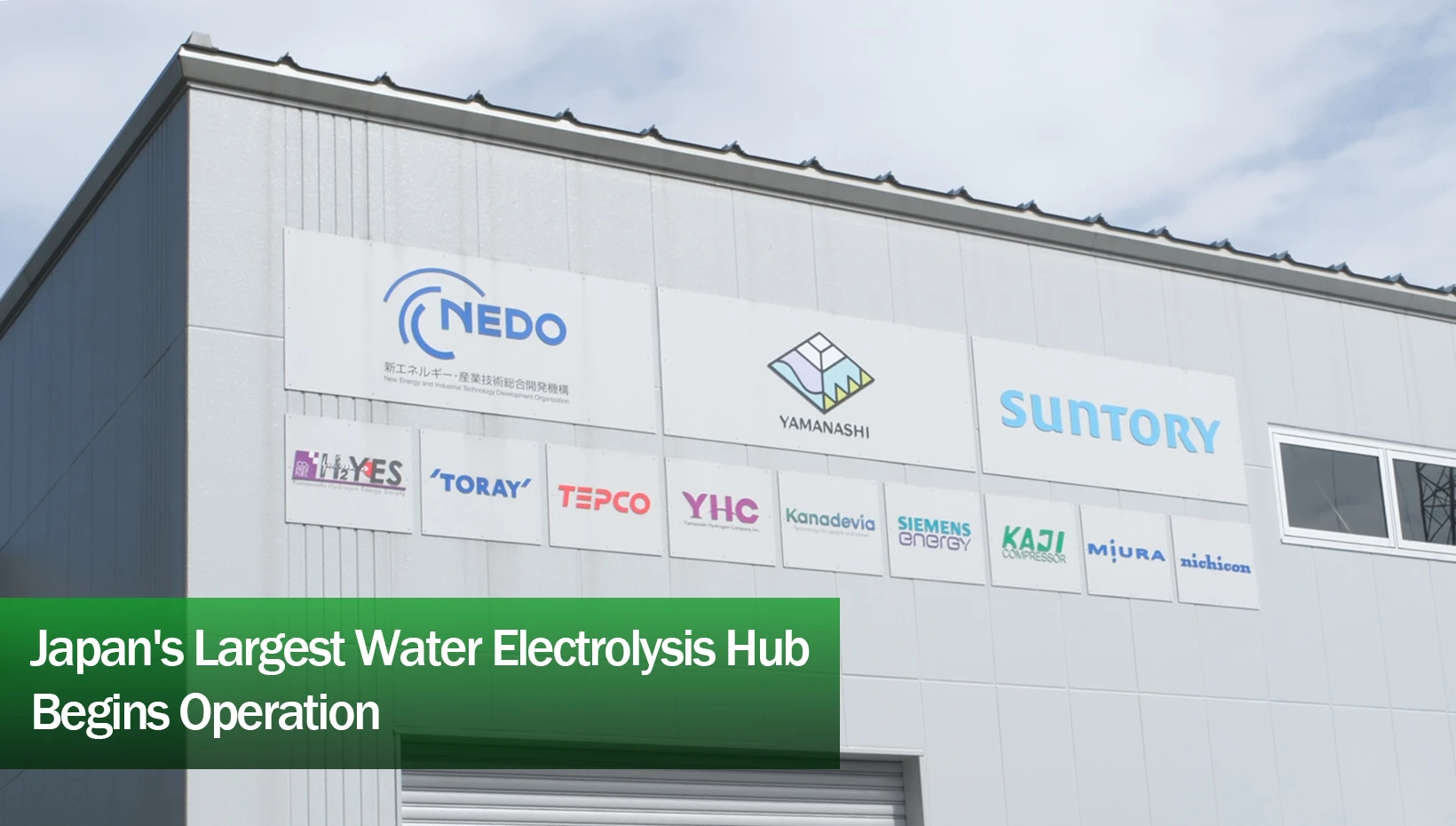
Hydrogen-based steelmaking depends on access to enormous quantities of hydrogen. As part of this effort, a demonstration was conducted in June 2026 using green hydrogen produced at the Komekurayama Electric Power Storage Technology Research Site in Kofu, Yamanashi, under the NEDO project “Development of Technologies for Realizing a Hydrogen Society.” The hydrogen was transported by trailer to a small direct-reduction shaft furnace in Chiba and supplied for reduction tests that successfully produced about one metric ton of DRI using green hydrogen—the first such achievement in Japan, according to NEDO. The results were announced in July. Building a supply chain capable of delivering hydrogen in such large volumes reliably will be critical.
Electric furnaces, melters, and hydrogen production plants require vast amounts of clean electricity, making stronger power transmission and distribution networks essential.
Another key element is CCS, which will play an important role in capturing and storing CO2 that cannot be fully eliminated, including emissions generated during the transition.
Closely tied to these infrastructure needs are the market and policy frameworks required for commercialization. GX steel, produced with CO2 emissions reduced to the lowest possible level, carries higher production costs even though its performance as steel remains unchanged. “We need a framework that properly recognizes this added value and enables society as a whole to share the additional costs,” says Kato.
NEDO remains committed to advancing the technologies and creating the conditions needed to bring hydrogen-based decarbonization of the steel industry into widespread use.
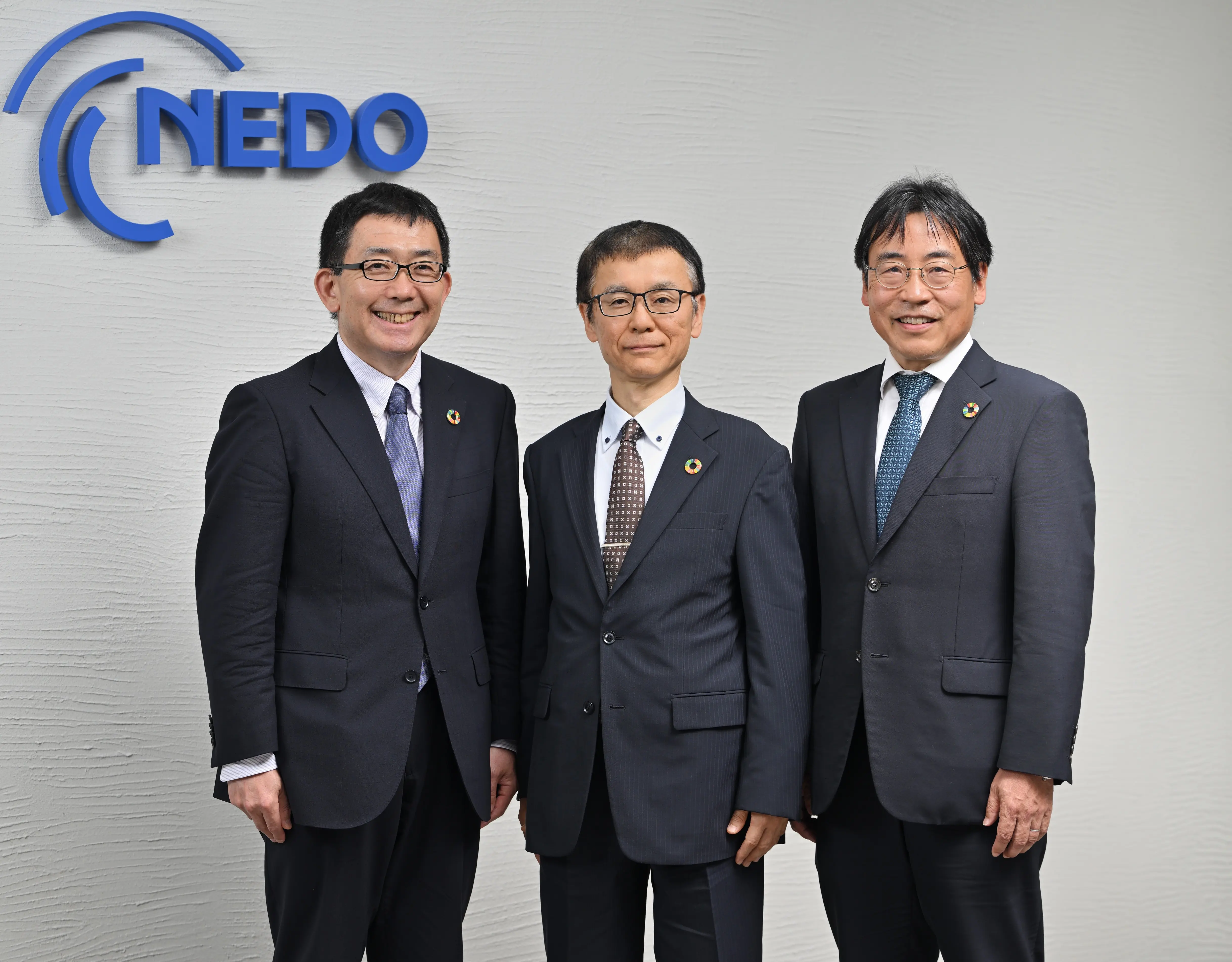
From left: Naoki Kikuchi of JFE Steel, Seiji Nomura of Nippon Steel, and NEDO Project Manager Toru Kato