
Demonstration Testing Begins for Converting Waste into Chemical Feedstocks
Featuring an Innovative Waste Gasification Process


Under NEDO’s Green Innovation Fund (GI Fund) Projects for Achieving Carbon Neutrality in Material Cycles and Waste Management, JFE Engineering Corporation, together with its group company J&T Recycling Corporation, completed a small-scale demonstration facility incorporating a new waste gasification process that converts waste into high-quality syngas. Demonstration testing began in December 2025.
The facility will play a central role in advancing the research theme of Waste-to-chemical technology development for green chemicals production by integration of advanced gasification and other chemical conversion technologies under the project. The research aims to produce syngas from waste and then convert the syngas into high-value chemicals.
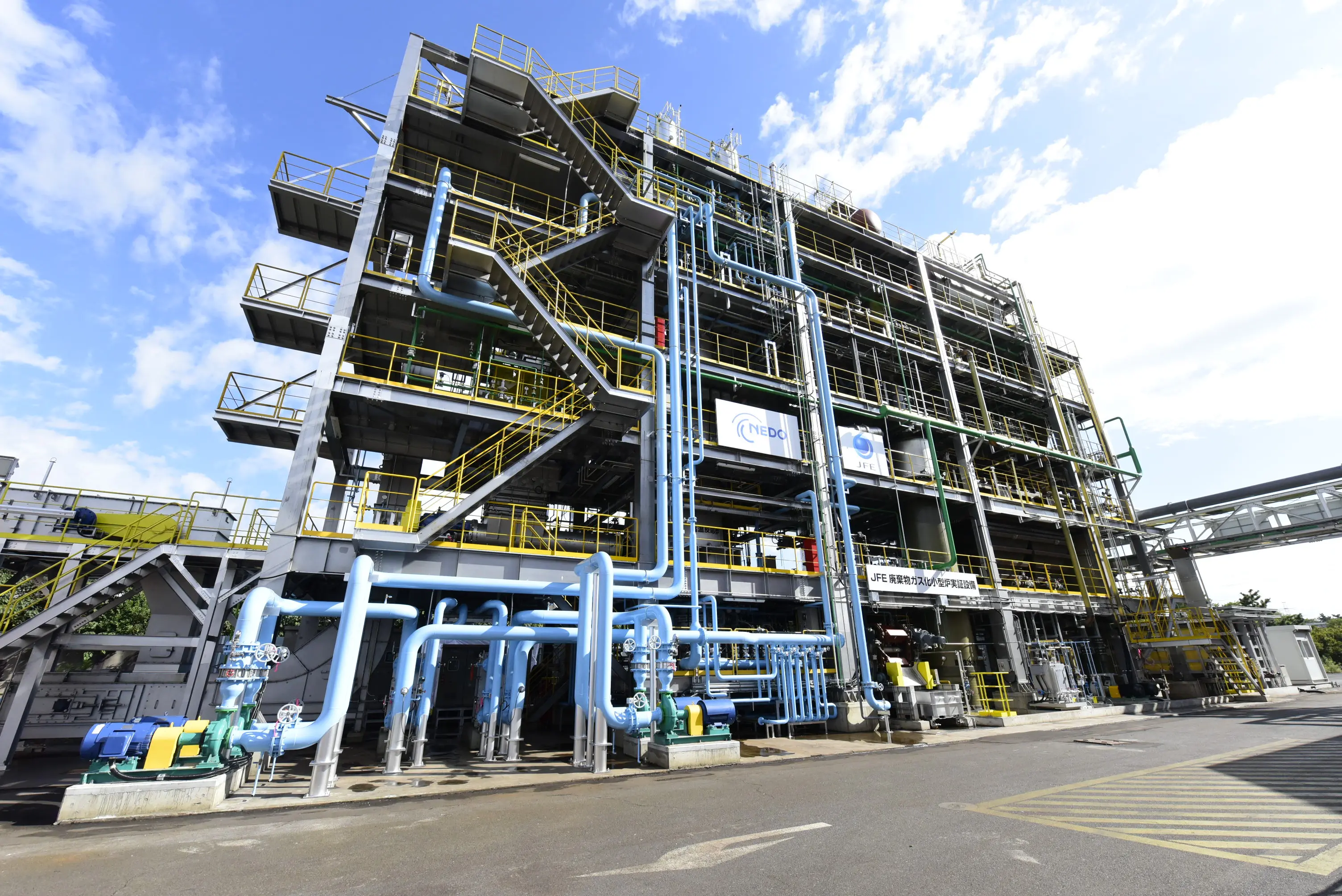
Small-scale demonstration facility for chemical recycling technology of waste, installed at J&T Recycling Corporation’s Chiba Recycling Center in Chiba City (source: JFE Engineering)
A Paradigm Shift: From Waste-to-Energy to Waste-to-Chemical
The completion of the small-scale demonstration facility marks a new step for innovation in the resource circulation sector. It also points to a new approach for the waste industry: treating waste as a resource for chemical feedstocks rather than simply a source of energy.
Conventional waste management has long relied on Waste-to-Energy (WtE), which generates electricity from the heat produced by waste incineration. By replacing fossil fuel-based power generation, WtE has helped reduce CO2 emissions. However, WtE cannot fully eliminate emissions from combustion. Achieving carbon neutrality will require further innovation in the waste sector.
The concept behind this research is a shift from WtE, which generates power from waste, to Waste-to-Chemical (WtC), which converts waste into feedstocks for chemical production.
The refined syngas produced through this process consists mainly of hydrogen (H2) and carbon monoxide (CO). It can be used to produce methanol, plastic feedstocks, sustainable aviation fuel (SAF), hydrogen, and other chemical products.
By enabling the production of chemicals without relying on fossil fuel-derived feedstocks, the process could help promote resource circulation and reduce greenhouse gas (GHG) emissions across the value chain.
Global demand is rising for recycled materials and decarbonized fuels. In Europe, regulations are being tightened to increase the use of recycled materials in the automotive sector, while the aviation industry faces international targets for the adoption of SAF.
In this environment, the technology could become a key solution for meeting the industry’s urgent decarbonization needs. It can process waste that has been difficult to recycle using conventional technologies and convert it into high-value recycled resources.
Stable Operations and Reliable High-Quality Syngas Production
JFE Engineering is conducting demonstration testing using the facility completed under the GI Fund Projects. The company has accumulated more than 25 years of operational and maintenance expertise in Japan since building its first commercial-scale waste gasification facility in 1999. That extensive operational experience supports two key requirements: stable plant operations and a reliable supply of high-quality syngas for chemical manufacturers.
The gasification process differs fundamentally from conventional waste incineration. Conventional incinerators use air to fully combust carbon into CO2, whereas this process uses pure oxygen instead of air. This produces a syngas containing more than 30% hydrogen (H2) and carbon monoxide (CO), less than 30% CO2, and less than 5% nitrogen.
The generated gas is rapidly cooled to suppress dioxin formation, then purified through multiple cleaning stages to remove undesired substances and micropollutants. The result is a clean syngas suitable for use as a chemical feedstock.
The concentrations of H2 and CO in the refined syngas were already high enough for chemical production when the technology was introduced in the early 2000s. At the time, however, demand for chemical applications was still limited, and the gas was primarily used for power generation through combustion.
The bottom section of the gasification reactor operates at extremely high temperatures ranging from 1,600°C to 2,000°C. The ability to maintain stable operation under these conditions is supported by refractory and water-cooling technologies developed through experience in steelmaking processes.
This high-temperature processing capability allows the system to accept a wide range of waste materials, including paper waste, food waste, and plastics, as well as difficult-to-recycle materials such as automobile shredder residue (ASR) and mixed-material products that have traditionally been incinerated or sent to landfill.
The waste is thermally decomposed and gasified, while the remaining residue is completely melted and recovered as slag or metal for reuse. This also helps reduce the amount of waste requiring final disposal.
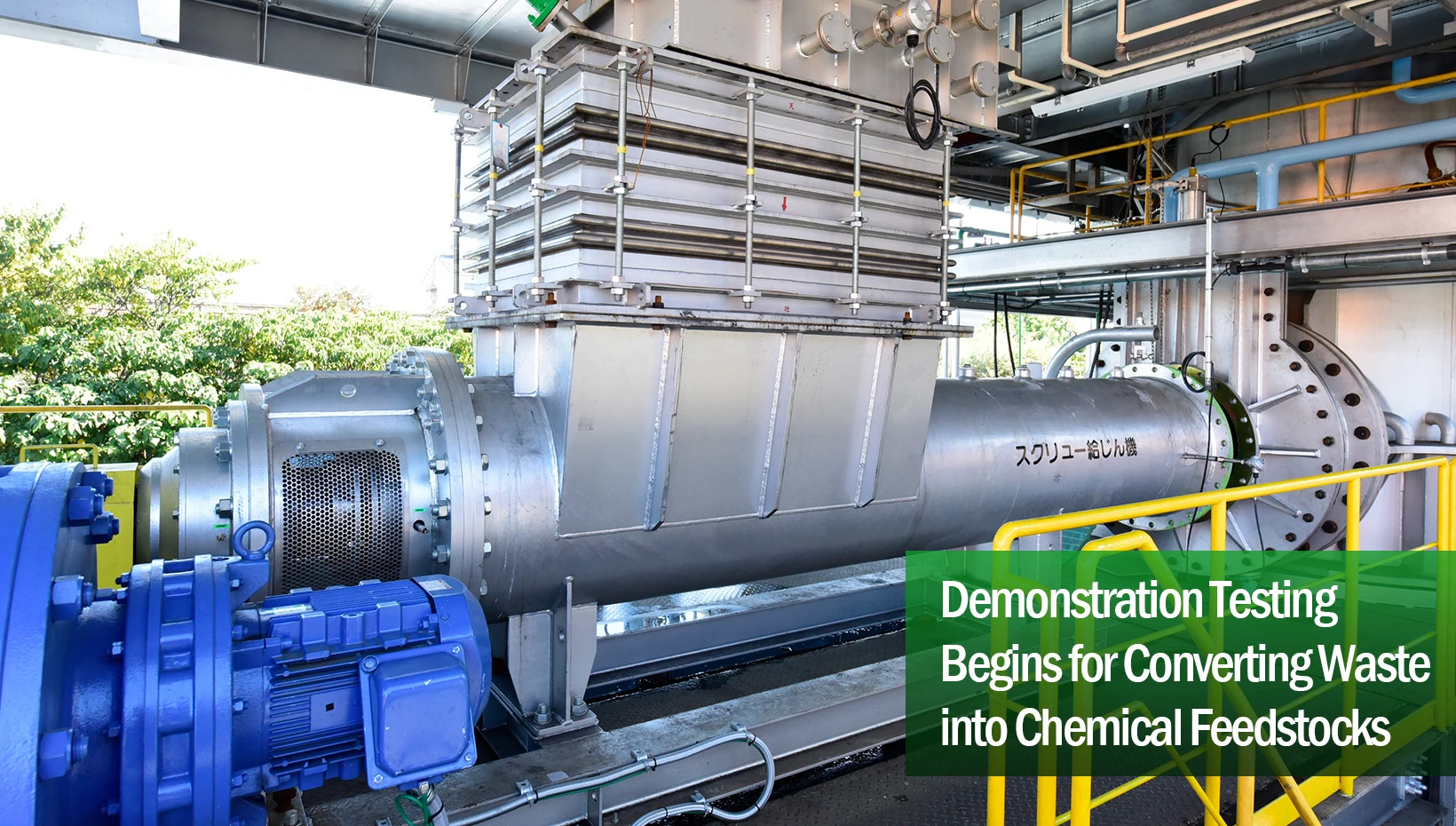
Building on the features and operational track record of the existing technology, the research covers a wide range of new developments. One of the most important is a continuous waste feeding system using a screw feeder.
Unlike conventional hydraulic batch feeding systems, the new system enables a stable, continuous supply of waste into the reactor, helping reduce fluctuations in both gas volume and gas quality, including hydrogen (H2) and carbon monoxide (CO) concentrations.
The reactor operates under positive pressure at approximately 1.2 atmospheres, potentially creating a risk of gas leaking back through the feeding system. To address this, the feeder structure is being improved with gas shutoff functions and other safety measures designed to achieve both safe operation and continuous waste feeding.
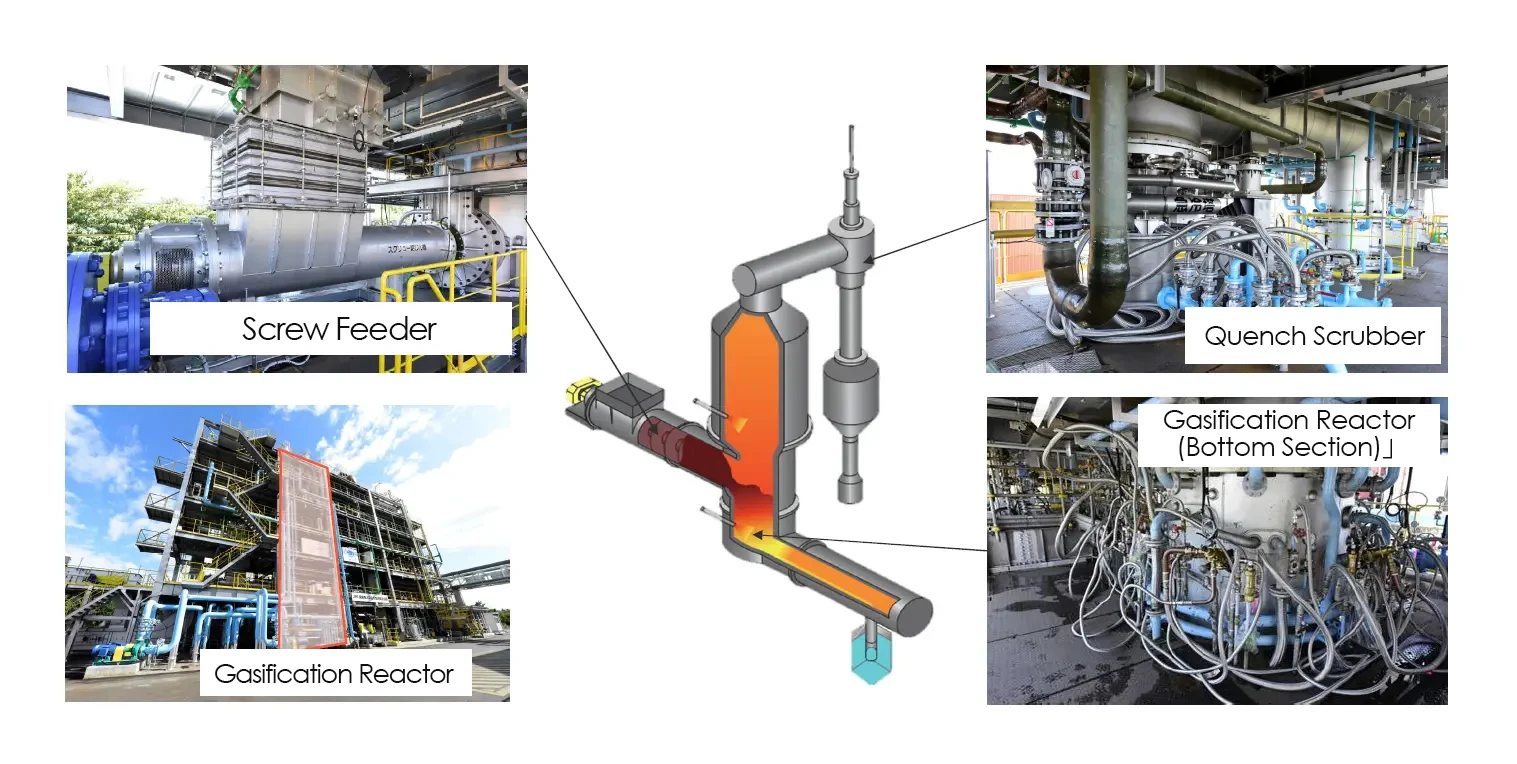
Key plant components used in the pilot-scale demonstration facility (source: JFE Engineering)
The project is also developing a technology to increase CO concentrations in the syngas. CO2 contained in the syngas — which tends to become surplus in downstream chemical production processes — is captured and returned to the gasifying reactor for conversion into CO.
Although the small-scale demonstration facility does not include downstream chemical production processes, the project will test the injection of externally supplied CO2 into the reactor to evaluate its effect on CO concentrations.
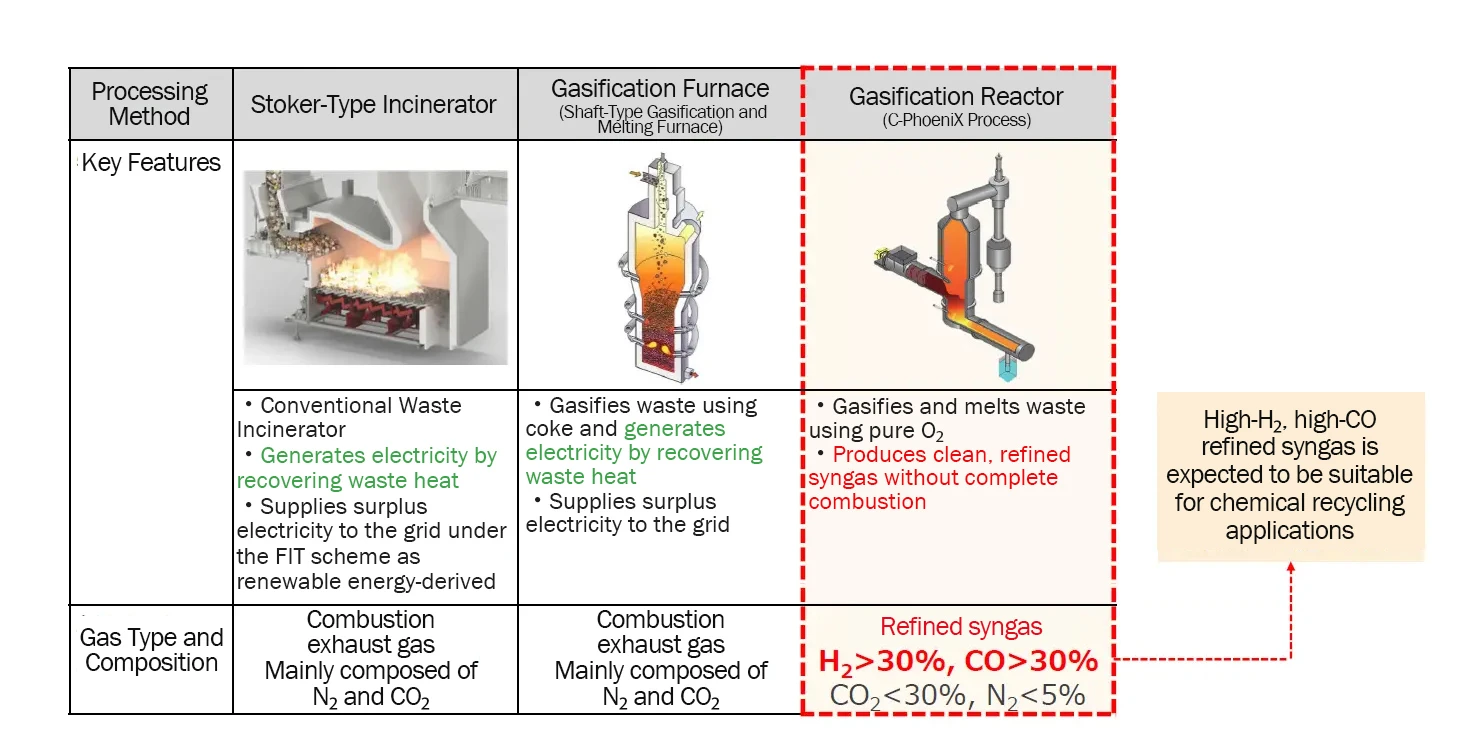
Advantages of the C-PhoeniX gasification process (source: JFE Engineering)
The project is also taking on the challenge of heat recovery.
Until now, the generated gas has been rapidly cooled from 1,200°C to around 70°C in less than one second to suppress dioxin formation. The goal was to minimize the time spent within the temperature range where dioxins are most likely to form (200–500°C).
The new process is designed to improve overall energy efficiency while maintaining the dioxin suppression feature. A boiler will recover heat as the gas cools from 1,200°C to around 600–800°C before the rapid cooling stage.
The difficulty lies in preventing molten slag, dust, and other materials in the high-temperature gas from adhering to boiler heat-transfer surfaces and causing operational problems. The project is developing anti-adhesion measures to enable stable heat recovery under these conditions.
Another area of development is gas cooling technology.
Conventional systems cooled the gas using the sensible heat capacity of cooling water. However, reusing the water required large heat exchangers and additional processes to lower the water temperature after cooling.
The new approach eliminates these processes by using cooling technology based on the latent heat of water evaporation at relatively high temperatures, reducing both equipment and maintenance costs.
JFE Engineering has named the system under development the “C-PhoeniX Process” and plans to continue its development, demonstration, and deployment.
Toward Commercial-Scale Demonstration from 2028
The project will scale up in phases toward deployment. The first step will be waste treatment demonstration testing using the newly completed small-scale facility through the first half of fiscal 2026 to confirm the technology’s reliability under real operating conditions. The facility is expected to produce approximately 20 tons of syngas per day.
By the end of fiscal 2027, the project plans to complete the basic design of the full-scale demonstration facility, capable of processing approximately 150 tons per day. From fiscal 2028 onward, the project will move toward construction and full-scale demonstration of the facility.
The demonstration is intended to validate the entire process, from syngas production by JFE Engineering to chemical manufacturing carried out in collaboration with partner companies.
Sekisui Chemical Co., Ltd. was initially expected to participate as a partner company for ethanol production during the full-scale demonstration phase. However, the company has withdrawn from the project, and JFE Engineering now plans to continue the demonstration in collaboration with different partners.
Based on the results of the demonstration program, the project ultimately aims for deployment by 2030, followed by the phased launch of commercial projects in Japan and overseas in partnership with strategic collaborators.
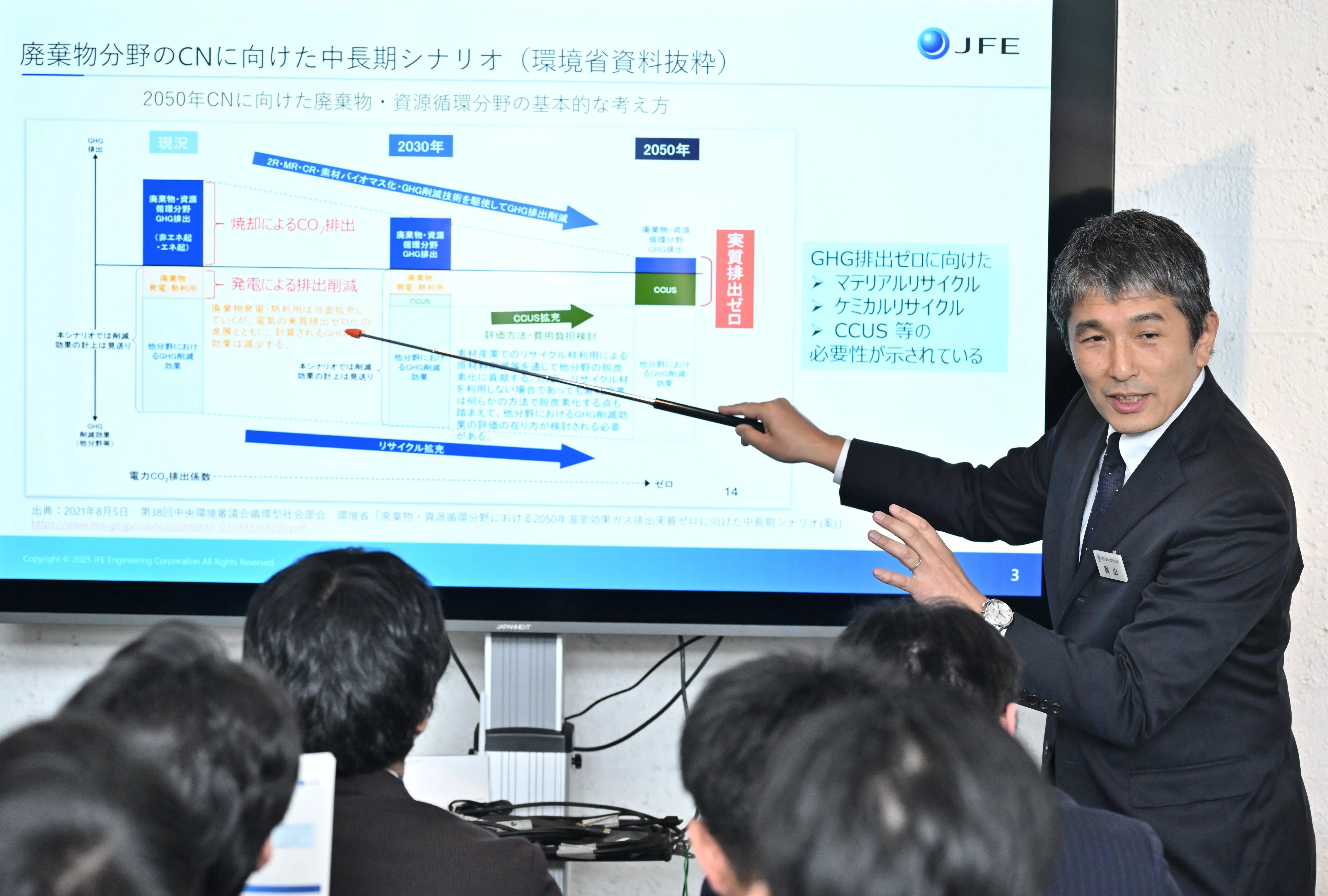
Kenichi Okuyama, Team Leader and Senior Fellow of the Waste-to-Chemical Project Team at JFE Engineering’s Innovation Center, explains the technologies behind the C-PhoeniX Process and the roadmap toward carbon neutrality in the waste sector.
Turning Cost into Value to Build a New Value Chain
Technical success alone will not be enough for waste-to-chemical technologies to achieve broader adoption. Establishing a viable business model will also be essential. JFE Engineering plans to focus on upstream gasification that enables the stable production and supply of high-quality refined syngas from waste. For downstream processes that convert syngas into chemical products, the company intends to build a strong value chain through collaboration with external partners, including chemical manufacturers.
The company also plans to seek partners capable of producing a wide range of chemical products from syngas, such as methanol, polymers, and SAF. This approach would support commercialization tailored to diverse market needs.
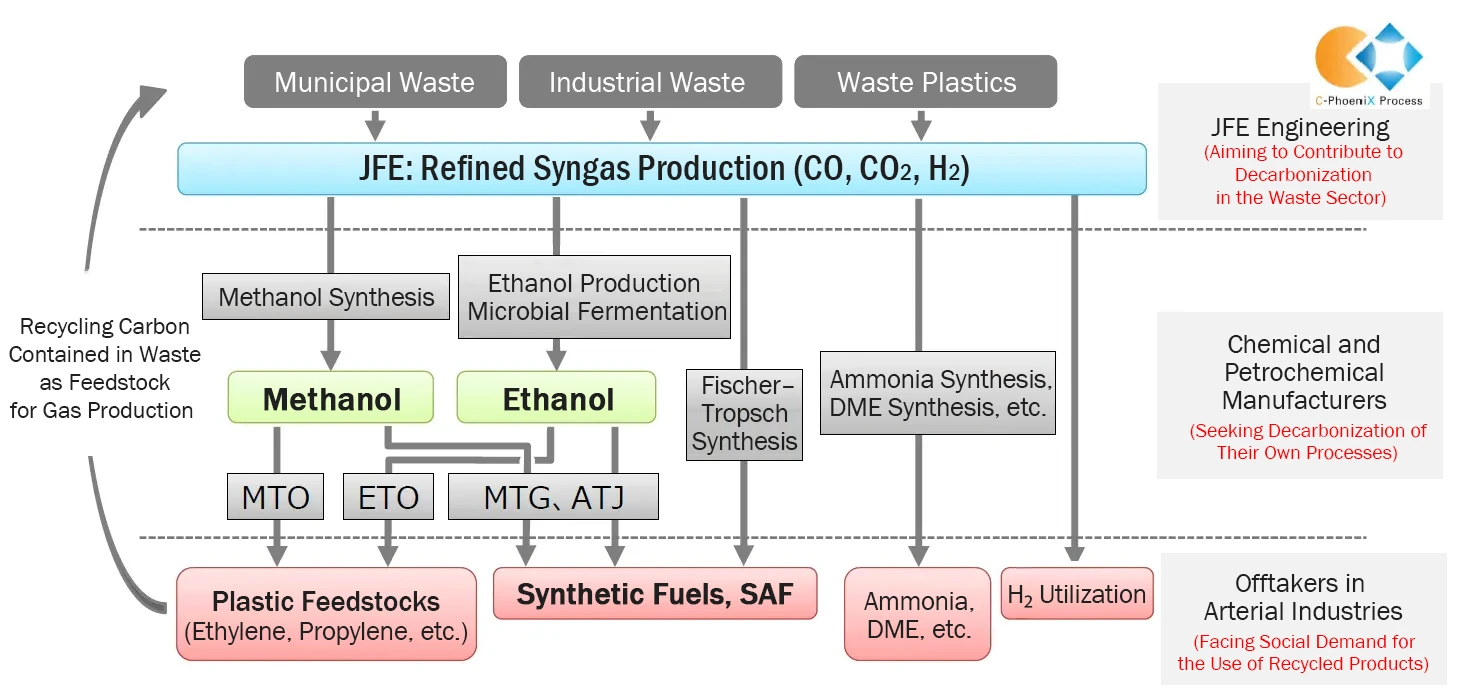
Potential applications of the C-PhoeniX process in chemical recycling (source: JFE Engineering)
One of the greatest challenges is the cost gap. Producing recycled chemical feedstocks through the gasification process currently operates on a much smaller scale than conventional petroleum-based production, resulting in higher production costs.
“The business can succeed only if we narrow the gap between the value producers place on recycled materials and what buyers are willing to pay,” says Susumu Ayukawa of JFE Engineering. Closing that gap will require the development of high-value markets willing to pay a premium for recycled materials, particularly in sectors such as automotive manufacturing and SAF.
Through demonstration testing, the project aims to improve syngas supply stability and increase yields to help reduce recycling costs. At the same time, JFE Engineering is working with potential customers on conditions that would support premium pricing for recycled materials, while also discussing the possibility of long-term agreements. Business viability and market development are expected to advance in parallel.
The waste sector is widely recognized as one of the most difficult hard-to-abate areas for reducing CO2 emissions. The gasification process could help address this challenge by transforming waste management from a cost into a source of value.
Shigekazu Fukunaga of NEDO’s Circular Economy Department emphasizes the significance of the project: “The project is expected to reduce CO2 emissions from waste incineration while also lowering emissions and raw material consumption associated with chemical production. In doing so, it could play an important role in advancing carbon neutrality and the circular economy.”
On November 12, 2025, Ryuzo Sugimoto of Japan’s Ministry of the Environment attended the inauguration ceremony for the small-scale demonstration facility and noted the significance of the facility beginning operations as global discussions on climate action continued at the 30th United Nations Climate Change Conference (COP30).
“Japan is accelerating its decarbonization efforts through revisions to the Plan for Global Warming Countermeasures and amendments to the GX Promotion Act in pursuit of carbon neutrality by 2050,” Sugimoto says.
He also expressed strong expectations for the project, describing it as an initiative that expands resource circulation beyond the traditional 3Rs — reduce, reuse, and recycle — by introducing the concept of carbon circulation. He added that the project addresses an essential technological challenge for achieving carbon neutrality.
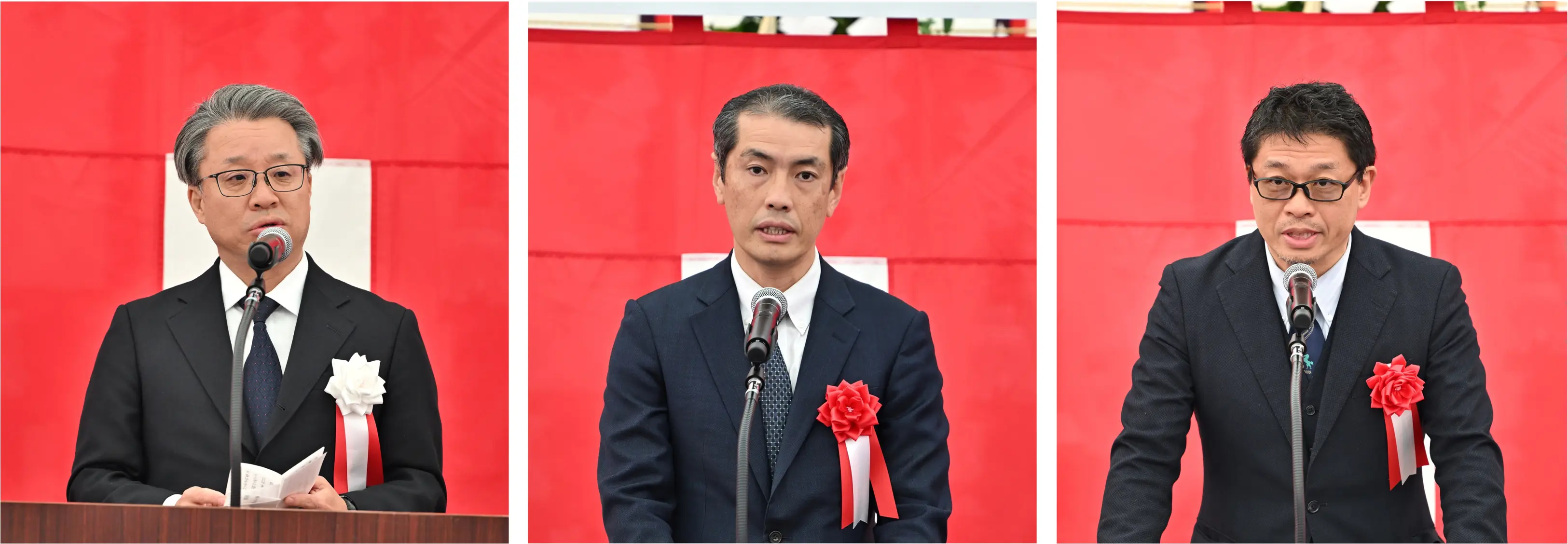
From left: Susumu Ayukawa, Member of the Board, Senior Managing Director and Head of Environmental Solutions Sector at JFE Engineering; Shigekazu Fukunaga, Director General of the Circular Economy Department at NEDO; and Ryuzo Sugimoto, Director of the Waste Management Division, Environmental Regeneration and Material Cycles Bureau, Ministry of the Environment, at the inauguration ceremony on November 12, 2025. The three discussed the significance of the small-scale demonstration facility and the project.
Masanobu Kimura of the Circular Economy Department explains the policy needs behind the GI waste project, its broader significance, and NEDO’s expectations for JFE Engineering’s initiative.
“The waste sector accounts for roughly 3% of total GHG emissions both globally and in Japan. Most of these emissions come from CO2 released through waste incineration and methane generated by landfill disposal.
“Because the emissions are tied to carbon contained in the waste itself, they cannot be significantly reduced through energy-efficiency measures or a shift to renewable energy alone. Expanding 3R initiatives — reduce, reuse, and recycle — particularly for plastics, will remain important. Even so, waste incineration will still be necessary in 2050, when carbon neutrality is expected to become a reality, for reasons including sanitation.
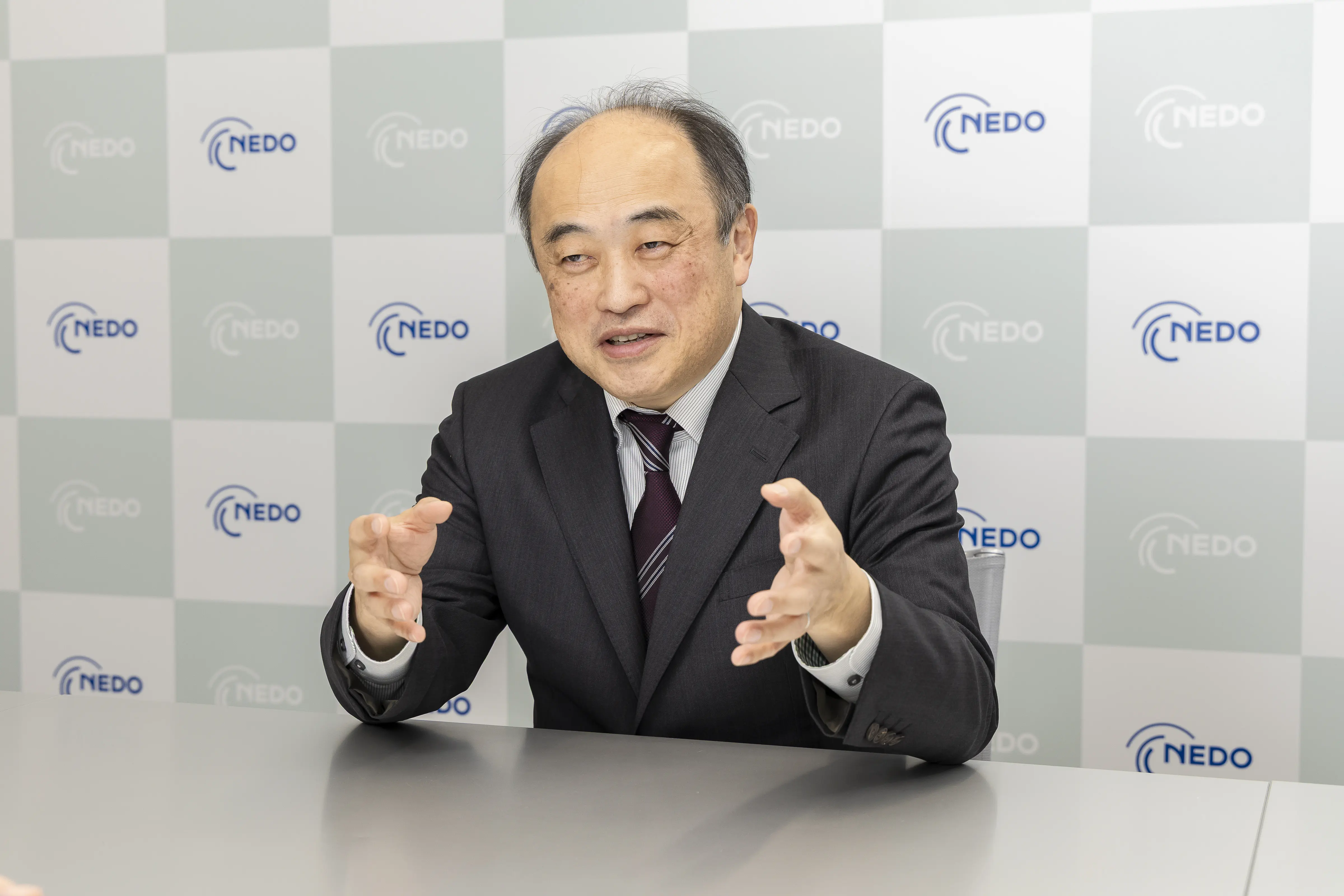
Masanobu Kimura, Deputy Director General, Carbon-circulated Waste Treatment Plant Section, Circular Economy Department, NEDO
“This makes CCUS (Carbon Capture, Utilization and Storage) technologies essential for capturing carbon from incinerated waste and either reusing or storing it. If carbon recovered from waste can also be used as a feedstock or fuel, it could help reduce GHG emissions in other industries and sectors as well.”
Against this backdrop, NEDO is advancing the GI Fund Projects for Achieving Carbon Neutrality in Material Cycles and Waste Management.
The program includes two projects focused on CO2 separation and capture technologies for waste incineration treatment and another focusing on biomethanation technologies using CO2 contained in biogas generated through methane fermentation.
Alongside these initiatives, JFE Engineering is developing technologies for waste pyrolysis gasification and chemical production using the resulting gas.
“One of the key strengths of the technologies JFE Engineering is developing through this project is their ability to enable chemical recycling even for mixed waste streams, such as combustible household waste,” Kimura says. “The project also offers several other advantages, including the ability to produce chemicals without external hydrogen by utilizing hydrogen contained in organic matter in the waste itself, the flexibility to produce a wide range of chemical products from syngas, and more than 25 years of operational experience with gasification facilities.”
“We are also developing technologies that can generate syngas more stably and efficiently than conventional systems, making it better suited for chemical production. We believe these efforts help achieve both carbon neutrality and a circular economy,” Kimura adds. “NEDO will continue working to ensure the success of the project and help bring its benefits into practical use.”
Note: Titles are as of November 2025, at the time of the interview.