
SOEC Methanation Turns CO2 and Water into City Gas
World-Leading Bench-Scale Test Facility Begins Operation


As part of its efforts to realize a carbon-neutral society by 2050, NEDO is promoting the development of methanation technologies as a key strategic field. These technologies enable the efficient synthesis of methane using hydrogen produced from renewable-energy-based electricity and CO2 captured from sources such as power plants. By treating CO2 as a usable feedstock, the process produces methane, the main component of city gas. The initiative has now taken a major step forward toward practical deployment.
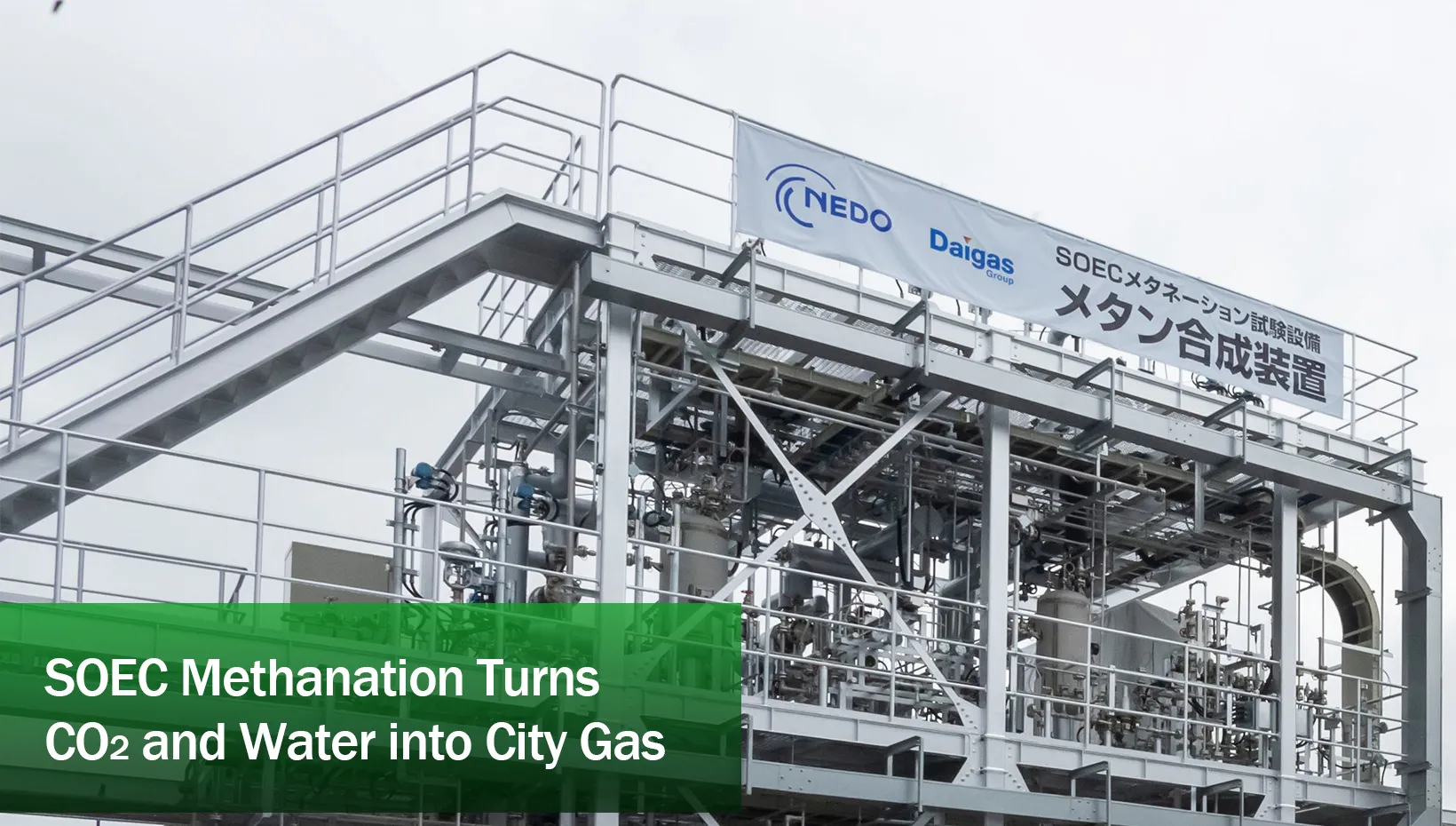
Osaka Gas, a participating company in NEDO’s Green Innovation (GI) Fund Projects program “Development of Technology for Producing Fuel Using CO2, etc. ” completed a bench-scale SOEC (solid oxide electrolysis cell) methanation test facility in June 2025 that is among the largest of its kind in the world. A bench-scale facility is used to carry out verification and validation work required for scaling up to plant-level systems. Since beginning operation, the facility has conducted ongoing synthetic methane production trials and has been steadily accumulating practical know-how for future deployment.
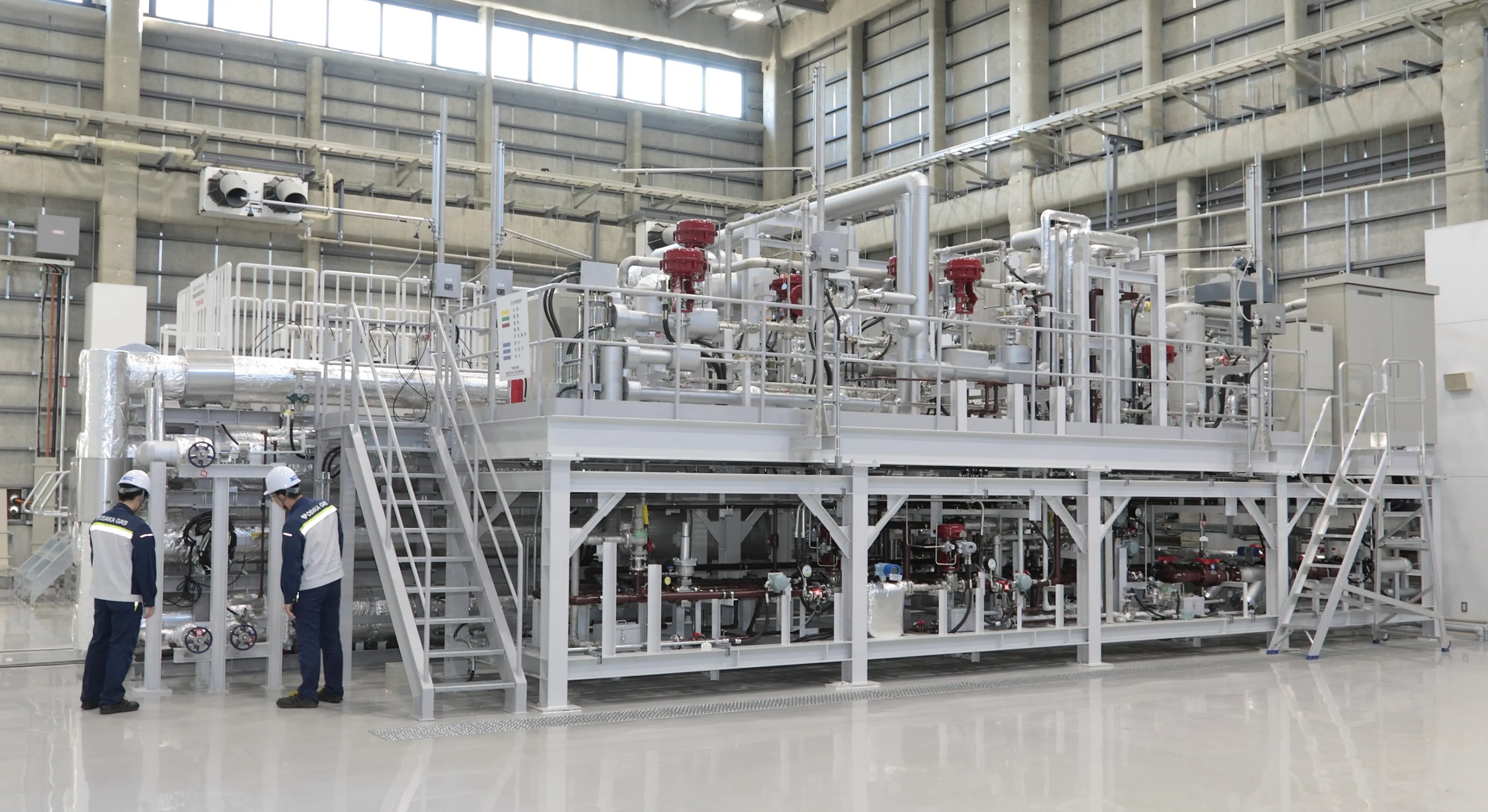
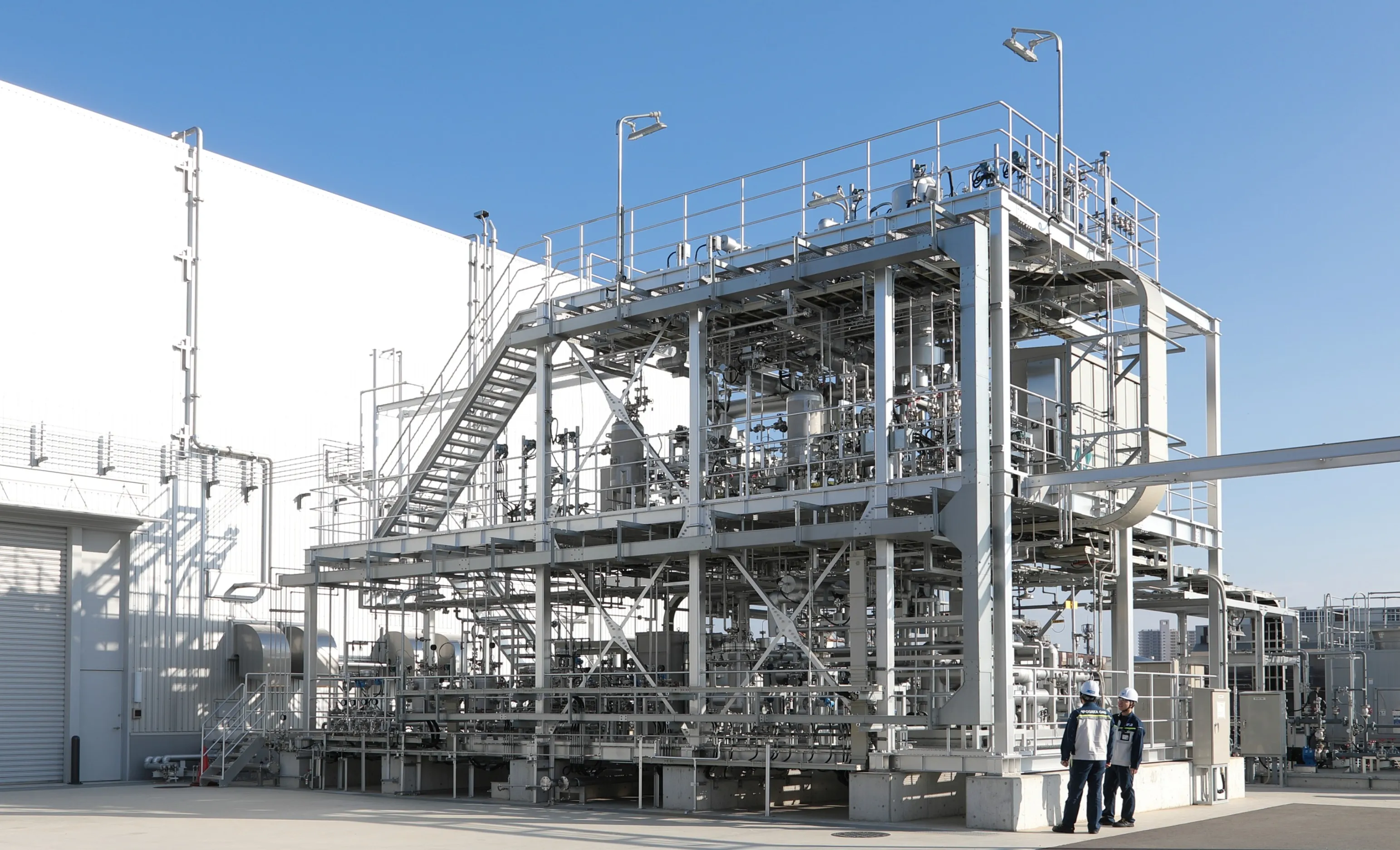
Top: The indoor SOEC electrolysis cell system and related equipment, where water (steam) is electrolyzed to produce hydrogen.
Bottom: The outdoor methanation unit, where hydrogen produced by the SOEC system reacts with CO2 to synthesize methane. The unit uses a proprietary methanation catalyst developed by Osaka Gas. These facilities are installed at Osaka Gas’s DIC (Daigas Innovation Center) site in Konohana Ward, Osaka.
Reversing the Fuel Cell Concept to Achieve World-Leading Efficiency
Methanation is a technology that produces methane (CH₄) by reacting hydrogen (H₂) with carbon dioxide (CO₂). When the hydrogen used in this process is generated from renewable energy-based electricity—often referred to as green hydrogen—the resulting product is commonly known as e-methane. Because e-methane can be supplied through existing city gas pipelines and used with current gas appliances without modification, it is regarded as a key carbon recycling pathway that supports decarbonization while limiting overall system costs. Using SOEC methanation in the production process also eliminates the need for an external hydrogen supply, enabling e-methane to be produced directly from water and CO₂ within a single integrated system.
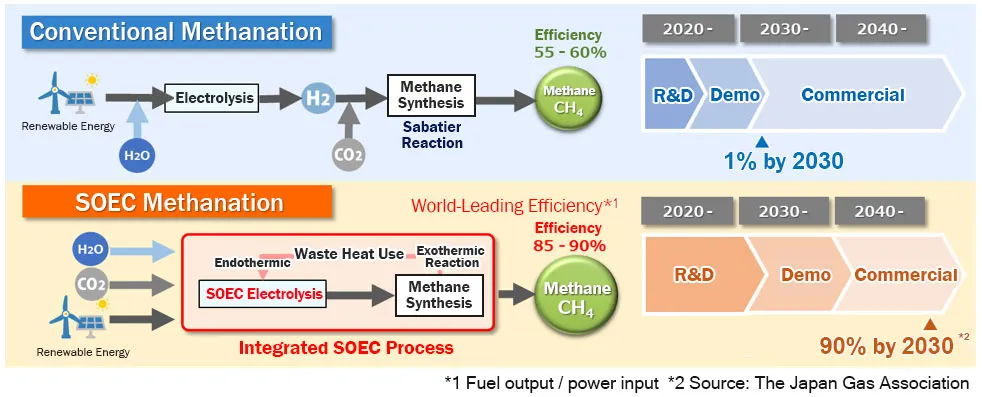
Overview of SOEC Methanation Technology (Source: Osaka Gas press release, June 3, 2025)
Methanation enables CO2 to be effectively reused as a feedstock for city gas, but it comes with a key challenge: high electricity demand. Water electrolysis for hydrogen production requires substantial power, which can drive up overall costs. Cutting the electricity required to produce methane has therefore become a central focus. One promising solution is SOEC methanation, a technology developed by Osaka Gas. Conventional methods typically achieve an electricity-to-methane conversion efficiency of about 55–60%, while SOEC methanation aims to reach roughly 85–90%.
Dr. Hisao Ohnishi, Executive Fellow at Osaka Gas and General Manager of the SOEC Methanation Technology Office at the Advanced Technology Institute, describes the core principle of the technology this way:
“The defining strength of SOEC methanation is its ability to make productive use of waste heat. In conventional methanation, the heat generated during methane synthesis has typically gone unused. Electrolysis works more efficiently at higher temperatures, meaning the reaction can proceed with less electrical power. Because SOEC operates at temperatures of roughly 700–800°C, it requires less electricity for water splitting than other electrolysis methods.
"That said, SOEC electrolysis does require additional thermal energy to convert water into steam. What we do instead is use the heat produced during methane synthesis to generate the steam needed for SOEC operation. This removes the need for an external heat source and allows the input electricity to be converted into methane energy with very high efficiency,” Ohnishi says.
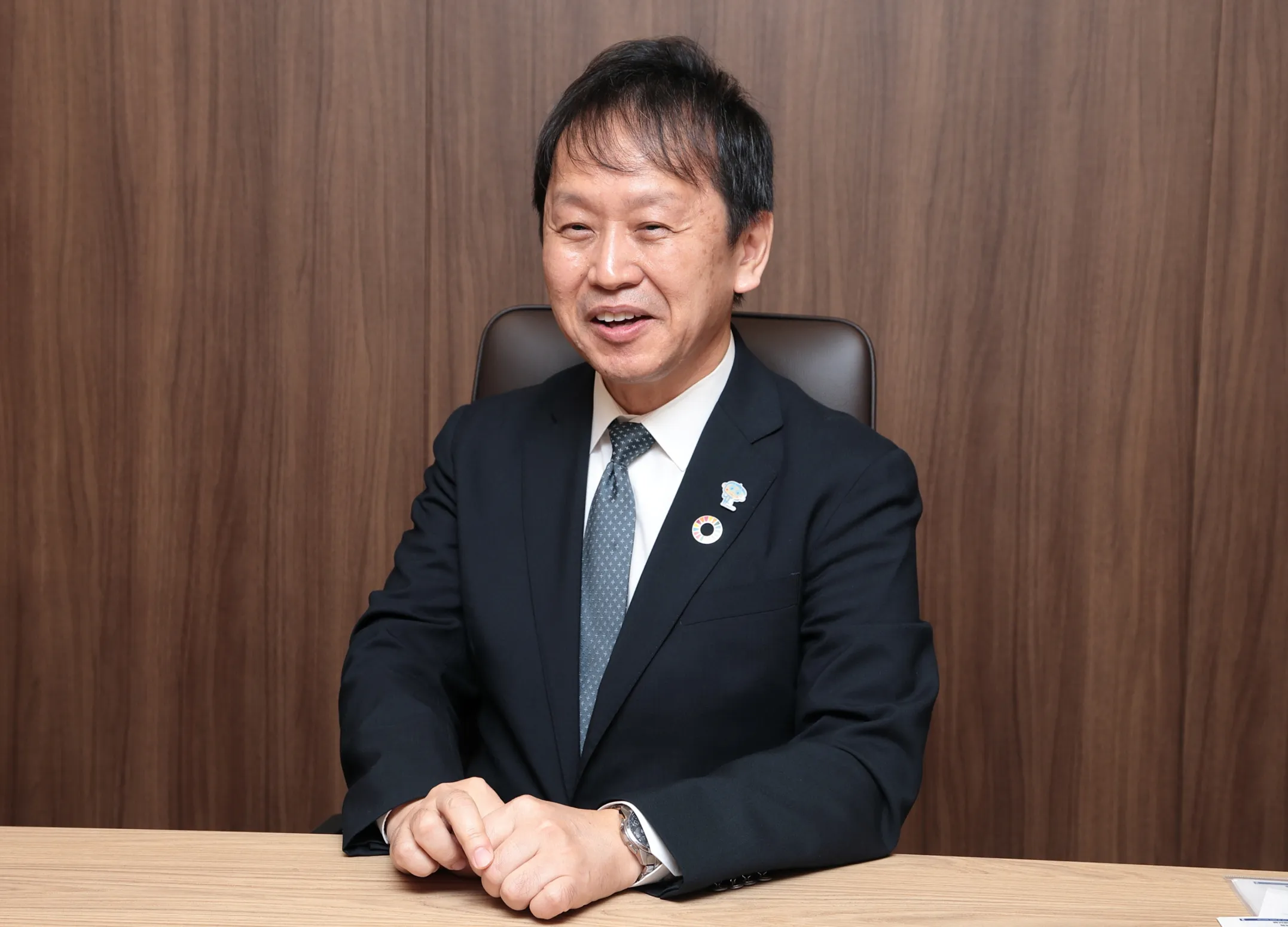
Hisao Ohnishi, Dr. Sci., Executive Fellow at Osaka Gas, and General Manager of the SOEC Methanation Technology Office, Advanced Technology Institute
The breakthrough behind this system grew out of what Ohnishi describes as a “reversal of the usual approach.” Earlier in his career, he worked on SOFC (solid oxide fuel cell) technology, which generates electricity by extracting hydrogen from city gas. An SOFC produces heat during power generation, while the reforming reaction that converts methane into hydrogen absorbs heat.
“I started wondering what would happen if we ran the process in reverse. SOFC power generation operates at about 55% efficiency, but when we calculated the reverse case—producing methane from electricity—the projected conversion efficiency came out close to 90%. At first, people around me thought the numbers must be wrong. Later, when I learned that the National Institute of Advanced Industrial Science and Technology was pursuing similar research, I became convinced we were on the right track,” Ohnishi recalls.
Osamu Sadakane, Director of the Circular Economy Department at NEDO and Project Manager of the “Development of Technology for Producing Fuel Using CO2, etc.” program under the GI Fund Projects, expresses strong expectations for the technology:
“In theory, SOEC has the potential to minimize electricity consumption and is attracting growing attention worldwide. By combining SOEC with methanation, we should be able to achieve a world-leading level of process efficiency,” he says.
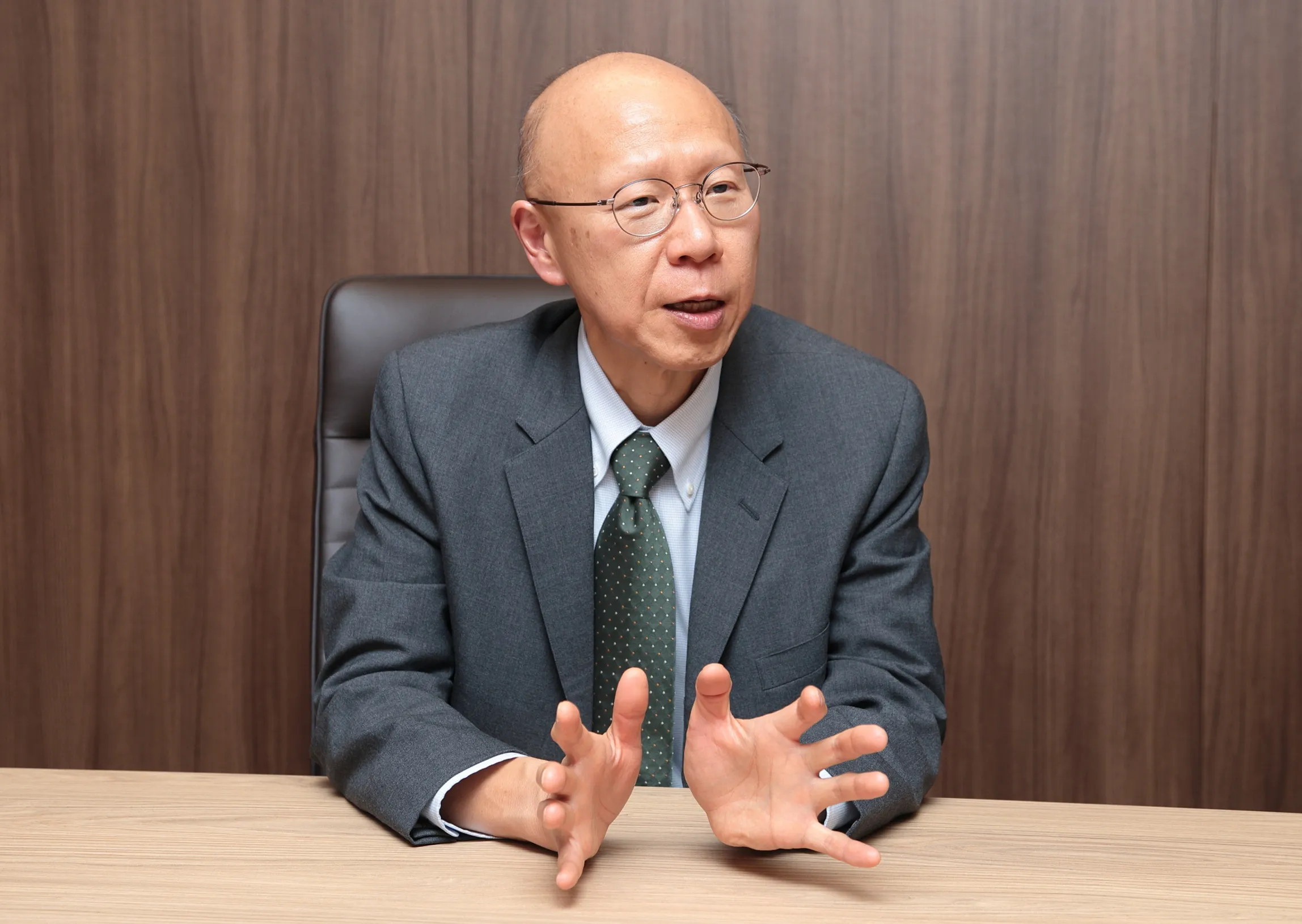
Osamu Sadakane, Project Manager and Director of Chemicals and Fuels Section, Circular Economy Department, NEDO
Why Methanation Fits Japan’s Energy System and Security Needs
Approaches to decarbonized fuels differ across countries. In Europe, supplying gas by blending hydrogen directly into existing pipeline networks is under active consideration. Japan, however, operates under different conditions. Ohnishi explains:
“City gas in Japan is primarily derived from imported LNG (liquefied natural gas) and is a high-calorific-value fuel containing extremely low levels of impurities such as CO2 and nitrogen compared with gas supplied in Europe. Even if hydrogen were blended into this gas, the resulting decarbonization benefit would be limited, while the reduction in calorific value would be substantial enough to require adjustment or replacement of end-user gas appliances.”
He notes that the European approach is not well aligned with Japan’s circumstances. By contrast, synthesizing methane itself through methanation would allow both existing gas infrastructure and end-user equipment to remain in use, making it a pathway better suited to Japan’s energy system. Against this backdrop, Ohnishi observes from a gas utility perspective that “Japan’s level of commitment to methanation is particularly strong by global standards.”
Sadakane, Project Manager at NEDO, also addresses how SOEC methanation is positioned in relation to PEM (polymer electrolyte membrane) water electrolysis, another electrolysis technology being advanced under the GI Fund Projects.
“PEM systems can operate at relatively low temperatures of around 80°C, which facilitates startup and shutdown and enables effective integration with renewable power sources such as solar energy, whose output is inherently variable. SOEC, by contrast, operates at high temperatures of around 700°C, making thermal management a critical consideration, but it offers particular advantages in achieving stable operation at high energy conversion efficiency. Each technology should therefore be deployed in accordance with its intended application, and NEDO supports both on the basis that they are equally important,” he explains.
This project also has significant implications for both energy security and economic security. Even if Japan were, in the future, to import methane produced overseas using low-cost renewable electricity, a fundamental question remains: should the country also depend on foreign technologies for its production?
Ohnishi underscores this point: “It is not only resource self-sufficiency that matters. Technological self-sufficiency is equally important. Even when overseas renewable resources are utilized, if methane can be produced at the world’s lowest cost using Japanese technology, it will directly strengthen Japan’s energy security. In addition, amid growing global demand for LNG, possessing technologies capable of supplying carbon-neutral methane will help secure long-term strategic leadership.”
Sadakane, the NEDO project manager, echoes this view: “From a security standpoint, fostering technologies that enable domestic energy production has become a national priority. In that respect, SOEC methanation represents a particularly important technology.”
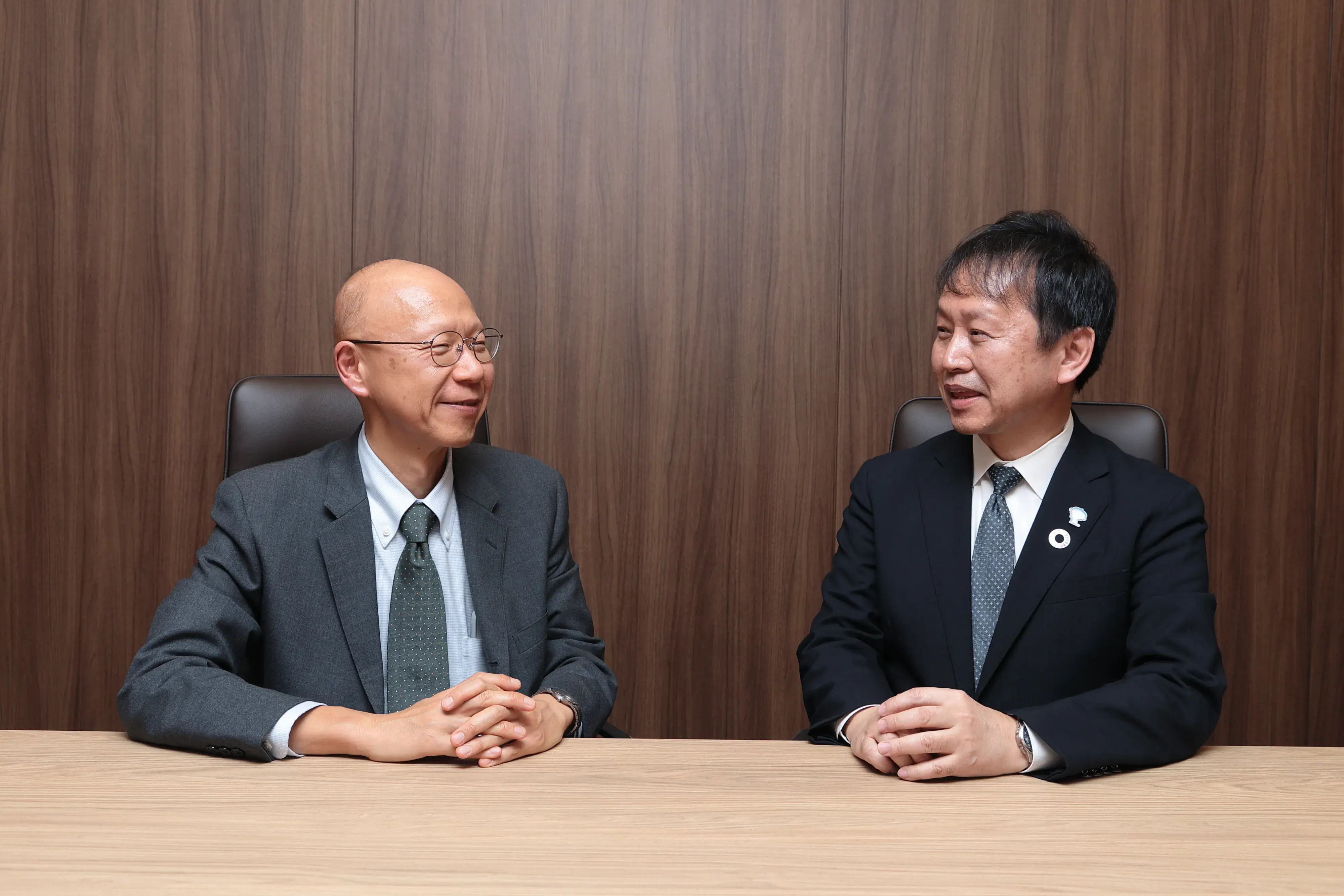
Osamu Sadakane of NEDO (left) and Hisao Ohnishi of Osaka Gas (right)
Rapid Expansion from Laboratory-Scale to World-Leading Scale
Production facilities for synthetic methane using SOEC methanation have expanded rapidly in scale over the past few years. The newly commissioned bench-scale facility represents a roughly one hundredfold increase in capacity compared with the earlier laboratory-scale system, which was capable of supplying energy equivalent to about two households. The new system is designed to produce enough gas to serve approximately 200 households.
Ohnishi recalls the early stage of development: “Around 2021, when we first attempted to produce methane by combining SOEC with the methanation reaction, the amount of synthetic methane we obtained was extremely small — just enough to produce a faint flame, like the glow of a firefly. Even so, the entire team celebrated when we saw it work. By fiscal 2024, we had developed a laboratory-scale unit capable of producing gas for two households. With support from the Green Innovation Fund Projects, we have now scaled up rapidly to bench-scale,” he says, emphasizing that a clear path toward larger scale production is now coming into view.
This scale-up represents more than simply increasing the size of the equipment. As a fully integrated system combining SOEC and methanation, the newly commissioned facility is regarded as one of the largest of its kind in the world. Because SOEC operates at high temperatures of around 700°C, there had been concerns that large-scale implementation might prove difficult. The start of operations therefore marks an important milestone, demonstrating that a high efficiency process can be realized not merely in theory but as a practical engineering system,” Ohnishi says.
At the new facility, the team is focusing on validating two key technical challenges. The first is thermal control. As methanation reactors become larger, heat tends to build up inside the system, making precise temperature management essential to maintain reaction efficiency. For that reason, the team is thoroughly testing heat removal and temperature control mechanisms designed with future scale-up in mind.
The second challenge is uniformity. When many electrolysis cells are stacked and then integrated into a large-scale system, a critical question is how to distribute feedstock steam and electrical power evenly across all cells. Achieving this uniform distribution is a key piece of know-how that directly affects overall performance.
Ohnishi explains: “We view the integrated electrolysis cell assemblies in this facility as modular building blocks. By grouping multiple units together, we can create the basic structure for future large commercial plants. The plan is to establish the core technologies at this level and then scale-up by combining multiple modules.”
Parallel Development of Steam and Co-Electrolysis Toward 2050
Looking ahead, the program is already preparing for the next stage of technology development. The system currently in operation uses steam electrolysis, in which water is electrolyzed to produce hydrogen that is then reacted with CO2. In parallel, the team is also advancing co-electrolysis, a more technically demanding approach in which steam and CO2 are electrolyzed simultaneously.
Sadakane explains: “Steam electrolysis is technically more mature, so we are using it first to accumulate scale-up know-how. Co-electrolysis involves more complex electrode reactions, but it has the potential to achieve even higher efficiency. By applying the knowledge gained from steam electrolysis to co-electrolysis as well, we intend to accelerate the pace of development.”
Ohnishi positions the two approaches this way: “We regard steam electrolysis as an established technology and co-electrolysis as an advanced technology. In fact, space has already been reserved at the current bench-scale site for a future co-electrolysis system. In a few years, additional equipment will likely be installed there, resulting in a significantly expanded facility. Over the longer term, having both technologies available as options, depending on operating conditions and applications, will provide important business flexibility.”
Within the project, the research and development pathway is often described as a staged development process. Sadakane comments: “The current bench-scale facility represents the intermediate stage. The next step is the move to plant scale, in other words, the challenge of building a pilot plant. We aim to follow the classic path of research and development by demonstrating what is theoretically possible and then scaling up step by step, steadily and ahead of the rest of the world.”
Ohnishi adds: “This facility is only a waypoint. Looking toward the carbon neutral era of 2050, we aim not only for domestic deployment but also for large-scale production in overseas locations well suited to renewable energy. We intend to accelerate development so that technologies originating in Japan can play a leading role in the global energy industry.”
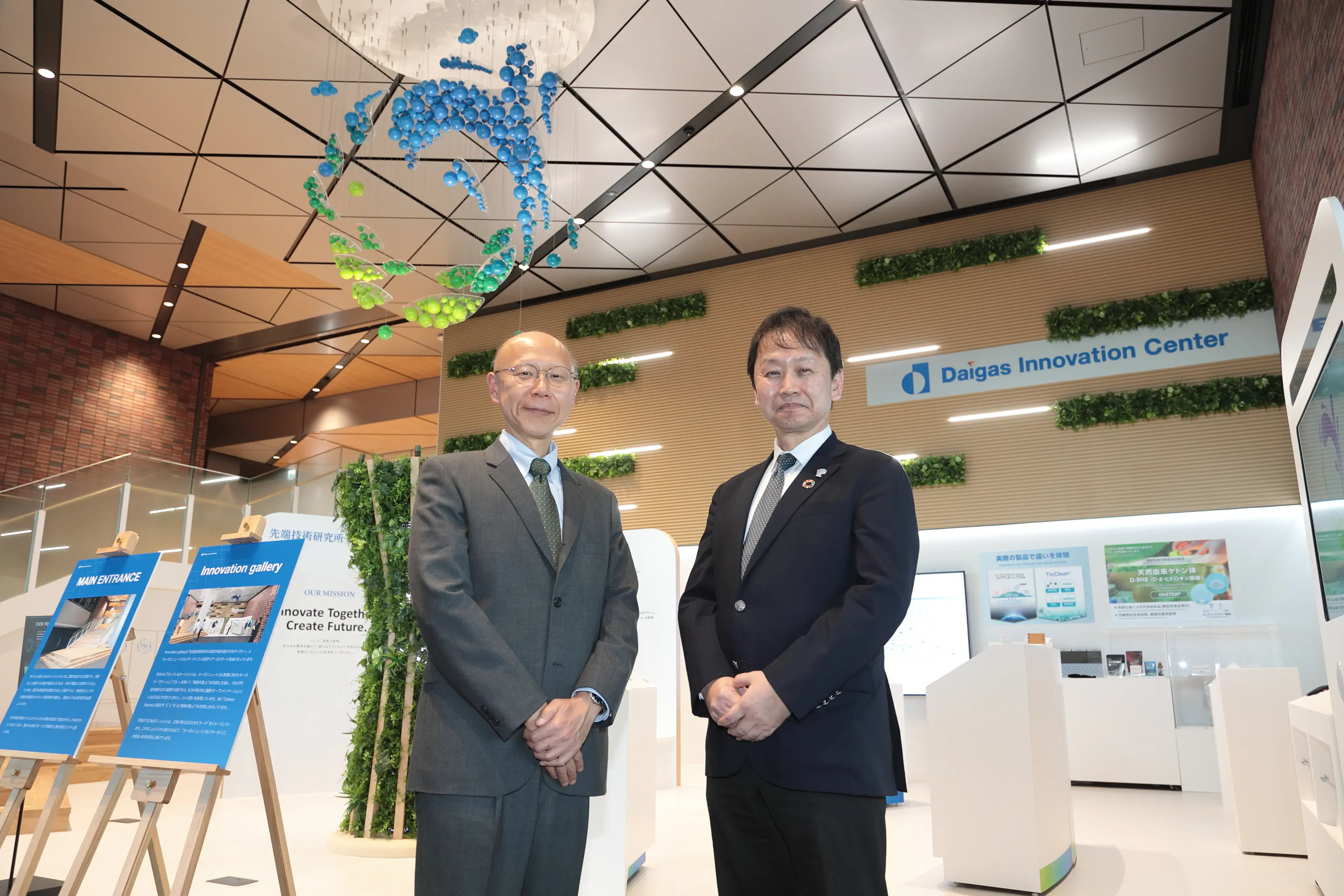
Sadakane and Ohnishi at the entrance gallery of the DIC, showcasing Osaka Gas technologies
Under the project, pilot-scale testing is scheduled for fiscal years 2028 through 2030, with the goal of establishing e-methane production technology capable of achieving a world-leading level of energy conversion efficiency (approximately 85–90%) by fiscal 2030. Following this phase, Osaka Gas plans to proceed to demonstration projects from fiscal 2031 onward, with the aim of commercial deployment in the late 2030s to around 2040.
For resource-constrained Japan, SOEC methanation has the potential to fundamentally reshape the country’s energy landscape.
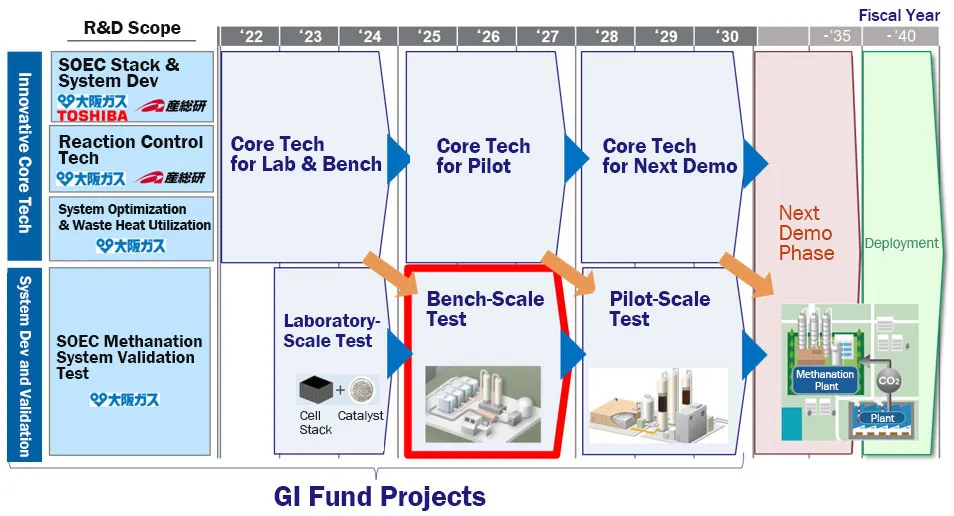
Development roadmap and implementation timeline for SOEC methanation technology under the Green Innovation Fund Projects (Source: Osaka Gas press release, June 3, 2025)